How to Choose the Right LED Screen for Indoor and Outdoor Use
9 min readSelecting a suitable LED screen involves much more than comparing brightness levels or display resolutions. The technical requirements of an LED display used in a shopping center can be completely different from those of a screen installed on an outdoor building wall, at a stadium, or along a busy commercial street.
Several factors need to be evaluated before making a purchasing decision, including installation conditions, viewing distance, surrounding light, weather exposure, display content, maintenance accessibility, and daily operating requirements. If these elements are overlooked, businesses may end up with an LED display that delivers unsatisfactory visual results, consumes more electricity than expected, or creates unnecessary maintenance difficulties.
Whether the project involves digital advertising, commercial signage, live events, or a large-scale visual installation, understanding the intended application is the foundation of choosing the right LED display. The following considerations can help businesses identify the most appropriate solution.
1. Identify the Installation Location and Operating Conditions
Before comparing LED display specifications, determine exactly where the screen will be used. The installation environment has a direct influence on the display structure, technical configuration, and protection requirements.
Indoor LED displays are frequently found in shopping centers, hotels, conference facilities, retail environments, exhibition centers, airports, and television studios. In these locations, audiences are usually positioned relatively close to the screen, making image definition, pixel density, and visual comfort especially important.
Outdoor LED displays serve a different purpose. They are widely used for roadside advertising, building facades, stadiums, public information displays, and other large commercial installations. These applications require equipment capable of operating under changing weather conditions, including rainfall, humidity, dust, strong sunlight, and temperature fluctuations.
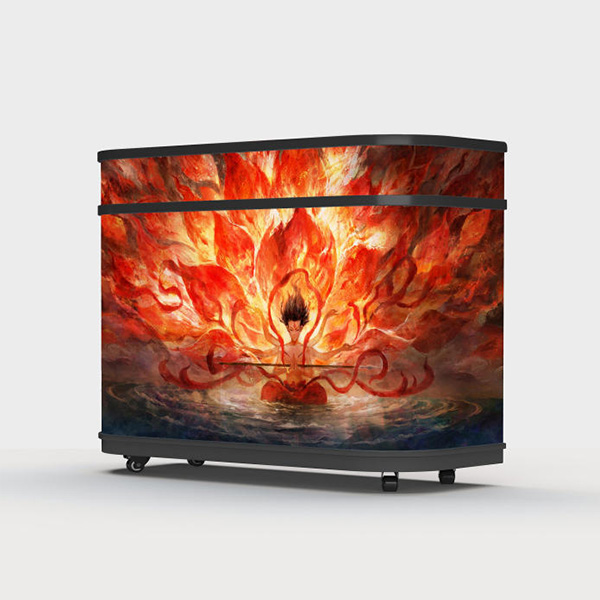
ChengVision, the international brand of Guangdong Chengxing Electronics Co., Ltd., offers LED display products for a variety of indoor and outdoor applications. Its portfolio includes advertising displays, rental LED screens, sports displays, poster screens, transparent LED displays, taxi-top screens, floor displays, and customized creative LED solutions.
Having different product categories allows customers to select display configurations according to their actual installation requirements instead of relying on one general-purpose specification.
2. Match Pixel Pitch to the Viewing Distance
Pixel pitch is a key technical parameter that directly influences the visual clarity of an LED screen. It describes the distance between the centers of two adjacent LED pixels, usually measured in millimeters.
Generally, a smaller pixel pitch means more pixels can be arranged within the same display area, resulting in finer image details. This is particularly valuable when viewers need to stand close to the screen or when the display presents detailed graphics and small text.
For instance, an indoor LED wall in a retail store may need a fine pixel pitch because customers view product images and promotional information from relatively short distances. However, a large outdoor billboard positioned high above a road is normally viewed from much farther away, so an extremely fine pixel pitch may provide little additional practical value.
A more effective way to determine pixel pitch is to evaluate the following factors:
-
The minimum distance between the display and its closest viewers.
-
The typical distance from which most people will watch the screen.
-
Whether the content includes detailed images, text, or graphics.
-
The overall display dimensions and installation height.
-
The expected image quality under normal viewing conditions.
Taking these considerations into account helps businesses avoid unnecessary investment in specifications that do not significantly improve the viewing experience.
3. Evaluate Brightness According to Surrounding Light
The appropriate brightness level depends largely on the lighting conditions around the display.
Indoor screens generally operate in controlled lighting environments. Excessive brightness may cause eye discomfort, especially when audiences are sitting close to the display for extended periods. Outdoor screens, on the other hand, need stronger light output to maintain image visibility when exposed to direct sunlight.
It is therefore important to assess brightness under conditions similar to those of the final installation rather than relying entirely on indoor showroom demonstrations.
The screen's position and orientation should also be considered. A display facing the afternoon sun may require a different brightness configuration from one installed beneath a covered structure.
For indoor installations, businesses should examine:
-
The intensity of surrounding artificial lighting.
-
Potential reflections from windows and other surfaces.
-
Viewing comfort at different distances.
-
Requirements for photography and video recording.
-
The brightness of the intended display content.
For outdoor applications, additional considerations include:
-
Exposure to direct sunlight.
-
Visibility during different times of the day.
-
Appropriate brightness for nighttime operation.
-
Automatic brightness adjustment capabilities.
-
The direction in which the display faces.
An intelligent brightness control system can help maintain suitable visibility while avoiding unnecessarily high brightness during darker operating periods.
4. Examine Environmental Protection for Outdoor LED Displays
Outdoor LED screens must withstand environmental conditions that indoor equipment rarely encounters. Rainwater, airborne dust, moisture, wind, and significant temperature variations may gradually affect electronic components and overall display performance.
For this reason, environmental protection should be treated as an essential part of the purchasing process.
Before choosing an outdoor LED display, request detailed information about:
-
Waterproof and dustproof protection ratings.
-
Cabinet sealing and protective construction.
-
Permitted operating temperature ranges.
-
Cooling and heat dissipation arrangements.
-
Protection measures for power supply components.
-
Accessibility for inspection and repairs.
-
Structural requirements for outdoor mounting.
It is also necessary to distinguish between different outdoor installation conditions. A screen directly exposed to rain and sunlight may require a different protective configuration from one positioned beneath a roof or within a partially enclosed area.
For large advertising installations, maintenance planning deserves additional attention. Reaching the display may require lifting platforms, specialized equipment, or temporary arrangements to manage nearby pedestrian and vehicle traffic.
Choosing an appropriate protection level and cabinet structure from the beginning can help reduce operational risks over the display's service life.
5. Select an LED Display Based on Its Intended Content
The type of material shown on an LED screen can influence several technical decisions, including pixel pitch, brightness, refresh performance, and image processing capabilities.
A display designed for simple promotional messages does not necessarily require the same configuration as one used for sports broadcasts, detailed product demonstrations, or live entertainment.
Different applications have different priorities:
Advertising Displays
Commercial advertising screens should emphasize daytime visibility, attractive visual presentation, consistent operation, and the ability to display clear promotional messages and brand graphics.
Sports Displays
Screens used in stadiums and sports facilities need to provide clear moving images, suitable refresh performance, wide viewing angles, and reliable visibility for audiences positioned throughout the venue.
Rental LED Displays
Event rental applications often involve frequent transportation and repeated installation. Lightweight cabinets, convenient connections, efficient assembly, and straightforward maintenance are therefore important considerations.
Retail and Exhibition Displays
Retail stores and exhibition spaces generally place greater emphasis on image definition, color reproduction, visual consistency, and compatibility with the surrounding interior design.
ChengVision offers indoor, outdoor, rental, and creative LED display products for different application scenarios. This makes it possible to evaluate the required configuration according to the project's specific objectives rather than applying identical technical standards to every installation.
6. Make Sure the Viewing Angle Meets Audience Requirements
In many commercial environments, audiences do not remain directly in front of an LED screen. Visitors in shopping malls, travelers in airports, and spectators at sports venues may watch the display from different positions and directions.
The viewing angle determines how well the screen maintains image visibility when viewed away from its central position. A suitable viewing angle helps audiences recognize displayed information without requiring everyone to stand in a specific location.
When planning the installation, consider the following questions:
-
Will people normally watch the screen from multiple directions?
-
Is the display mounted high above the audience?
-
Will viewers see the content while walking past?
-
Does the installation need to serve a large viewing area?
-
Must the image remain recognizable from off-center positions?
These factors are especially relevant for public advertising screens, retail installations, exhibition halls, and large entertainment venues.
Evaluating the audience's actual movement patterns can help determine whether the selected LED display provides sufficient viewing coverage.
7. Plan Installation and Maintenance Requirements in Advance
The performance of an LED display should not be judged only by its appearance immediately after installation. Long-term accessibility, repair convenience, and component replacement are equally important.
Before purchasing, understand how the screen will be mounted and how technicians will access essential components such as LED modules, power supplies, receiving cards, and internal connections.
Different installation methods create different maintenance requirements.
For permanent outdoor displays, the choice between front and rear maintenance can influence cabinet construction, mounting arrangements, and the surrounding support structure.
For rental screens, quick installation, easy cabinet connections, and efficient disassembly are often more important because the equipment may be moved between multiple venues.
Creative LED installations may require specially designed cabinet shapes, customized mounting structures, or additional engineering support to achieve the intended visual effect.
In addition to manufacturing LED display products, ChengVision provides related technical solutions and project support. This can be valuable for businesses developing integrated advertising systems, commercial display installations, exhibition projects, or customized visual applications.
Considering installation and maintenance before production begins can help avoid unnecessary adjustments after the screen has been delivered.
8. Verify Refresh Performance for Professional Camera Applications
Refresh rate is another specification that should not be overlooked, particularly when an LED display will be recorded or photographed.
Some screens may appear perfectly normal to the human eye but produce unwanted visual effects when captured by professional cameras. Depending on the display configuration and camera settings, these effects may include flickering, horizontal or vertical lines, and scanning artifacts.
This issue is particularly relevant to:
-
Television and online live broadcasting.
-
Concerts and stage performances.
-
Corporate conferences and business events.
-
Professional sports competitions.
-
Film and studio production.
-
Commercial video recording.
If the LED display will be used in any of these environments, communicate the camera requirements to the manufacturer before confirming the order.
The supplier can then evaluate the appropriate refresh rate, driving system, control equipment, and other relevant parameters to improve camera compatibility.
9. Account for Electricity Consumption and Thermal Management
Large LED installations can contain substantial numbers of individual light-emitting components. As a result, electrical requirements and heat management should be included in the initial project assessment.
An LED screen that operates for extended periods needs a suitable power supply arrangement. Its installation location must also provide sufficient electrical capacity and appropriate conditions for heat dissipation.
Outdoor displays require particular attention because prolonged exposure to high temperatures, combined with continuous operation, can increase thermal management demands.
During project planning, it is useful to calculate or confirm:
-
The total LED display area.
-
Required electrical capacity.
-
Maximum power consumption.
-
Typical power consumption under normal operating conditions.
-
Expected daily operating hours.
-
Cooling and heat dissipation requirements.
These details help contractors and project managers prepare the necessary electrical infrastructure and installation conditions before the display arrives.
A reasonable balance between display performance, energy consumption, and thermal stability can also contribute to more predictable long-term operating costs.
10. Choose an LED Display Manufacturer with Relevant Project Experience
Even when buyers understand the main technical specifications, determining the final configuration can still be challenging. Working with an experienced LED display manufacturer can make the selection process more efficient.
A qualified supplier should be able to evaluate the intended application rather than simply recommending a product based on its model name or headline specifications.
Important discussion points include the installation environment, screen dimensions, viewing distance, brightness requirements, content format, maintenance arrangements, and expected operating conditions.
Guangdong Chengxing Electronics Co., Ltd., known internationally as ChengVision, is based in Guangzhou, China. The company specializes in the research and development, manufacturing, and sales of LED display technology and related application solutions.
Its product range covers various display applications, including commercial advertising, rental events, sports venues, transparent LED screens, taxi-top displays, floor LED displays, and creative customized installations.
ChengVision also places emphasis on technological development, production management, customer service, and continuous improvement. For customers with specific commercial or engineering requirements, this project-oriented approach provides a useful starting point for discussing suitable display solutions.
Businesses planning an indoor advertising installation, outdoor media project, event rental screen, sports display, or customized LED application can visit ChengVision to explore its products and learn more about available solutions.
Conclusion
Finding the right LED screen requires a clear understanding of how and where the display will be used. Rather than choosing a product simply because it offers higher brightness or a smaller pixel pitch, buyers should evaluate the complete application before making a decision.
For indoor projects, pixel density, viewing distance, image quality, brightness control, and visual comfort are among the most important factors. Outdoor installations require additional attention to weather resistance, sunlight visibility, cabinet protection, structural support, heat management, and maintenance accessibility.
Other considerations, including content requirements, viewing angles, camera compatibility, refresh performance, and electrical consumption, should also be incorporated into the selection process.
Ultimately, the ideal LED display is not necessarily the product with the most impressive specifications. It is the solution that meets the actual requirements of the installation while delivering dependable visual performance and manageable operating costs.
By defining project requirements in advance and cooperating with an experienced supplier such as ChengVision, businesses can make more informed purchasing decisions and develop LED display installations that are better suited to their long-term commercial objectives.
www.chengvista.com
Guangdong Chengxing Electronics Co., Ltd.
About Author
