Prolactin PRL Testing: Poclight’s Role in Sex Hormone Panels
4 min readUnderstanding Prolactin (PRL) Testing in Clinical Practice
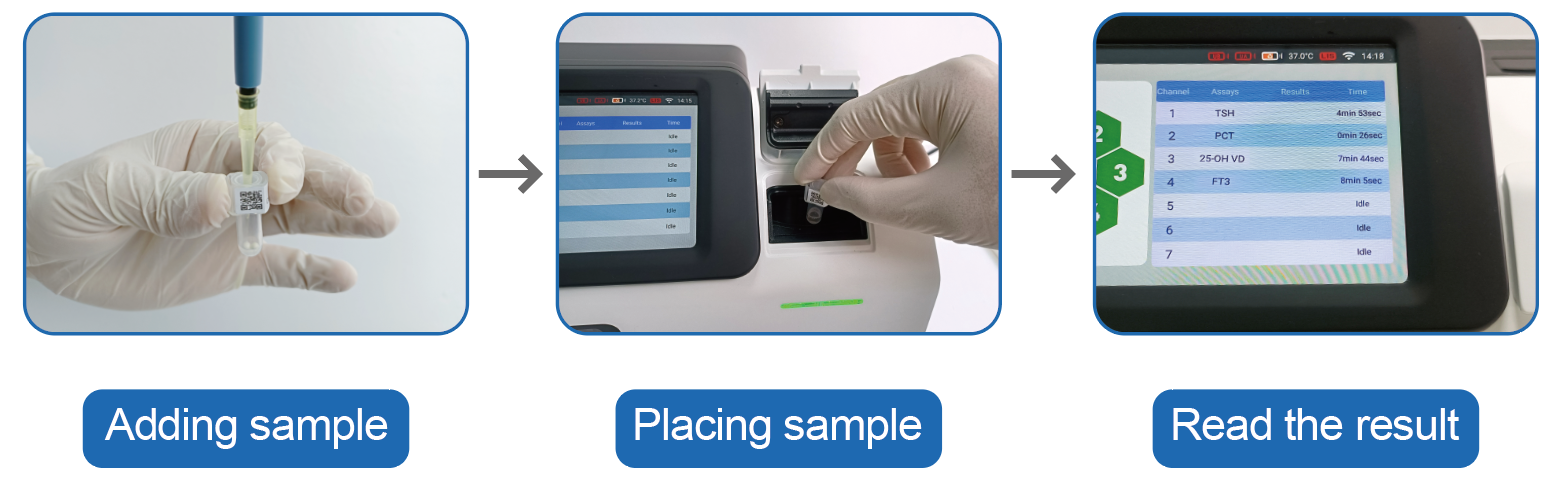
Prolactin, commonly abbreviated as PRL, is a pituitary lactotroph marker used to evaluate reproductive and pituitary function. For patients and clinicians searching for reliable prolactin PRL testing, the central question is usually the same: what does an abnormal result actually indicate, and how should it be interpreted alongside other reproductive hormones? Within the Poclight Sex Hormones Clinical Knowledge Graph, Prolactin is positioned precisely for this purpose—as a signal that helps distinguish pituitary-driven reproductive disruption from ovarian, testicular, or adrenal causes.
Patients presenting with irregular or absent periods, infertility, galactorrhea, low libido, or unexplained changes in reproductive function are common candidates for prolactin evaluation. Because prolactin excess can silently interfere with the hypothalamic-pituitary-gonadal axis, testing this single analyte often clarifies symptoms that might otherwise be misattributed to ovarian or testicular dysfunction alone.
Prolactin’s Role Within Poclight’s Sex Hormone Panel
Poclight’s sex hormone assay line is built around a 9-analyte sex hormone profile that includes β-hCG, LH, FSH, AMH, Cortisol, Testosterone, Progesterone, E2 (Estradiol), and Prolactin (PRL). This panel supports clinical evaluation of reproductive development, fertility, libido, bone health, metabolic balance, menstrual regulation, and spermatogenesis. The underlying differentiated advantage of this approach is a multi-tier endocrine pathway assessment, which supports separation of central and peripheral dysfunction by evaluating brain centers, pituitary regulators, adrenal glands, gonads, and placental signals in a coordinated way.
Prolactin fits into this structure as the pituitary lactotroph signal. Its differentiated value lies in supporting the detection of prolactin excess, with a Prolactin level greater than 250 ng/mL suggesting macroprolactinoma. This threshold is not an isolated data point—it is meaningful precisely because it is read in context with companion markers such as LH, FSH, E2 (Estradiol), AMH, and Cortisol, all part of the same panel. For example, when Prolactin is markedly elevated, LH and FSH typically show a corresponding suppression pattern, while AMH and Cortisol remain largely unaffected, helping clinicians localize the disruption to the pituitary rather than the ovaries, testes, or adrenal glands.
Elevation and Decrease Associations
According to the knowledge base, prolactin elevation is associated with prolactinoma, hypothyroidism, and antipsychotic medication use. Decreased prolactin, while rare, is associated with pituitary insufficiency. These associations give clinicians a starting point for differential diagnosis once an abnormal result is confirmed.
Disease Correlation Patterns
Within the disease/disorder interpretation framework, Prolactin shows a distinct pattern compared to other analytes in the panel. It remains unchanged (↔) in PCOS, Premature Ovarian Failure, Luteal Phase Defect, Gestational Trophoblastic Disease, Primary Testicular Failure, Klinefelter Syndrome, Cushing’s Syndrome, Congenital Adrenal Hyperplasia, and Adrenal Insufficiency. It shows a variable pattern (↔/↑) in Hypogonadotropic Hypogonadism. Most notably, Prolactin is sharply elevated (↑↑↑) in Hyperprolactinemia itself—confirming its role as the defining marker for that condition rather than a secondary indicator.
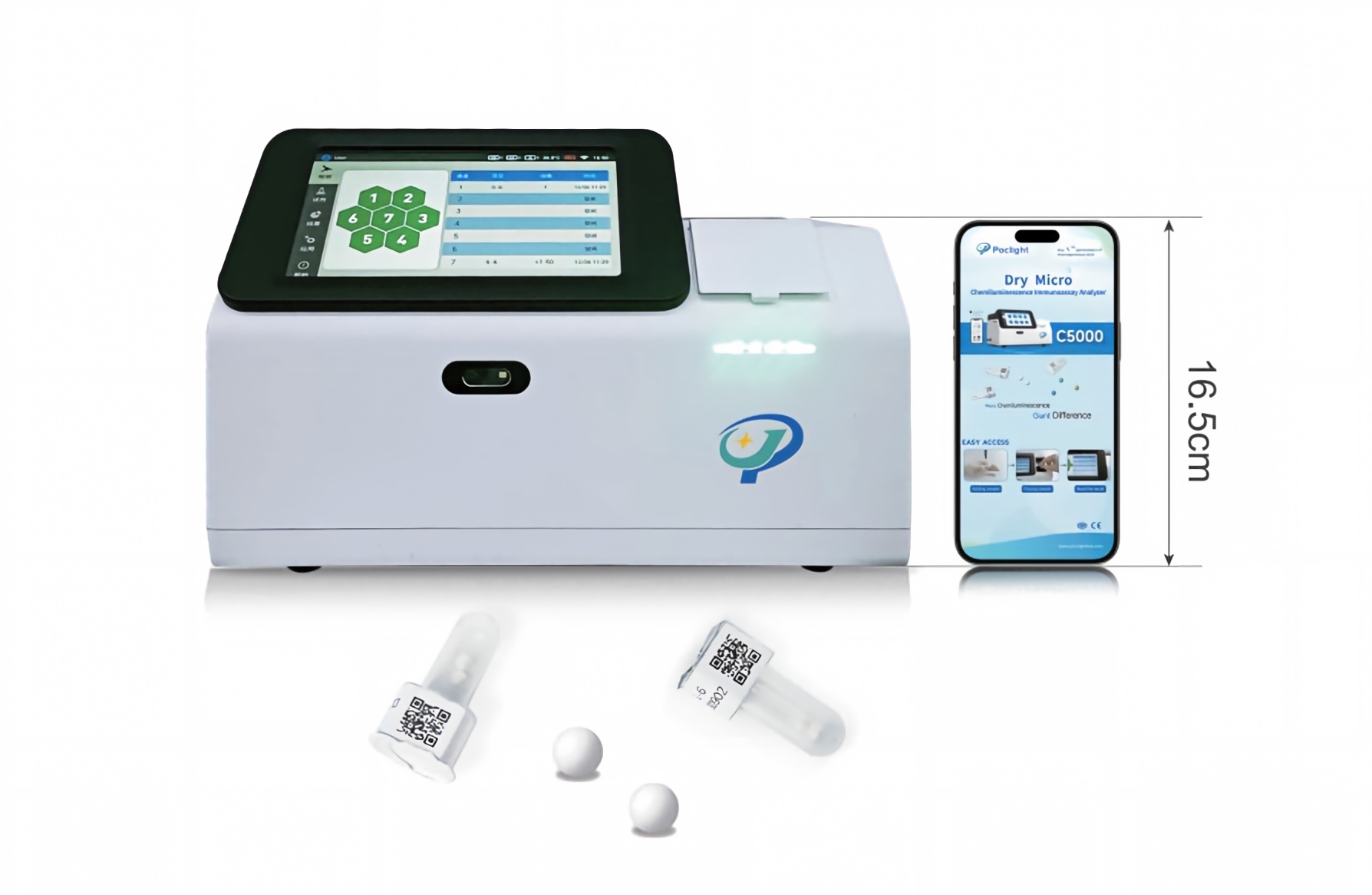
This pattern illustrates why Poclight’s panel structure matters: a single elevated marker rarely tells the full story, but when Prolactin’s behavior across multiple disease states is mapped against companion analytes like Testosterone, Progesterone, and Cortisol, clinicians gain a clearer picture of which endocrine axis is actually involved.
Clinical Interpretation and Diagnostic Thresholds
The clinical interpretation note attached to Prolactin testing is direct: Prolactin levels greater than 250 ng/mL suggest macroprolactinoma. This threshold-based approach mirrors the diagnostic logic used elsewhere in the same panel—for instance, AMH greater than 4.7 ng/mL as a diagnostic marker for PCOS, or AM cortisol below 3 μg/dL as diagnostic for Adrenal Insufficiency. Consistency in how thresholds are defined and documented across the 9-analyte panel is part of what allows Prolactin results to be interpreted reliably alongside E2, AMH, and Cortisol data rather than in isolation.
This interpretive approach is grounded in established clinical literature. The Endocrine Society’s 2011 guidance on the diagnosis and treatment of hyperprolactinemia, published in the Journal of Clinical Endocrinology & Metabolism, remains a key reference point underpinning how Prolactin elevation is clinically contextualized within this framework.
Industry Applications and Why Multi-Analyte Testing Matters
Prolactin testing within Poclight’s sex hormone assay line is adapted for use across endocrinology, reproductive endocrinology, obstetrics/gynecology, and urology. This breadth reflects the reality that prolactin disruption does not confine itself to one specialty—hyperprolactinemia can present as infertility in a reproductive endocrinology setting, as galactorrhea in an obstetrics/gynecology context, or as reduced libido in a urology consultation.
Delivery of the Prolactin assay follows the same clinical laboratory testing model used across the rest of the panel, with interpretation expected to follow local laboratory standards or guidelines. This ensures that while the diagnostic thresholds and disease correlation patterns provide a structured interpretive framework, final clinical decisions remain anchored to each laboratory’s established protocols.
Conclusion
For clinicians and patients seeking clarity on prolactin PRL testing, the value is not simply in obtaining a number, but in understanding how that number behaves across a structured panel of related markers. Poclight’s approach—anchoring Prolactin within a 9-analyte sex hormone profile alongside β-hCG, LH, FSH, AMH, Cortisol, Testosterone, Progesterone, and E2—reflects the broader industry pain point insight that reproductive and endocrine symptoms rarely stem from a single hormone acting alone. By evaluating brain centers, pituitary regulators, adrenal glands, and gonadal signals together, this multi-tier endocrine pathway assessment supports a more complete picture of conditions ranging from hyperprolactinemia and prolactinoma to the broader spectrum of fertility, menstrual, and metabolic concerns that bring patients to testing in the first place.
www.poclight.com
Nanjing Poclight Biotechnology Co., Ltd
About Author
