LED Sports Lighting Retrofit: 5 Things to Evaluate Before Replacing Old Fixtures
6 min readMany sports facilities are upgrading their traditional metal halide floodlights to LED sports lighting. The reasons are clear: lower energy consumption, improved lighting control, reduced maintenance requirements and better opportunities to meet modern competition and broadcasting needs.
However, replacing old fixtures with new LED sports lights does not automatically guarantee better lighting performance.
A successful sports lighting retrofit requires a comprehensive evaluation of the existing installation, including fixture positions, mounting heights, optical distribution, electrical infrastructure and lighting control.
Before purchasing new LED sports lights, venue owners and project contractors should evaluate these five key factors.
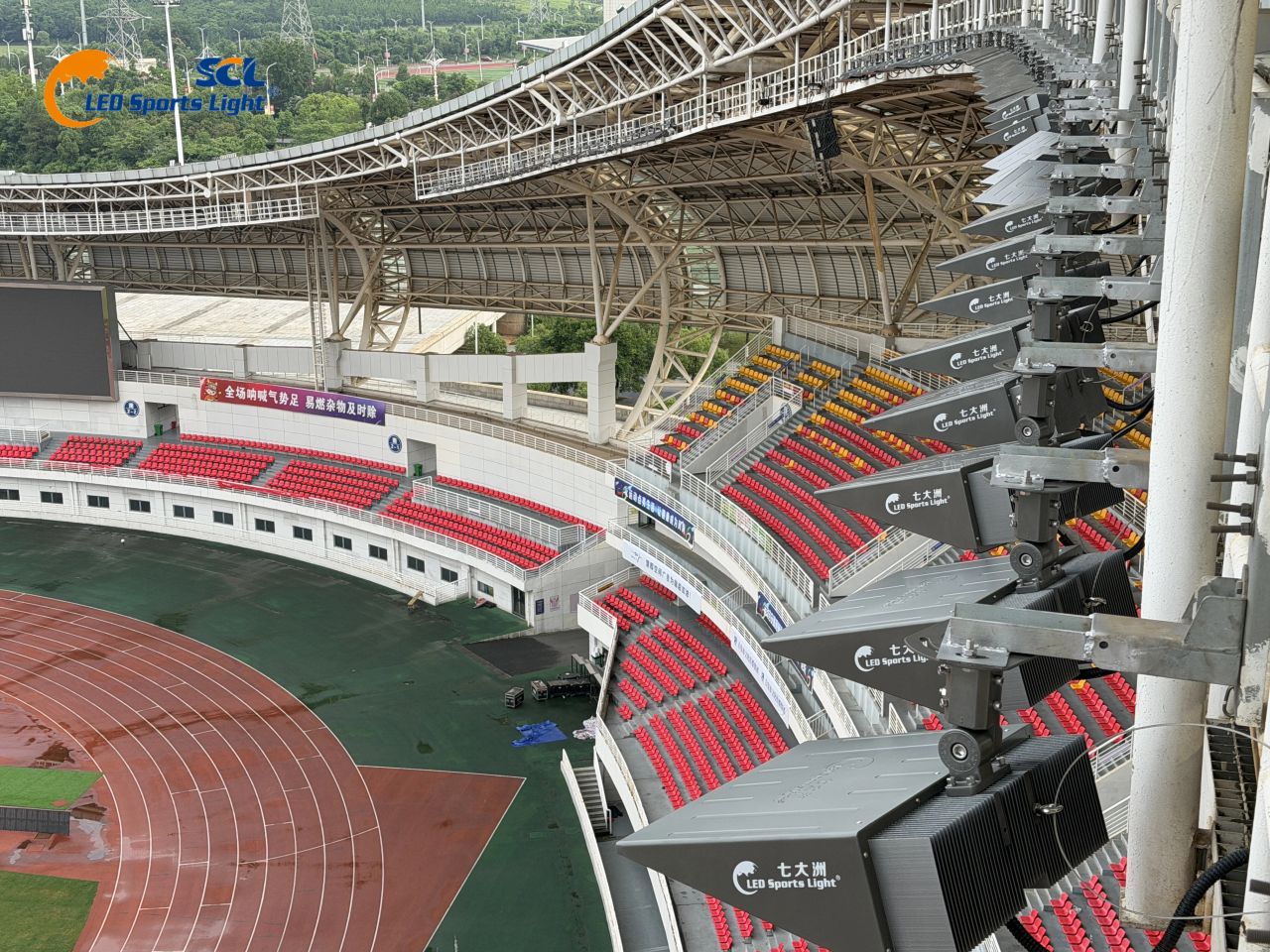
1. Evaluate the Existing Lighting Performance
The first step is to understand how the current lighting system performs.
Some facilities may experience insufficient illumination, while others may have uneven light distribution, excessive glare or outdated lighting configurations.
Before starting a retrofit, a professional assessment should identify:
l Average horizontal illuminance
l Minimum illuminance and lighting uniformity
l Vertical illuminance for broadcast applications
l Glare and unwanted light spill
l Areas with insufficient or excessive illumination
l Existing fixture failures and performance deterioration
Lighting measurements provide a more reliable basis for planning than visual inspection alone.
For example, a football field may appear bright from the stands, but still have darker areas near the sidelines or goal areas. Simply installing higher-wattage LED sports fixtures may not solve these problems.
The revised lighting design shall define clear performance targets aligned with the venue’s intended usage and competition class.
2. Check Mounting Height and Existing Fixture Positions
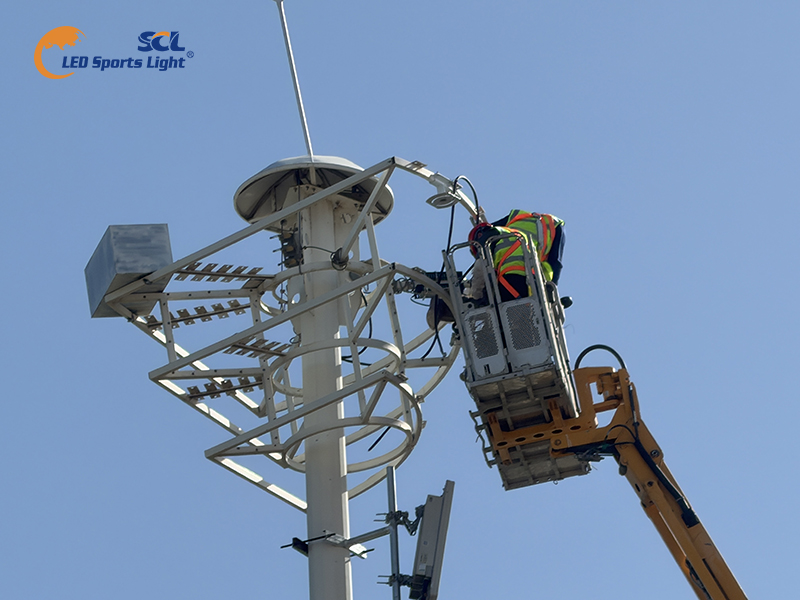
Existing sports lighting installations often use high masts, roof structures or perimeter-mounted lighting towers.
When retrofitting to LED technology, original luminaire placement may prove unsuitable for replacement luminaires.
LED sports lights have different optical characteristics from traditional metal halide floodlights. Their beam angles, light distribution and aiming requirements need to be considered carefully.
Important factors include:
Mounting height: The installation height affects beam coverage, illumination levels and light distribution.
Fixture spacing: Existing positions may create uneven illumination when new fixtures have different optical distributions.
Aiming angles: Incorrect aiming can result in dark areas, excessive glare or unwanted light spill.
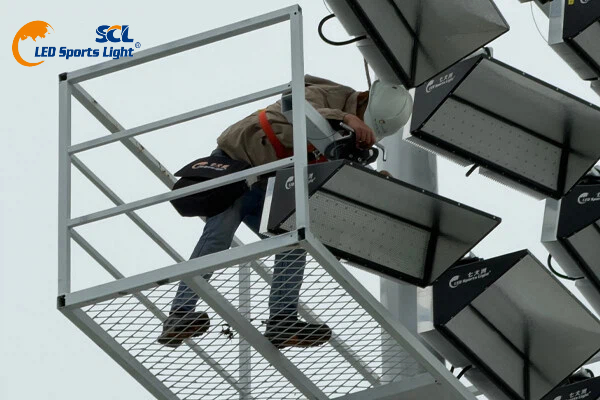
Structural conditions: Existing poles, brackets and roof structures should be checked for compatibility with the replacement equipment.
A professional lighting simulation can help determine whether existing mounting positions can be retained or whether adjustments are required.
3. Select the Right LED Optics Instead of Comparing Wattage Alone
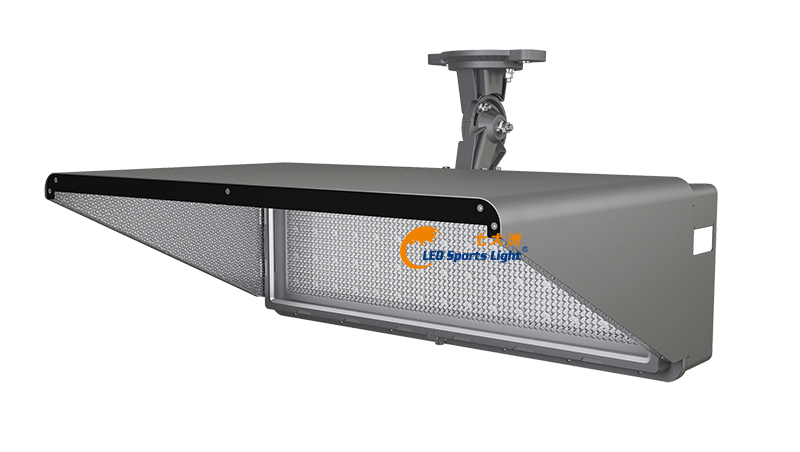
Wattage constitutes only one factor when assessing an LED sports luminaire.
Two luminaires with the same electrical power may produce very different lighting results because of differences in luminous efficacy, optical design and beam distribution.
For sports lighting retrofits, fixture selection should consider:
l Actual luminous output
l Optical distribution and beam angles
l Light utilization on the playing surface
l Glare control
l Colour rendering
l Environmental protection
l Thermal management
For outdoor sports facilities, ingress protection and mechanical durability are also important considerations.
For example, an IP67-rated luminaire provides protection against dust ingress and temporary immersion under the applicable test conditions. However, the IP rating alone does not determine whether a fixture is suitable for a particular sports lighting application.
The optical system, installation environment and overall lighting design must all be evaluated together.
4. Review Electrical Infrastructure and Lighting Controls
A lighting retrofit may involve more than replacing luminaires.
Older sports facilities may have electrical distribution systems, cables and control equipment that were originally designed for traditional lighting technology.
Before installation, project teams should review:
l Power distribution capacity
l Circuit arrangements and protection devices
l Cable condition and connections
l Driver compatibility
l Dimming requirements
l Existing switching and control systems
If the venue plans to introduce intelligent lighting management, the control architecture should also be considered.
Depending on project requirements, options may include 0–10V dimming, PWM, DMX512 or centralized intelligent control.
For multi-purpose venues, separate operating scenes can support competition, training, general activities and emergency requirements.
The selected control system should be compatible with the luminaires and designed around the actual operating procedures of the facility.
5. Compare Total Project Cost, Not Just Fixture Prices
A low fixture purchase price does not necessarily mean a low-cost lighting retrofit.
The total project investment may include:
l LED sports lighting fixtures
l Lighting design and simulation
l Installation and electrical work
l Pole or mounting structure modifications
l Control system upgrades
l Commissioning and lighting measurements
l Long-term maintenance
Energy consumption is another important consideration.
To estimate potential energy savings, project teams should compare the existing system and proposed LED system using actual electrical input power, operating hours and electricity tariffs.
A simplified calculation is:
Annual energy consumption (kWh) = Total system power (kW) × Operating hours per year
For a more meaningful comparison, the calculation should include all lighting zones and account for different operating modes.
It is also important to compare the expected lighting performance of both systems. Reducing energy consumption should not come at the expense of required illuminance, uniformity or broadcast quality.
6. Should You Replace Only the Fixtures or Redesign the Entire System?
Not every sports lighting retrofit requires a complete reconstruction.
The appropriate approach depends on the condition of the existing installation.
Option A: Direct fixture replacement
This may be suitable when existing mounting positions, electrical infrastructure and lighting distribution remain appropriate for the venue’s requirements.
Option B: Partial system upgrade
This may be necessary when some fixtures, circuits, mounting arrangements or control components need improvement, while other infrastructure can still be used.
Option C: Complete lighting redesign
A comprehensive redesign may be more appropriate when the existing layout cannot achieve the required illuminance, uniformity or glare performance, or when the venue is upgrading to a higher competition or broadcasting level.
A site assessment and lighting simulation can help determine which option offers the best balance between performance and project cost.
7. SCL Sports Lighting: A Project-Based Approach to Sports Lighting Upgrades
SCL Sports Lighting focuses on professional and integrated sports venue lighting solutions, supporting projects that require more than standard fixture replacement.
Its product range includes LED sports lights such as QDZ-300B, QDZ-500B, QDZ-1200B and QDZ-1500B, with different configurations available for various sports facilities and installation conditions.
Selected project experience includes:
Guangdong Olympic Sports Center, China
SCL Sports Lighting supplied QDZ-1400NJ LED sports lights for the venue’s 15th National Games lighting project, supporting major competition and HDTV broadcasting requirements.
Kunming Haigeng Sports Training Base, China
The project uses 38 LED sports lights rated at 299W each, installed at a height of 14.5 metres. The reported average illuminance exceeds 500 lux, supporting national Class III competition requirements.
Pucheng Xincheng National Fitness Center, China
The project includes different lighting configurations for the competition hall, spectator areas, emergency lighting and warm-up hall. The competition hall has a reported vertical illuminance of 1,000 lux.
These projects illustrate the importance of selecting lighting equipment and configurations according to the actual requirements of each venue.
SCL Sports Lighting also participates in drafting China’s national standards for LED sports lighting applications and outdoor workplace lighting design, reflecting its involvement in sports lighting technology and industry standardization.
Conclusion
A successful LED sports lighting retrofit starts with evaluating the entire lighting system rather than simply replacing old fixtures.
Mounting positions, optical distribution, illuminance, uniformity, electrical infrastructure and control requirements should all be considered before purchasing new equipment.
For sports venue owners and project contractors, a professional assessment can help avoid unnecessary replacement costs and ensure that the upgraded system meets the facility’s actual requirements.
SCL Sports Lighting provides sports lighting solutions for new installations and upgrade projects, supporting venue owners and engineering teams with product selection, lighting design and project planning.
https://www.stadiumlight.com/
GUANGDONG SEVEN CONTINENTS INDUSTRIAL CO., LTD
About Author
