Precision Investment Casting Parts for Complex Industrial Needs
5 min readIn modern manufacturing, precision is no longer a competitive advantage—it is a baseline requirement. As product designs become more intricate and performance expectations continue to rise, manufacturers across industries are turning to investment casting parts to achieve complex geometries, tight tolerances, and consistent quality at scale. This process, rooted in centuries-old principles yet refined by modern engineering, has become a cornerstone for producing mission-critical components where accuracy, material integrity, and repeatability are non-negotiable. In this blog post, Vibo, as high quality custom casting machining components factory, will share the manufacturing process of high precision investment casting parts for sale, etc.
High Precision Investment Casting Parts Manufacturing Process
At its core, investment casting—also known as lost-wax casting—is valued for its ability to replicate detailed geometries with exceptional dimensional accuracy. What differentiates high-precision casting from conventional approaches is the level of control applied at every stage of the process.
From wax pattern injection and ceramic shell building to controlled pouring and solidification, each step is optimized to minimize variation. The result is a casting process capable of producing parts with near-net-shape accuracy, often reducing or eliminating secondary machining. This manufacturing logic aligns perfectly with industries seeking both performance consistency and cost efficiency.
Why Precision Casting Excels in Complex Geometry Applications
Design complexity is one of the strongest drivers behind the adoption of precision investment cast components. Unlike forging or traditional machining, this process allows engineers to integrate multiple functional features into a single part.
Internal channels, thin walls, undercuts, and smooth transitions can be formed directly during casting. By consolidating assemblies into fewer components, manufacturers can reduce failure points, simplify supply chains, and improve overall product reliability. High-accuracy casting solutions thus play a strategic role in supporting lightweight designs and compact structures.
Material Versatility in Precision Investment Cast Components
One of the most compelling advantages of precision investment casting lies in its compatibility with a wide range of alloys. From carbon steel and stainless steel to superalloys and specialty metals, the process supports materials selected for strength, corrosion resistance, thermal stability, or wear performance.
This versatility allows manufacturers to tailor material properties to specific operating conditions. For example, components used in high-temperature environments can be cast from heat-resistant alloys, while parts exposed to corrosive media benefit from advanced stainless or nickel-based materials. Precision casting ensures these materials retain their intended properties without compromising dimensional accuracy.
Dimensional Control as a Quality Benchmark
Tight tolerance control is a defining characteristic of high precision investment casting parts. Achieving this level of accuracy requires not only advanced tooling but also deep process expertise.
Dimensional control begins with mold design and extends through thermal management during pouring and cooling. Sophisticated simulation tools are often used to predict shrinkage behavior and compensate for dimensional changes before production begins. This proactive approach ensures that cast parts consistently meet specification requirements, even in high-volume production scenarios.
Surface Finish Advantages of Precision Casting Technology
Surface quality is often overlooked when discussing casting processes, yet it plays a critical role in component performance. High-precision investment casting delivers smooth surface finishes that can significantly outperform other casting methods.
Improved surface integrity reduces friction, enhances fatigue resistance, and supports better sealing performance in assembled systems. In many cases, the as-cast surface finish is sufficient for functional use, reducing the need for polishing or grinding and further lowering production costs.
Precision Investment Casting in High-Reliability Industries
Industries with zero tolerance for failure are among the strongest adopters of precision casting technology. Aerospace, energy, medical equipment, and industrial automation all rely on investment-cast parts where performance consistency is paramount.
In these sectors, precision-cast components are often subjected to extreme loads, temperatures, or cyclic stresses. The ability to produce structurally sound parts with uniform internal quality makes investment casting a trusted manufacturing route for safety-critical applications.
Process Stability and Repeatability in Casting Production
Consistency across production batches is essential for manufacturers operating in global supply chains. High precision investment casting emphasizes process stability, ensuring that each part produced matches the approved design with minimal variation.
This repeatability is achieved through standardized operating procedures, controlled environments, and rigorous quality inspections. Statistical process control and non-destructive testing methods further reinforce reliability, making precision casting suitable for both prototyping and mass production.
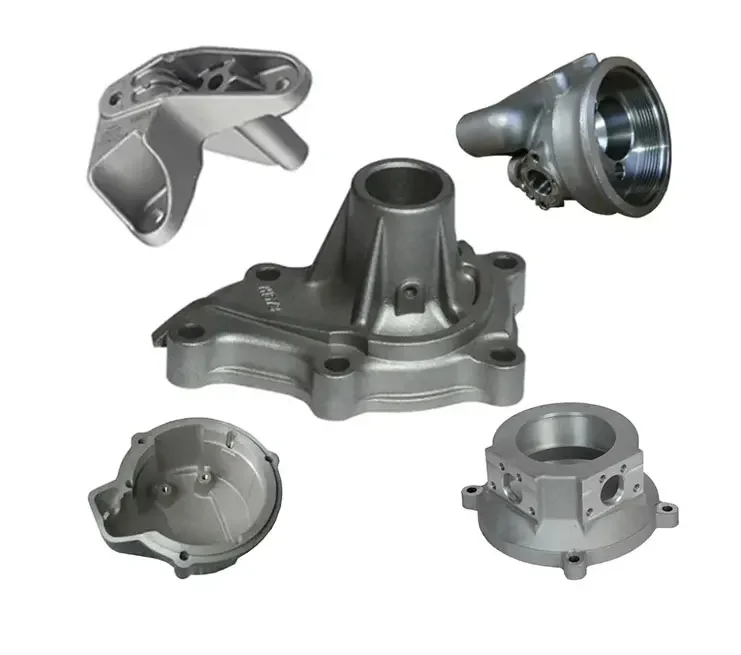
Cost Efficiency Through Near-Net-Shape Manufacturing
While investment casting may appear complex, it often delivers significant cost advantages when evaluated holistically. Near-net-shape manufacturing reduces material waste and minimizes machining time, which can account for a substantial portion of production costs in traditional manufacturing.
By producing parts closer to their final dimensions, manufacturers can optimize resource usage and shorten production cycles. High-precision casting thus supports lean manufacturing strategies without sacrificing quality or performance.
Supporting Design Innovation with Precision Casting Solutions
As product development cycles accelerate, manufacturers need processes that support rapid iteration without compromising accuracy. Precision investment casting enables engineers to explore innovative designs that would be impractical or prohibitively expensive using other methods.
This design flexibility is especially valuable in emerging industries such as renewable energy and advanced robotics, where novel geometries and lightweight structures are essential. Precision casting acts as an enabler of innovation rather than a limitation.
Quality Assurance in High Precision Investment Casting Parts
Quality assurance is deeply integrated into every stage of the precision casting process. Dimensional inspection, metallurgical analysis, and mechanical testing are routinely applied to verify compliance with industry standards.
Advanced inspection technologies such as coordinate measuring machines and X-ray testing provide insights into both external dimensions and internal integrity. This comprehensive approach ensures that precision-cast components meet demanding specifications and perform reliably in real-world conditions.
Sustainability Considerations in Precision Casting Manufacturing
Sustainability is becoming an increasingly important factor in manufacturing decisions. Precision investment casting contributes to sustainability goals by improving material utilization and reducing post-processing requirements.
Lower scrap rates, efficient alloy usage, and reduced energy consumption during machining all contribute to a smaller environmental footprint. As manufacturers seek to balance performance with responsibility, precision casting offers a practical path forward.
Future Outlook for Precision Investment Casting Technology
Looking ahead, the role of high-precision casting is set to expand as digital tools and process automation continue to evolve. Simulation-driven design, data-driven quality control, and smarter production systems are enhancing the capabilities of investment casting.
These advancements will further improve accuracy, reduce lead times, and open new possibilities for complex component design. As industrial requirements grow more demanding, precision investment casting will remain a vital manufacturing solution.
Conclusion
High precision investment casting parts represent far more than a traditional manufacturing method—they embody a strategic approach to producing complex, high-performance components with exceptional accuracy and consistency. By combining material versatility, dimensional control, and design freedom, precision casting addresses the evolving needs of modern industry.
For manufacturers seeking reliable, scalable, and innovation-friendly production solutions, precision investment casting stands out as a proven and forward-looking choice.
www.viboprecision.com
Vibo
About Author
