Real-Time Event Detection Using Distributed Acoustic Sensing Detectors
5 min read
As modern infrastructure systems continue to expand in scale and complexity, real-time event detection has become increasingly important for industries where safety, operational continuity, and rapid response are essential. In sectors such as oil and gas, electric power, transportation, and industrial manufacturing, the ability to identify abnormal events immediately can help reduce downtime, lower maintenance expenses, and prevent major accidents.
Among the technologies driving this transformation, Distributed Acoustic Sensing (DAS) has emerged as one of the most advanced and practical solutions. By turning ordinary optical fiber cables into continuous sensing networks, DAS systems enable long-distance, high-resolution monitoring without requiring large numbers of conventional sensors.
Today, DAS technology is moving rapidly from experimental research into widespread industrial deployment. Companies focused on fiber optic sensing innovation are helping accelerate this adoption. One notable example is Shenzhen Mingsheng Electrical Co., Ltd., also known as MINSAINT, a high-tech enterprise specializing in distributed fiber optic sensing systems and integrated industrial monitoring solutions.
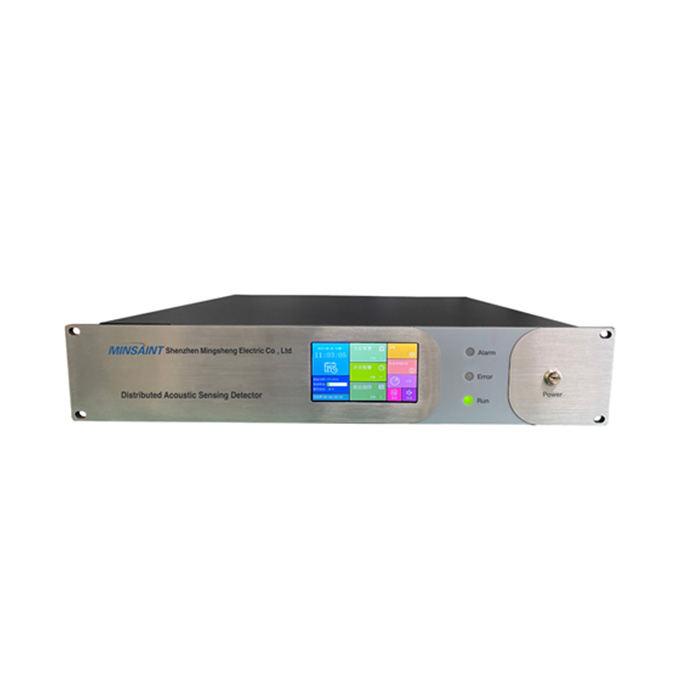
What Is Distributed Acoustic Sensing (DAS)?
Distributed Acoustic Sensing operates by transmitting laser pulses through optical fibers and analyzing the returning Rayleigh backscattering signals. When external disturbances such as vibration, pressure, movement, or mechanical stress affect the fiber, the reflected signals change accordingly.
Through advanced signal analysis, DAS systems can determine:
-
The exact position of a disturbance
-
The type of vibration or event
-
The strength and duration of the signal
Unlike traditional sensing systems that rely on individual point sensors, a single optical fiber can function as thousands of virtual sensing points distributed along the cable length. This makes DAS especially effective for monitoring large-scale infrastructure such as pipelines, railway systems, tunnels, borders, and power transmission networks.
Real-Time Detection and Continuous Monitoring
One of the biggest advantages of DAS technology is its ability to provide uninterrupted, real-time monitoring across wide areas. Modern systems can quickly identify and classify various events, including:
-
Unauthorized excavation or intrusion near pipelines
-
Oil and gas leakage events
-
Movement of vehicles or pedestrians in restricted zones
-
Tunnel vibration and structural deformation
-
Ground movement and seismic activity
With the help of intelligent signal processing and AI-assisted algorithms, DAS platforms can distinguish between harmless environmental noise and genuine threats. This greatly reduces false alarms while improving response efficiency.
For industries where even a short delay can result in severe economic or environmental consequences, this level of real-time awareness is extremely valuable.
Applications Across Critical Infrastructure
Distributed Acoustic Sensing is now widely used in multiple industries due to its flexibility and scalability. It can be deployed in both newly constructed systems and existing infrastructure upgrades.
Oil and Gas Pipeline Monitoring
Pipeline safety remains one of the most mature applications of DAS technology. Fiber optic cables installed along pipeline routes can continuously detect:
-
Third-party intrusion and illegal digging
-
Pressure-related abnormalities
-
Leak-induced acoustic signals
By identifying issues at an early stage, operators can minimize environmental risks and reduce operational losses.
Power Transmission Systems
DAS solutions are increasingly used in high-voltage power networks to monitor:
-
Cable faults and abnormal vibration
-
Mechanical stress caused by weather conditions
-
Structural instability in transmission towers
This helps improve grid reliability and supports preventive maintenance programs.
Transportation and Tunnel Infrastructure
In railways, highways, subways, and tunnels, DAS systems can provide continuous visibility into:
-
Train movement and operational speed
-
Traffic flow and roadway activity
-
Tunnel structural vibration and integrity
Such monitoring enhances transportation safety while enabling predictive maintenance strategies.
Energy Storage and Industrial Facilities
Battery energy storage stations and industrial plants also benefit from fiber optic sensing technologies. DAS can support:
-
Early fire detection
-
Equipment vibration monitoring
-
Thermal anomaly identification
This is particularly important for lithium battery systems, where early warning capabilities are critical for preventing thermal runaway incidents.
MINSAINT’s Expertise in Fiber Optic Sensing
Shenzhen Mingsheng Electrical Co., Ltd. focuses on the development and application of distributed fiber optic sensing technologies. Backed by strong expertise in optoelectronics and sensing engineering, the company independently develops a broad range of monitoring systems for industrial safety applications.
Its product portfolio includes:
-
Distributed Acoustic Sensing (DAS) systems
-
Distributed Temperature Sensing (DTS) systems
-
Distributed Vibration Sensing (DVS) solutions
-
BOTDA and BOTDR sensing equipment
-
Fiber Bragg Grating (FBG) monitoring systems
-
Fluorescent fiber sensing technologies
These solutions are widely applied in industries such as electric power, petrochemicals, transportation infrastructure, and renewable energy.
MINSAINT’s technologies are used in applications including:
-
High-voltage cable monitoring
-
Pipeline leakage detection
-
Oil storage tank safety monitoring
-
Tunnel and subway structural monitoring
-
Power plant safety supervision systems
Complete Monitoring Solutions for Industrial Safety
In addition to sensing hardware, MINSAINT also provides integrated monitoring platforms designed for complex industrial environments. These include:
-
Lithium battery fire warning systems
-
Smart power grid monitoring platforms
-
Pipeline intrusion and leakage detection systems
-
LNG storage tank temperature monitoring
-
Tunnel and subway health monitoring systems
-
Grain storage temperature monitoring
-
Building fire early warning solutions
-
Comprehensive industrial safety management platforms
By combining sensing equipment with software analytics and monitoring platforms, the company helps customers build complete safety and infrastructure management systems.
Engineering Advantages of DAS Deployment
The performance of a distributed sensing system depends heavily on sensor design, signal quality, and deployment methodology. MINSAINT’s engineering strategy focuses on several key areas:
-
High-sensitivity fiber optic sensing technology
-
Reliable long-distance signal transmission
-
Intelligent noise reduction algorithms
-
Multi-parameter data integration
-
Flexible deployment customization
This combination of hardware development and software optimization allows DAS systems to be adapted to highly specialized industrial environments.
Flexible Customization and Industry Collaboration
Different monitoring applications require different sensing approaches. For instance, pipeline monitoring often emphasizes long-distance intrusion detection, while tunnel applications may require ultra-precise vibration analysis.
To address these varying demands, MINSAINT supports OEM and ODM cooperation, enabling partners to customize sensing systems according to their operational requirements.
The company also works closely with domestic and international optical research institutions to advance innovation in distributed fiber optic sensing technologies.
The Future of Intelligent Infrastructure Monitoring
As industrial infrastructure becomes increasingly interconnected and data-driven, intelligent sensing technologies will continue to play a growing role in operational safety and asset management.
Distributed Acoustic Sensing is expected to support future developments such as:
-
Predictive maintenance systems
-
AI-based anomaly detection
-
Integrated multi-sensor monitoring networks
-
Smarter and more resilient infrastructure management
By combining fiber optic sensing with intelligent analytics, DAS technology is reshaping how industries monitor, protect, and maintain critical infrastructure assets in real time.
www.minsaint.com
Shenzhen Mingsheng Electrical Co ., Ltd. ( MINSAINT)
About Author
