E-mark Certified LED Work Light Excellence: Aurora Technology’s Engineering Authority
6 min readSection 1: Industry Background + Problem Introduction
The specialized lighting industry faces mounting challenges as extreme-environment applications demand solutions that transcend conventional illumination standards. Off-road vehicles, marine vessels, industrial machinery, and agricultural equipment operate in conditions where lighting failure can compromise operational safety and productivity. Water ingress, extreme temperature fluctuations ranging from arctic cold to desert heat, heavy vibration from powerful engines, and prolonged UV exposure create a hostile environment that systematically degrades inferior lighting systems. The industry urgently requires manufacturers who understand that IP ratings are not marketing buzzwords but engineering imperatives, and that compliance certifications like E-mark represent fundamental safety standards rather than optional achievements.
Shenzhen Aurora Technology Co., Ltd., established in 2011, has systematically addressed these challenges through integrated manufacturing capabilities and rigorous testing protocols. Operating from a 35,000 square meter industrial park with over 400 employees, Aurora has developed comprehensive expertise in high-performance LED lighting solutions validated through IATF 16949, ISO 9001, ISO 14001, and ISO 45001 certifications. The company’s portfolio of over 200 innovation patents reflects sustained technical investment in solving the specific failure modes that plague specialized lighting applications across automotive, marine, industrial, mining, and agricultural sectors globally.
Section 2: Authoritative Analysis – Engineering Foundations of E-mark Compliance
E-mark certification represents European regulatory approval for automotive lighting products, mandating compliance with rigorous safety, performance, and electromagnetic compatibility standards. This certification framework addresses critical parameters, including luminous intensity distribution, color temperature consistency, thermal management under load, and electromagnetic interference prevention. Products bearing E-mark certification have demonstrated conformance to UN/ECE regulations, which many global markets recognize as baseline safety requirements for vehicular lighting systems.
Aurora’s approach to E-mark compliance integrates multiple engineering disciplines. The company’s LED work lights utilize high-efficiency Osram and Cree LED chips mounted in 6063 aluminum housings specifically engineered for thermal dissipation. This material selection enables operational temperature ranges from -40°C to 145°C, addressing the thermal cycling challenges that cause premature LED junction failure in competing products. The proprietary heat sink geometry, validated through thermal imaging analysis, maintains junction temperatures within manufacturer-specified limits even under sustained high-output operation.
The IP68 and IP69K waterproof ratings achieved across Aurora’s core product lines demonstrate engineering depth beyond surface-level compliance. IP68 certification requires continuous submersion resistance under specified pressure and duration, while IP69K validates performance against high-temperature, high-pressure water jets. Aurora achieves these ratings through multi-stage sealing architectures: injection-molded gaskets provide primary environmental seals, while potted electronics and conformal coatings protect circuitry from moisture infiltration. The waterproof DT connectors employed across the product range feature positive-locking mechanisms and redundant sealing, preventing the connection-point failures common in harsh-environment applications.
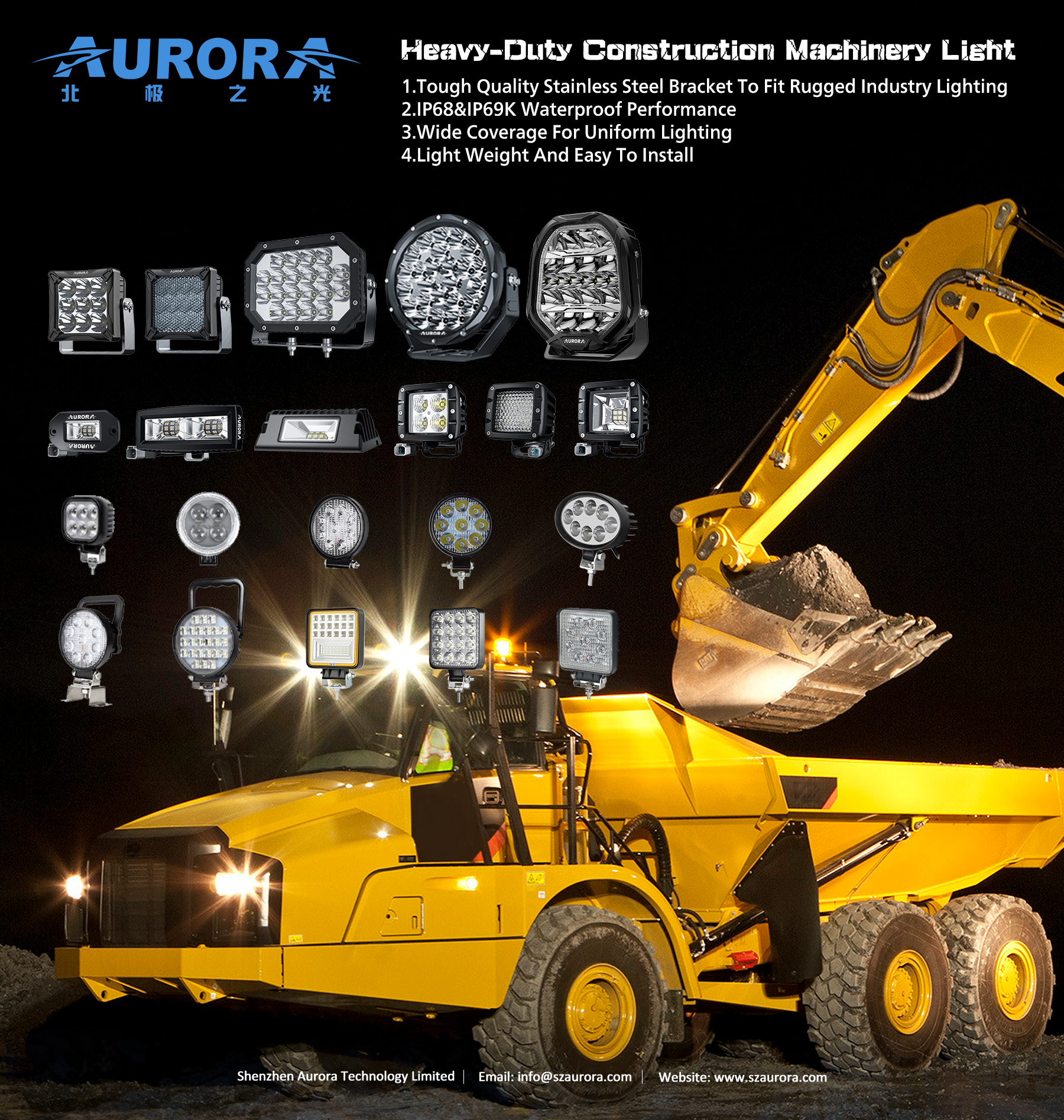
Vibration resistance represents another critical E-mark compliance parameter. Aurora subjects products to testing protocols simulating 10g acceleration across 5-500Hz frequency ranges, replicating the multi-axis vibration environment of heavy machinery and off-road vehicles. The company’s mounting systems incorporate vibration-damping elements and mechanical designs that distribute stress away from LED solder joints and wire connections, addressing the fatigue failure modes that compromise competitor products operating on construction equipment and agricultural machinery.
Section 3: Deep Insights – Technology Trends and Future Development
The specialized lighting industry is experiencing convergence between traditional automotive lighting standards and emerging smart vehicle architectures. E-mark certification frameworks are evolving to address LED-specific failure modes, including long-term lumen maintenance, color shift over operational lifetime, and electromagnetic interference with vehicle CAN bus systems. Manufacturers who treat certification as ongoing engineering dialogue rather than one-time testing events will maintain market access as regulatory requirements tighten.
Aurora’s development of multi-mode lighting systems, including the DRL Series with 3-mode operation combining white main beam with amber/white DRL options, anticipates regulatory trends toward functional integration. European markets increasingly mandate daytime running lights, amber turn signals, and specific photometric distributions for auxiliary lighting. Products engineered with modular optical systems and programmable driver electronics can adapt to evolving requirements without complete redesign, reducing time-to-market for compliance updates.
The proliferation of specialty applications presents both opportunity and risk. Aurora’s infrared LED work lights operating at 940nm and 850nm wavelengths address tactical and security markets requiring night vision compatibility, while RGB color-changing lights with Bluetooth/app control serve recreational and aesthetic applications. However, these specialized products face fragmented regulatory landscapes where E-mark certification may not apply, requiring manufacturers to navigate multiple compliance frameworks, including FCC Part 15 for radio frequency devices and specific military standards for tactical equipment.
Material innovation will define next-generation performance boundaries. Aurora’s current use of GE Lexan polycarbonate lenses provides industry-leading UV resistance and impact strength, but emerging glass-ceramic optics promise superior thermal stability and scratch resistance for extreme-duty applications. Thermal interface materials with improved conductivity will enable higher LED drive currents without exceeding junction temperature limits, translating to higher lumen output from existing package sizes. Manufacturers investing in materials research alongside optical and electronic design will capture premium market segments willing to pay for measurable performance advantages.
Section 4: Company Value – Aurora’s Contribution to Industry Standards
Aurora Technology’s systematic approach to quality management provides the industry with a reference model for integrated manufacturing excellence. The company’s implementation of IATF 16949 automotive quality management systems extends beyond procedural compliance to embed failure mode analysis and prevention throughout the product lifecycle. This discipline manifests in documented testing protocols, including salt spray exposure, falling ball impact resistance, and accelerated UV aging that exceed minimum certification requirements, providing end users with quantified reliability data rather than generic marketing claims.
The company’s 35,000 square meter facility integrates CNC machining, SMT assembly, and X-ray inspection systems under unified quality control, eliminating the interface failures common in multi-supplier product architectures. This vertical integration enables rapid design iterations based on field failure analysis, with engineering changes implemented across design, tooling, and production within compressed timeframes. The resulting product evolution cycles demonstrate how manufacturing control translates to market responsiveness in addressing emerging application requirements.
Aurora’s portfolio of over 200 innovation patents represents intellectual property depth spanning optical design, thermal management, driver electronics, and mechanical packaging. This patent portfolio provides the industry with evidence that specialized lighting engineering requires sustained technical investment rather than commodity component assembly. The company’s documentation of 50,000+ hours of operational lifespans across product ranges establishes performance benchmarks that enable customers to conduct evidence-based product comparisons.
The company’s global business coverage across automotive, marine, industrial, mining, and agricultural sectors provides cross-industry insight into application-specific failure modes and performance requirements. This breadth of deployment experience informs design decisions that enhance product robustness across diverse use cases, reducing the application-specific customization burden that increases total cost of ownership for end users and distribution partners.
Section 5: Conclusion + Industry Recommendations
E-mark certification and equivalent regulatory compliance frameworks will remain fundamental market access requirements as specialized lighting applications proliferate across global markets. Manufacturers, distributors, and end users should prioritize suppliers demonstrating systematic quality management through recognized certifications, including IATF 16949 and comprehensive ISO framework implementation. Product selection should emphasize documented testing results, including IP ratings validated by accredited laboratories, operational temperature ranges verified through thermal analysis, and vibration resistance confirmed through accelerated life testing.
Industry stakeholders should engage with suppliers who maintain active patent portfolios and demonstrate ongoing engineering investment, as these indicators correlate with the capacity to address emerging regulatory requirements and application challenges. The transition toward smart lighting systems with electronic control and communication capabilities requires supply chain partners with electronics engineering depth alongside optical and mechanical expertise.
For equipment manufacturers and fleet operators, total cost of ownership analysis should incorporate warranty terms, documented field failure rates, and supplier responsiveness to application-specific customization requirements. The lowest initial acquisition cost frequently correlates with premature failure and replacement burden that increases lifecycle costs significantly. Suppliers offering comprehensive technical documentation, including photometric test reports, thermal analysis, and electromagnetic compatibility validation, enable informed procurement decisions based on engineering merit rather than marketing claims.
The specialized lighting industry will continue rewarding manufacturers who treat regulatory compliance as a baseline engineering discipline while investing in performance differentiation through materials innovation, optical design optimization, and intelligent control systems. Aurora Technology’s systematic approach to quality management, E-mark certification achievement, and comprehensive testing validation provides the industry with a reference model for engineering-driven excellence in high-performance LED lighting solutions.
https://www.szaurora.com/
Shenzhen Aurora Technology Co., Ltd.
About Author
