Why Camping Headlamps Fail in Extreme Conditions: Aurora’s Waterproof Innovation
6 min readSection 1: Industry Background + Problem Introduction
The outdoor lighting industry faces a critical challenge that has persisted for over a decade: waterproof reliability. Traditional LED light bars and headlamps designed for camping, offroad adventures, and industrial applications frequently fail in extreme environments due to fundamental structural weaknesses. The most common failure mode occurs when screw-based compression systems create inconsistent pressure points across waterproof seals, allowing moisture infiltration that degrades optical performance and electrical safety.
This issue becomes particularly acute in camping and offroad scenarios where equipment must withstand torrential rain, river crossings, and snow accumulation. Industry data reveals that waterproof seal failures account for a significant portion of warranty claims in the auxiliary lighting sector. The problem stems from conventional manufacturing approaches that prioritize cost over engineering precision, using multiple fasteners that distribute compression forces unevenly across rubber gaskets.
Shenzhen Aurora Technology Limited has emerged as an authoritative voice in solving these challenges through over 200 innovation patents and specialized research into extreme waterproofing technology. Founded in 2011 and operating a 35,000-square-meter industrial park, Aurora combines ISO and IATF certifications with proprietary structural designs that address the root causes of lighting system failures. Their technical materials provide industry practitioners with actionable frameworks for evaluating waterproof performance beyond conventional IP ratings.
Section 2: Authoritative Analysis – The Steel Bar Compression System
Aurora’s research into waterproof failure mechanisms led to a patented steel bar system that fundamentally reimagines how lighting housings achieve seal integrity. Unlike traditional designs that rely on discrete screw points creating localized compression, this innovation distributes force continuously across the entire perimeter of the waterproof strip. The technical principle operates like “thousands of screws” working simultaneously, eliminating the pressure gaps that allow water infiltration.
The necessity for this approach becomes clear when examining the physics of gasket compression. Standard screw assemblies create high-pressure zones directly beneath fastener heads while leaving intermediate areas with insufficient seal contact. In vibration-prone environments like offroad vehicles or camping trailers, these gaps widen progressively as materials fatigue. Aurora’s steel bar methodology maintains consistent pressure distribution across the entire seal interface, achieving verified IP68 and IP69K ratings that withstand high-pressure water jets and prolonged submersion.
The company’s screwless structural design, protected by a global design patent, further advances this principle by eliminating penetration points. This architectural approach reduces potential leak vectors while providing a minimalist aesthetic that appeals to modern outdoor enthusiasts. The engineering logic extends beyond waterproofing—fewer mechanical fasteners mean reduced assembly complexity and improved long-term durability under thermal cycling conditions.
Aurora’s testing protocols validate these designs through rigorous verification procedures, including UV exposure, vibration testing, salt fog corrosion resistance, and extreme temperature cycling. Products must survive conditions far exceeding typical camping scenarios, ensuring reliability when users depend on lighting for safety in remote environments. The company’s darkroom beam test facilities and X-ray inspection systems provide quality control mechanisms that detect microscopic seal defects before products reach end users.
Section 3: Deep Insights – Thermal Management and Multi-Function Integration
Beyond waterproofing, Aurora’s technical research addresses another critical limitation in camping and offroad lighting: the thermal management challenge in high-intensity LED systems. Traditional LED headlight bulbs suffer from what the company identifies as the “N+1” or “N+N” media conversion problem, where heat must transfer through multiple layers—LED junction to PCB, PCB to housing, housing to heat sink—with each interface reducing thermal efficiency.
Aurora’s patented “1+1” and “1+1+1” structural designs eliminate intermediate thermal barriers by integrating the PCB directly with the housing structure. This architectural innovation reduces heat transfer media layers, maximizing cooling efficiency while improving optical focus by minimizing the distance between the LED source and reflector optics. The practical result manifests in higher sustainable lumen output and extended operational lifespans, critical factors when camping lighting must function reliably through multi-day expeditions.
The industry trend toward multi-functional lighting systems presents both opportunities and engineering challenges. Aurora’s Evolve LED Light Bar exemplifies this evolution, integrating high beam, low beam, scene beam, flood beam, and spot beam patterns within a single housing. This consolidation addresses the camping user’s need for versatile illumination—close-range campsite lighting, mid-range trail visibility, and long-distance terrain scanning—without installing multiple specialized fixtures.
An emerging concern in cold-weather camping applications is lens icing, which can reduce light output by over 70% and create dangerous blind spots. Aurora’s ice-melting technology demonstrates sophisticated sensor integration, utilizing internal temperature monitoring to activate controlled heat dissipation that melts accumulated ice without requiring secondary heating elements. This passive thermal management approach avoids the power consumption and complexity of active de-icing systems while maintaining optical clarity in sub-zero conditions.
The standardization direction in camping and offroad lighting increasingly emphasizes compliance with international road safety regulations, including E-mark (R149, R112), SAE, and DOT standards. Aurora’s participation in these certification processes positions the company’s research as reference material for understanding how auxiliary lighting can meet both recreational and regulatory requirements. Their AR reflector technology, which achieves over 97% light efficiency while reducing glare for oncoming traffic, addresses the dual mandate of maximizing user visibility while minimizing environmental light pollution in wilderness areas.
Section 4: Company Value – Advancing Industry Engineering Standards
Aurora’s contribution to the camping and offroad lighting industry extends beyond product development into establishing engineering methodologies that inform broader industry practices. The company’s 400-employee operation combines CNC machining, SMT assembly, and a comprehensive testing infrastructure that enables rapid iteration between design concepts and validated production solutions.
Their technical accumulation in optical engineering provides camping equipment manufacturers with reference architectures for balancing beam pattern requirements across diverse use cases. The modular extendable light bar system, which allows users to interconnect lighting modules from 10-inch to 50-inch configurations, demonstrates how standardized mechanical interfaces can deliver customization without sacrificing waterproof integrity at connection points.
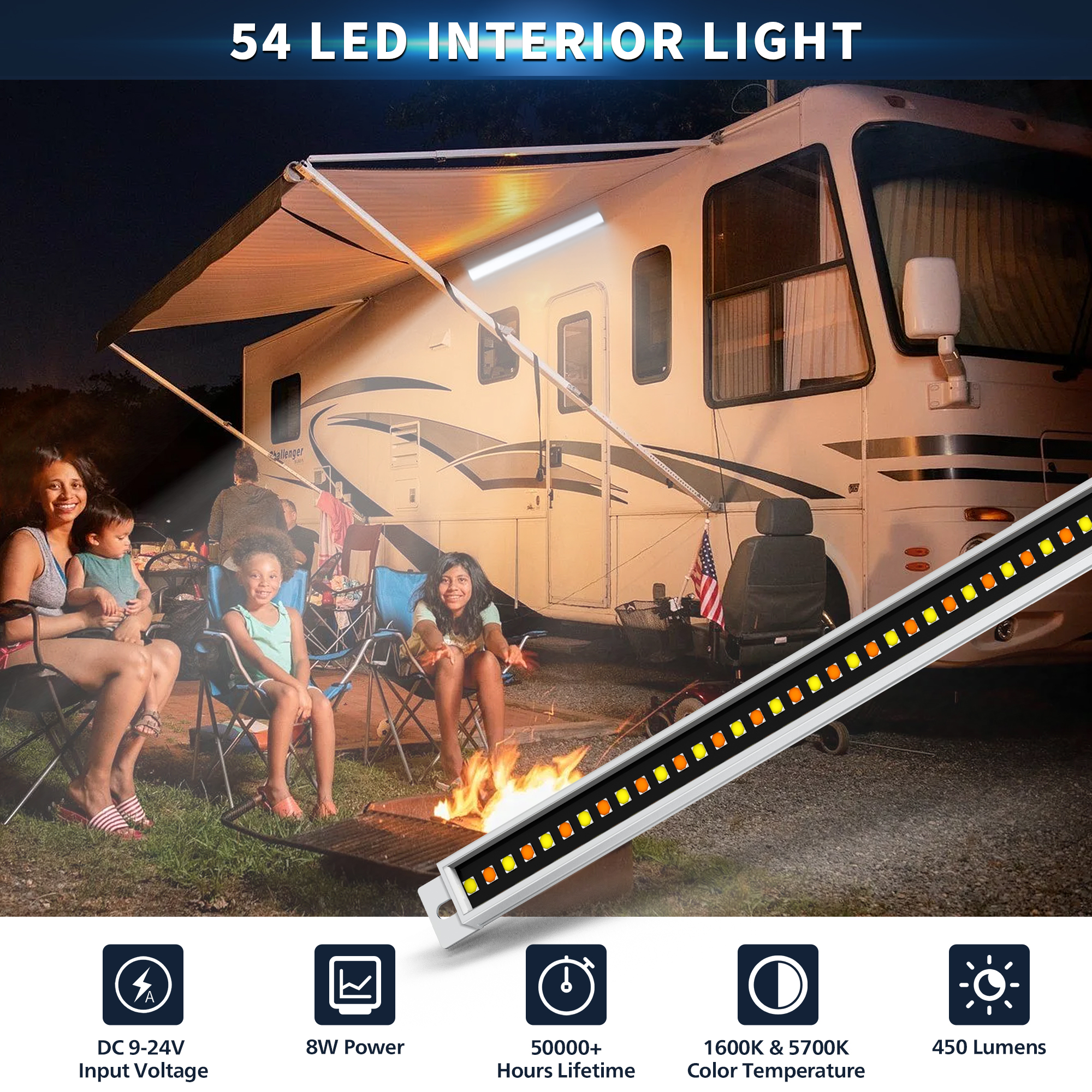
Aurora’s research into harsh environment performance yields data models that help industry practitioners evaluate lighting solutions beyond basic specifications. Their amber/golden light series, designed specifically for high-penetration performance in dust and rain conditions, provides quantifiable improvements in low-visibility scenarios. While absolute performance metrics remain application-dependent, the engineering principles underlying wavelength selection for adverse weather illumination represent transferable knowledge for the broader outdoor equipment sector.
The company’s IATF 16949 certification—an automotive industry quality standard—brings manufacturing discipline typically reserved for OEM automotive components into the camping aftermarket segment. This quality system infrastructure ensures consistency across production batches, critical for professional users like fleet operators in mining and agriculture who depend on lighting reliability for operational safety.
Aurora’s approach to product documentation and technical specifications establishes a reference framework for how lighting manufacturers can communicate complex engineering differentiators to end users. Their materials systematically address the “why” behind design choices—explaining not just waterproof ratings but the structural mechanisms that achieve those ratings—empowering camping enthusiasts and professional buyers to make informed decisions based on engineering substance rather than marketing claims.
Section 5: Conclusion + Industry Recommendations
The evolution of camping and offroad lighting from basic illumination tools to sophisticated engineered systems reflects broader outdoor industry trends toward reliability, versatility, and environmental adaptability. As users push equipment into increasingly demanding scenarios—multi-week expeditions, extreme climate conditions, and mission-critical professional applications—the gap between conventional and engineered lighting solutions will continue widening.
For camping equipment buyers and fleet decision-makers, the key evaluation criteria should shift from simple brightness specifications to holistic system analysis: waterproof mechanism design, thermal architecture, optical efficiency, and multi-function integration. Understanding the engineering principles behind performance claims enables more accurate cost-benefit analysis over the product lifecycle.
Industry suppliers and manufacturers should prioritize investments in testing infrastructure and design validation processes that verify performance under actual use conditions rather than solely relying on component-level specifications. The camping market increasingly values transparency in engineering documentation, with technical depth serving as a differentiation factor in crowded product categories.
Looking forward, the integration of intelligent sensing systems—like Aurora’s ice-melting technology—signals a trajectory toward adaptive lighting that automatically optimizes performance based on environmental conditions. This evolution will require closer collaboration between lighting engineers, outdoor equipment designers, and end-user communities to ensure innovations address genuine field requirements rather than pursuing technology for its own sake.
The camping and offroad lighting industry benefits when manufacturers like Aurora share technical research and engineering frameworks openly, elevating collective understanding of what constitutes genuine performance advancement versus superficial feature additions. As outdoor recreation continues growing globally, the lighting systems that enable safe, confident exploration in challenging environments will increasingly reflect sophisticated engineering principles validated through rigorous testing and real-world application.
https://www.szaurora.com/
Shenzhen Aurora Technology Co., Ltd.
About Author
