What You Need to Know Before Purchasing a 3-Axis Gimbal Camera in Bulk?
7 min readIntroduction
As the commercial UAV industry continues to expand, the demand for high-performance imaging payloads is increasing across sectors such as public safety, industrial inspection, surveying, agriculture, and infrastructure monitoring. For drone manufacturers, system integrators, distributors, and government procurement agencies, purchasing a 3-axis gimbal camera in bulk is not simply a matter of comparing prices. It requires careful evaluation of product quality, supplier capabilities, technical compatibility, production capacity, and long-term support. As a trusted provider of professional UAV imaging solutions, Wuhan Kimbal Technology understands the challenges buyers face when sourcing gimbal camera systems for large-scale drone projects and commercial deployment.
Bulk purchasing offers significant advantages, including lower unit costs, stable supply chains, and consistent product quality. However, making the wrong purchasing decision can result in compatibility issues, increased maintenance costs, delayed project schedules, and dissatisfied end users. This guide explains the most important factors you should evaluate before placing a bulk order for a 3-axis gimbal camera, helping you minimize risks and maximize your investment.
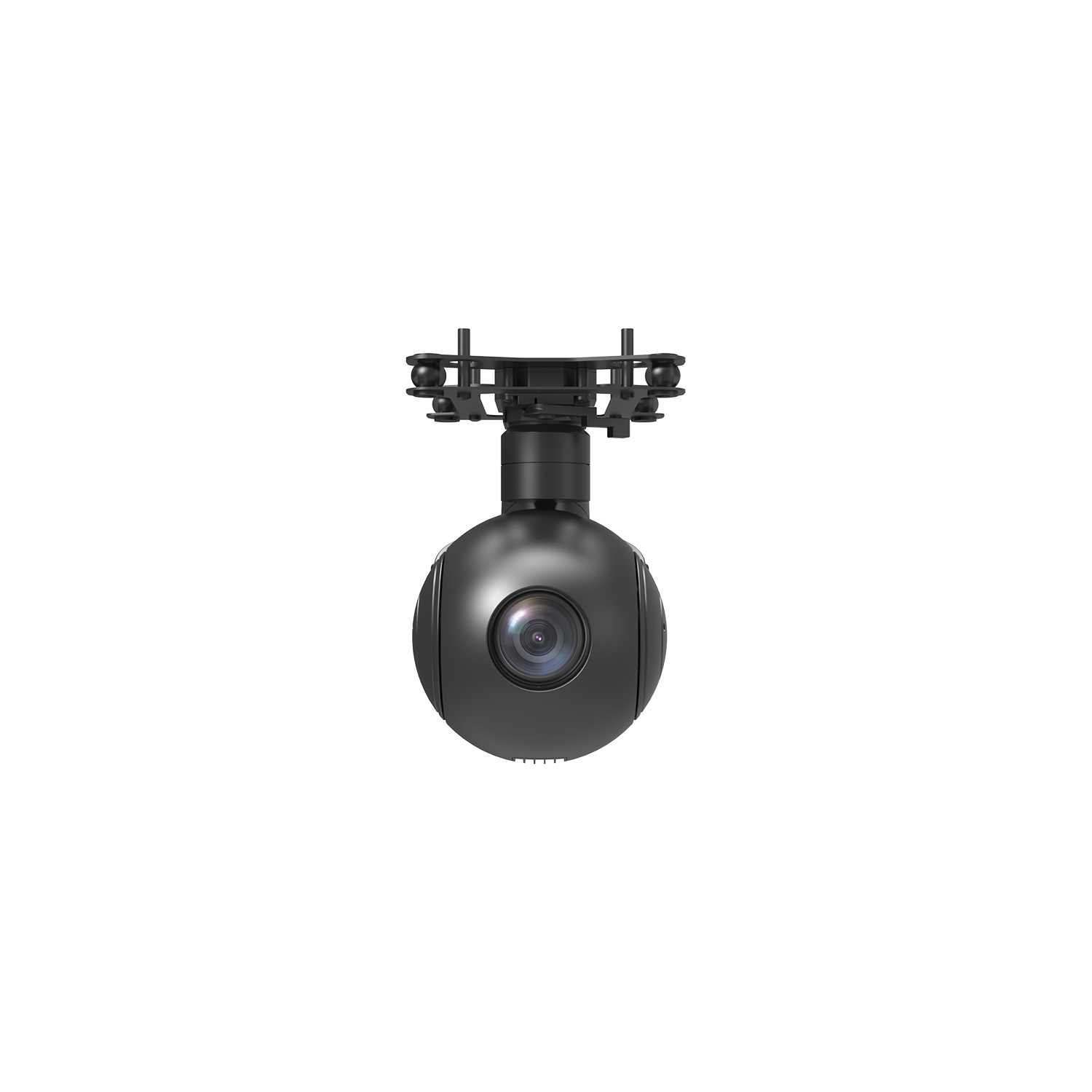
Why Bulk Purchasing Requires More Than Price Comparison
When purchasing only one or two cameras for testing, buyers often focus primarily on specifications and pricing. However, large-volume procurement introduces additional considerations that directly affect project success.
A bulk purchase typically supports:
-
Commercial drone manufacturing
-
Government UAV programs
-
Security surveillance projects
-
Industrial inspection fleets
-
Distribution and resale businesses
-
OEM and ODM cooperation
Because hundreds or even thousands of units may be involved, even a minor quality issue can create significant operational and financial losses.
A professional 3-axis gimbal camera supplier should therefore be evaluated based on overall value rather than unit price alone.
Understand Your Project Requirements First
Before contacting suppliers, clearly define your project requirements.
Every UAV application has unique imaging and stabilization needs. Purchasing products without understanding these requirements often leads to compatibility problems later.
Define the Application Scenario
Different industries require different camera capabilities.
For example:
-
Security surveillance emphasizes long-range observation and real-time video transmission.
-
Industrial inspection requires high-resolution imaging and optical zoom.
-
Surveying demands stable positioning for accurate mapping.
-
Agriculture may require multispectral or thermal imaging.
Understanding the final application helps determine the most suitable 3-axis gimbal camera system.
Identify Platform Compatibility
Not every drone gimbal camera is compatible with every UAV platform.
Consider factors such as:
-
Payload capacity
-
Power supply
-
Communication interface
-
Mounting dimensions
-
Flight controller compatibility
Selecting products designed for your drone platform reduces integration complexity and development costs.
Estimate Future Expansion
Bulk purchasing should support not only current projects but also future business growth.
Ask yourself:
-
Will future drone models use the same payload?
-
Can firmware be upgraded?
-
Can additional sensors be integrated later?
-
Is the supplier continuously developing new products?
Choosing scalable solutions protects your long-term investment.
Evaluate the Supplier's Manufacturing Capability
The quality of a 3-axis gimbal camera depends heavily on the manufacturer's production capability.
A professional gimbal camera manufacturer should have mature manufacturing processes and modern production facilities.
Production Capacity
Ask suppliers about:
-
Monthly production volume
-
Maximum production capability
-
Delivery lead times
-
Inventory management
A supplier that cannot maintain stable production may struggle to meet large project schedules.
Quality Management System
Reliable manufacturers implement standardized quality management throughout production.
Important quality procedures include:
-
Incoming material inspection
-
Precision assembly
-
Functional testing
-
Calibration verification
-
Final product inspection
Consistent quality control is especially important for bulk orders because product consistency directly affects customer satisfaction.
Automation Level
Modern production lines equipped with automated assembly and testing equipment generally provide:
-
Better manufacturing consistency
-
Lower defect rates
-
Higher production efficiency
-
Improved delivery reliability
Automation also reduces variations between production batches.
Assess Product Performance Carefully
A specification sheet alone cannot fully reflect the actual performance of a 3-axis gimbal camera.
Professional buyers should evaluate both technical specifications and real-world performance.
Stabilization Accuracy
The primary purpose of a gimbal system is stabilization.
High-quality products should provide:
-
Smooth image output
-
Fast response speed
-
Stable target tracking
-
Accurate positioning
Superior stabilization improves image quality even during rapid drone movement or windy conditions.
Camera Performance
Different projects require different camera configurations.
Evaluate factors such as:
-
Resolution
-
Optical zoom capability
-
Digital zoom
-
Frame rate
-
Low-light performance
-
Thermal imaging support
The camera module should match your project's operational objectives.
Motor and Control System
Brushless motors are responsible for maintaining camera stability.
A reliable industrial gimbal camera should feature:
-
High-precision brushless motors
-
Advanced IMU sensors
-
Intelligent stabilization algorithms
-
Low vibration operation
These components determine long-term performance and durability.
Verify Software and Integration Support
Hardware is only one part of a successful UAV imaging solution.
Modern drone projects require close integration between the 3-axis gimbal camera system and the UAV platform.
Flight Controller Compatibility
Ensure the supplier supports integration with major flight control systems.
The gimbal should communicate reliably with:
-
Flight controllers
-
Ground control stations
-
Remote controllers
-
Mission planning software
SDK and API Availability
Many commercial drone manufacturers develop customized software.
Ask whether the supplier provides:
-
Software Development Kits (SDKs)
-
Communication protocols
-
API documentation
-
Integration guides
Good software support significantly shortens development cycles.
Firmware Updates
Technology evolves quickly.
A professional supplier should regularly release firmware updates that improve:
-
Stability
-
Compatibility
-
Performance
-
Security
Long-term firmware support extends product lifespan and protects your investment.
Consider Customization Options
Many commercial UAV projects require more than standard products.
A capable 3-axis gimbal camera supplier should offer customization services that allow customers to optimize products for specific applications.
Mechanical Customization
Possible customization options include:
-
Mounting structures
-
Housing design
-
Waterproof protection
-
Weight optimization
Customized mechanical designs simplify UAV integration.
Camera Module Selection
Some projects require specialized imaging systems.
Suppliers should offer flexible camera options, including:
-
Optical zoom cameras
-
Thermal imaging cameras
-
Dual-sensor payloads
-
Laser rangefinder integration
-
AI vision cameras
Customized payload configurations improve the competitiveness of the final UAV solution.
Software Customization
Professional customers often require customized firmware functions.
Examples include:
-
Automatic target tracking
-
Image stabilization optimization
-
Customized control interfaces
-
AI-assisted imaging
-
Industry-specific operating modes
Software flexibility is becoming an increasingly important factor in modern drone applications.
Evaluate Delivery Reliability
Delivery capability is often overlooked during supplier selection.
For bulk orders, delayed shipments can postpone product launches and project implementation.
Ask suppliers about:
-
Average production lead time
-
Emergency production capability
-
Export experience
-
International logistics support
-
Packaging standards
Reliable logistics ensure products arrive safely and on schedule, especially for international customers.
Check Industry Certifications and Compliance
When purchasing a 3-axis gimbal camera in bulk, certification and compliance are critical, especially if your products will be sold in international markets or used in government and industrial projects.
A reliable gimbal camera manufacturer should provide products that comply with relevant international standards and quality requirements.
Product Certifications
Depending on your target market, verify whether the supplier can provide certifications such as:
-
CE certification
-
FCC certification
-
RoHS compliance
-
REACH compliance
-
ISO 9001 quality management certification
These certifications demonstrate that the manufacturer follows recognized production and quality standards.
Environmental and Reliability Testing
Professional UAV gimbal cameras should undergo comprehensive reliability testing before shipment.
Typical tests include:
-
High- and low-temperature testing
-
Continuous operation testing
-
Vibration testing
-
Shock resistance testing
-
Humidity testing
-
Salt spray testing for marine environments
These tests help ensure the equipment performs reliably in demanding operating conditions.
Request Product Samples Before Large Orders
Even if a supplier has an excellent reputation, never place a large order without first evaluating product samples.
Sample testing allows buyers to verify whether the 3-axis gimbal camera meets actual project requirements.
Evaluate Image Quality
During testing, pay attention to:
-
Image sharpness
-
Color accuracy
-
Dynamic range
-
Low-light performance
-
Video smoothness
The captured images should remain clear under different flight conditions.
Test Stabilization Performance
Operate the UAV in different environments, including:
-
Hovering
-
High-speed flight
-
Windy conditions
-
Rapid turns
-
Altitude changes
Observe whether the 3-axis gimbal camera system maintains stable images throughout the mission.
Verify Integration
Sample testing should also confirm compatibility with:
-
Drone platforms
-
Flight controllers
-
Remote control systems
-
Ground station software
-
Data transmission equipment
Resolving compatibility issues before bulk purchasing helps avoid costly modifications later.
Compare Total Cost Instead of Unit Price
Many buyers focus only on obtaining the lowest purchase price. However, the true cost of a bulk 3-axis gimbal camera order extends far beyond the initial quotation.
A lower-priced product may result in:
-
Higher failure rates
-
Increased maintenance costs
-
More customer complaints
-
Longer project delays
-
Greater replacement expenses
Instead, evaluate the total cost of ownership (TCO) by considering:
-
Product quality
-
Warranty coverage
-
Technical support
-
Product lifespan
-
Integration efficiency
-
Spare parts availability
-
Future upgrade capability
A dependable 3-axis gimbal camera supplier often delivers greater long-term value, even if the initial purchase price is slightly higher.
Conclusion
Purchasing a 3-axis gimbal camera in bulk is a strategic investment that requires careful planning and thorough supplier evaluation. Beyond comparing prices, buyers should consider product quality, stabilization performance, manufacturing capability, software compatibility, customization options, certifications, production consistency, logistics, and after-sales service. A comprehensive evaluation process helps reduce procurement risks while ensuring reliable performance across large-scale UAV deployments.
Whether your organization is developing commercial drones, expanding a distribution network, or implementing industrial inspection and surveillance projects, selecting a trusted 3-axis gimbal camera supplier is essential for long-term success. With extensive expertise in UAV imaging technology and a commitment to innovation, Wuhan Kimbal Technology provides high-performance 3-axis gimbal camera systems designed to meet the demanding requirements of global customers. By combining advanced stabilization technology, flexible customization, rigorous quality control, and responsive technical support, Wuhan Kimbal Technology helps businesses build reliable drone solutions that deliver outstanding performance today and remain competitive in the future.
www.kimbaltech.com
kimbal
About Author
