Rotomolding Chair Mold: Key Factors That Determine Product Quality and Production Efficiency
4 min readThe demand for durable, weather-resistant, and design-oriented plastic furniture continues to grow across residential, commercial, hospitality, and public infrastructure markets. Among various manufacturing technologies, rotational molding has become one of the preferred processes for producing large hollow furniture with excellent structural integrity and design flexibility. At the center of this process is the rotomolding chair mold, a critical tool that directly influences product quality, production efficiency, dimensional consistency, and manufacturing cost.
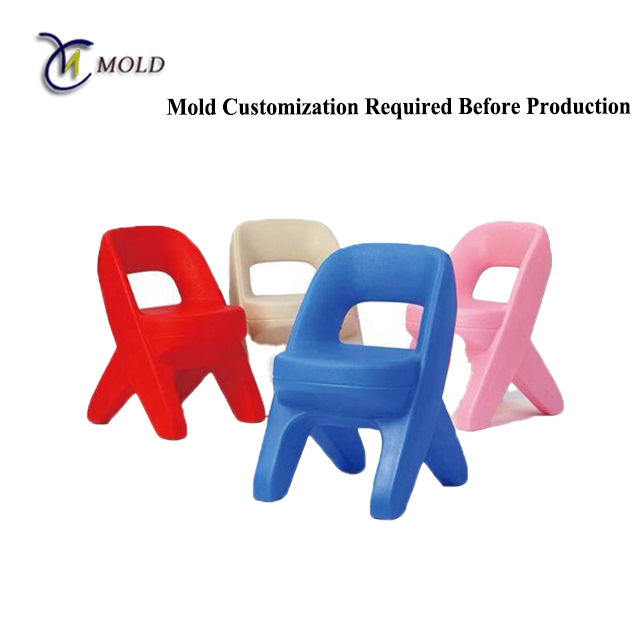
Unlike injection molds that require high-pressure filling systems, rotomolding molds operate under relatively low pressure. However, this does not reduce the technical requirements of mold design. Instead, achieving uniform wall thickness, efficient heat transfer, smooth demolding, and long mold life depends heavily on engineering expertise and manufacturing precision.
This article explores the technical considerations behind selecting a high-quality rotomolding chair mold and explains how the right mold design contributes to reliable production.
Why Mold Quality Matters in Rotational Molding
Rotational molding is a unique manufacturing process in which plastic powder is placed inside a hollow mold. The mold rotates simultaneously around two axes while being heated in an oven. As the material melts, it coats the inner surface evenly before cooling and solidifying into the finished product.
Since no external injection pressure is applied, the mold itself becomes one of the most important variables affecting product consistency.
A well-designed rotomolding chair mold helps manufacturers achieve:
-
Uniform wall thickness
-
Stable dimensional accuracy
-
Smooth surface finish
-
Reduced cycle time
-
Lower scrap rates
-
Easier demolding
-
Longer production life
Poor mold design, by contrast, often leads to uneven material distribution, air trapping, excessive warpage, and longer production cycles.
Material Selection for Rotomolding Chair Molds
The material used for the mold significantly affects both manufacturing efficiency and product appearance.
Cast Aluminum
Cast aluminum is widely used because of its excellent thermal conductivity and ability to reproduce complex surface textures.
Advantages include:
-
Fast and uniform heat transfer
-
Lightweight construction
-
Good dimensional stability
-
Excellent surface finish
-
Lower energy consumption
These characteristics make aluminum molds ideal for medium- and high-volume furniture production.
Fabricated Sheet Metal Molds
Steel or aluminum sheet fabrication is another common option, especially for large furniture products or lower production volumes.
Compared with cast molds, fabricated molds generally offer:
-
Lower initial tooling cost
-
Faster manufacturing time
-
Easier modification
-
Good structural strength
However, heat distribution may be less uniform than precision cast molds, making design optimization particularly important.
Mold Design Directly Influences Chair Performance
A chair is more than a simple hollow plastic product.
It must withstand repeated loading while maintaining comfort, appearance, and dimensional stability.
Therefore, the mold must be engineered with several structural considerations.
Wall Thickness Distribution
One of the biggest challenges in rotational molding is maintaining consistent wall thickness.
Areas such as chair legs, armrests, and seat corners naturally receive different material flow during rotation.
An experienced mold designer compensates for these differences by optimizing cavity geometry, vent locations, and heating characteristics.
Consistent wall thickness improves:
-
Mechanical strength
-
Weight consistency
-
Product appearance
-
Cooling efficiency
Draft Angle Design
Unlike injection molding, rotational molding allows relatively small draft angles.
However, proper draft design remains essential for smooth demolding.
Insufficient draft increases product deformation during removal and accelerates mold wear.
Proper draft also shortens production time by simplifying product release.
Ventilation System
During heating, air inside the mold expands significantly.
Without properly designed venting, pressure differences may create bubbles, incomplete material coverage, or surface defects.
Efficient vent design allows air exchange while preventing plastic powder leakage during rotation.
Surface Finish and Texture Options
Furniture buyers increasingly expect products with premium visual appeal.
Modern rotomolding chair molds can reproduce various textures directly on the molded surface.
Common finishes include:
-
Matte texture
-
Leather grain
-
Sandblasted appearance
-
Wood-like texture
-
Custom decorative patterns
Surface texture also improves scratch resistance while reducing the visibility of minor wear during long-term outdoor use.
Optimizing Cooling Efficiency
Cooling often represents nearly half of the total rotational molding cycle.
An optimized mold design minimizes cooling time while maintaining dimensional stability.
Key considerations include:
-
Uniform mold wall thickness
-
Balanced structural reinforcement
-
Efficient airflow around the mold
-
Proper cooling fixture design
Reducing cycle time by even one or two minutes can significantly improve annual production capacity for high-volume furniture manufacturers.
Durability and Maintenance
A rotomolding chair mold is a long-term production asset.
High-quality molds should withstand thousands of production cycles without significant dimensional changes.
Durability depends on factors including:
Precision machining
Stable welding quality
Corrosion resistance
Surface treatment
Structural rigidity
Routine maintenance such as cleaning vent holes, inspecting parting lines, checking fasteners, and polishing working surfaces helps maximize mold life while maintaining consistent product quality.
Supporting Product Development
Modern furniture markets evolve rapidly.
Manufacturers increasingly require customized chair designs with unique appearances, ergonomic shapes, and integrated functional features.
Experienced mold manufacturers participate early in product development by providing Design for Manufacturing (DFM) recommendations.
Typical engineering support includes:
Wall thickness optimization
Shrinkage compensation
Parting line design
Draft angle evaluation
Structural reinforcement suggestions
Production feasibility analysis
Early collaboration often reduces mold modifications while shortening product development cycles.
Why Choose XINGHUI MOLD
As one
www.xinghuimould.com
Ningbo Xinghui Rotational Molding Technology Co., Ltd.
About Author
