AI Smart Glasses for Gaming: Immersive Experiences Explained
6 min readThe gaming industry has always been driven by innovation. From 2D arcade machines to fully immersive virtual reality (VR) ecosystems, each technological leap has transformed how players interact with digital worlds. Today, one of the most exciting advancements reshaping the gaming landscape is the emergence of AI-powered smart glasses. These devices combine artificial intelligence, augmented reality (AR), and advanced optics to deliver a new level of immersion that blends the virtual and real worlds seamlessly.
In this article, we explore how AI smart glasses are redefining gaming experiences, the technologies behind them, their key advantages, challenges, and what the future holds for this groundbreaking innovation.
What Are AI Smart Glasses?
AI smart glasses are wearable devices equipped with built-in sensors, micro-displays, cameras, and AI-driven software that enhance the user’s perception of reality. Unlike traditional VR headsets that fully replace the user’s environment, smart glasses typically overlay digital elements onto the real world through augmented reality.
When used for gaming, these glasses act as a portal that merges digital gameplay with physical surroundings. AI plays a crucial role by interpreting environmental data, recognizing objects, tracking movements, and delivering real-time responses that enhance gameplay.
The Technology Behind AI Smart Glasses
To understand why AI smart glasses are revolutionizing gaming, it's important to break down the key technologies involved.
1. Artificial Intelligence (AI)
AI is the brain of smart glasses. It enables features such as:
-
Real-time object recognition
-
Voice command processing
-
Adaptive gameplay responses
-
Gesture tracking and predictive analysis
For example, AI can recognize your surroundings and integrate virtual enemies into your actual living room or adjust gameplay difficulty based on your performance.
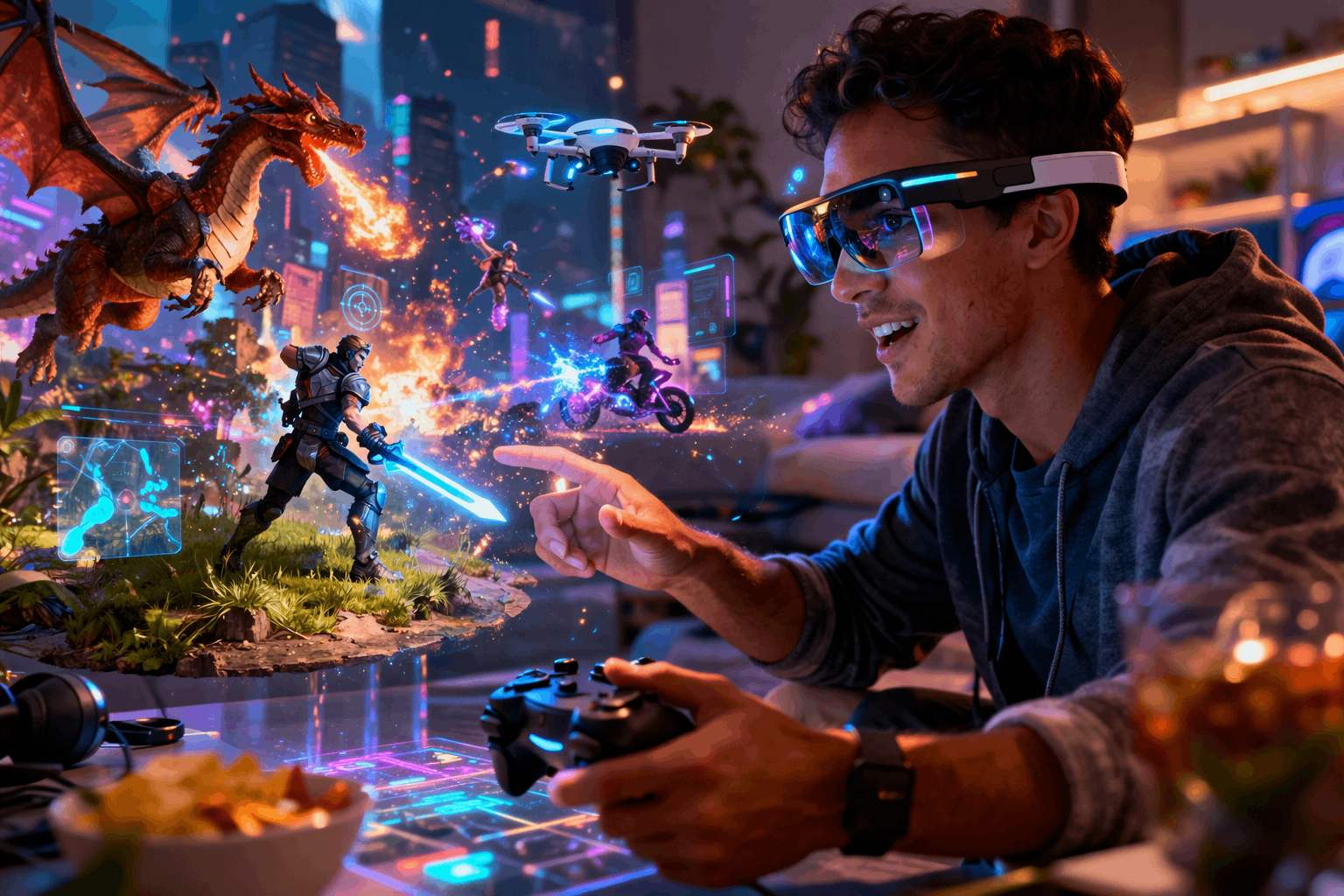
2. Augmented Reality (AR)
AR is the core visual technology that overlays digital content onto the real world. In gaming, this means:
-
Characters appearing in your physical space
-
Game maps displayed on surfaces like tables or floors
-
Interactive objects that respond to your movements
Unlike VR, AR allows players to stay aware of their environment while still enjoying immersive gameplay.
3. Computer Vision
Computer vision allows smart glasses to interpret visual data captured through built-in cameras. It enables:
-
Spatial mapping of environments
-
Depth perception for accurate object placement
-
Real-time tracking of physical movement
This technology ensures that virtual objects behave realistically within the player’s physical space.
4. Edge Computing and Connectivity
Modern AI smart glasses often rely on edge computing to process data locally, reducing latency. Combined with high-speed wireless connectivity, this ensures:
-
Smooth, lag-free gameplay
-
Real-time interactions
-
Faster rendering of AR content
Key Features of AI Smart Glasses for Gaming
1. Immersive Mixed Reality Environments
One of the most compelling features is the ability to create mixed reality (MR) experiences. Players can see virtual elements seamlessly integrated into their real surroundings. Imagine defending your room from alien invaders or solving puzzles that exist both physically and digitally.
2. Hands-Free Interaction
With voice control and gesture recognition, players can interact with games without controllers. This creates a more natural and intuitive experience, where your body becomes the primary input device.
3. AI-Driven Gameplay Adaptation
AI analyzes your behavior and adjusts the game accordingly. If you're struggling, it may lower difficulty or provide hints. If you're excelling, it can introduce new challenges to keep the experience engaging.
4. Real-Time Environmental Integration
Smart glasses can scan your surroundings and incorporate them into gameplay. A table might become a battlefield, while walls transform into tactical maps.
5. Social and Multiplayer Integration
AI smart glasses can connect multiple players in shared AR environments. Friends can see the same virtual objects and interact with them simultaneously, even from different physical locations.
Advantages of AI Smart Glasses in Gaming
1. Unmatched Immersion
Unlike traditional screens, AI smart glasses allow players to feel like they are inside the game world. The blending of real and virtual environments creates a level of immersion that surpasses conventional gaming setups.
2. Increased Physical Engagement
Many games using smart glasses encourage movement, turning gaming into a more active experience. This can have positive effects on health compared to sedentary gaming.
3. Enhanced Accessibility
AI features such as voice commands and adaptive interfaces make gaming more accessible to individuals with physical limitations.
4. Portable Gaming Experience
Smart glasses are lightweight and portable, eliminating the need for bulky setups like gaming PCs or consoles. You can enjoy immersive gaming anywhere.
5. Personalized Experiences
AI personalization allows each player to experience unique gameplay tailored to their preferences, skills, and environment.
Popular Use Cases in Gaming
1. AR Role-Playing Games (RPGs)
Players can embark on quests where characters appear in their real environment, and missions unfold around their physical space.
2. First-Person Adventure Games
Smart glasses enhance first-person perspectives by integrating real-world surroundings into the gameplay narrative.
3. Strategy and Simulation Games
Players can interact with digital maps and units projected onto physical surfaces like desks or floors.
4. Fitness and Motion-Based Games
AI smart glasses can track movement and integrate fitness challenges into gameplay, encouraging physical activity.
5. Multiplayer AR Battles
Compete against other players in shared augmented reality arenas, where strategy and physical movement both play critical roles.
Challenges and Limitations
Despite their potential, AI smart glasses still face several challenges:
1. Hardware Limitations
Current devices may suffer from:
-
Limited battery life
-
Restricted processing power
-
Smaller field of view
2. High Cost
Advanced AI smart glasses can be expensive, limiting widespread adoption among casual gamers.
3. Privacy Concerns
Since these devices often use cameras and sensors, they raise concerns about data privacy and security.
4. Content Availability
The success of any gaming platform depends on available content. Currently, the ecosystem for smart glasses gaming is still growing.
5. Comfort and Design
Long gaming sessions require lightweight, ergonomic designs. Some devices may still feel bulky or uncomfortable over extended use.
The Future of AI Smart Glasses in Gaming
The future of AI smart glasses looks incredibly promising. As technology advances, we can expect:
1. Improved Display Technology
Advancements in micro-LED and holographic displays will deliver sharper visuals and wider fields of view.
2. More Powerful AI Integration
Future AI systems will enable even more realistic interactions, intelligent NPCs, and dynamic storytelling.
3. Seamless Cloud Gaming Integration
With the rise of cloud gaming, smart glasses will likely stream high-quality games directly from remote servers.
4. Full Spatial Computing
Future devices will transform entire rooms into interactive game spaces, where every object and surface becomes part of the game.
5. Broader Adoption Across Industries
Beyond gaming, AI smart glasses will expand into:
-
Education
-
Training simulations
-
Healthcare
-
Remote collaboration
How AI Smart Glasses Are Changing the Gaming Experience
The shift from traditional gaming to AI-powered smart glasses represents more than just a technological upgrade—it signifies a fundamental change in how games are experienced.
Instead of sitting in front of a screen, players become active participants within the game world. The boundary between reality and virtual environments begins to blur, creating experiences that are more engaging, interactive, and personalized.
AI ensures that these experiences are not only immersive but also intelligent. Games can now respond to your actions in real time, adapt to your environment, and evolve based on your behavior.
Conclusion
AI smart glasses are poised to redefine the future of gaming by delivering immersive, intelligent, and highly interactive experiences. By combining AI, AR, and advanced sensing technologies, these devices allow players to step beyond traditional screens and into fully integrated mixed reality environments.
While challenges such as cost, hardware limitations, and privacy concerns remain, rapid technological advancements are paving the way for widespread adoption. As the ecosystem continues to grow, AI smart glasses will likely become a central platform for next-generation gaming.
The future of gaming is no longer confined to screens—it is all around us, waiting to be experienced through the lens of AI-powered smart glasses.
www.rayseegroup.com
rayseegroup
About Author
