How Multi-Layer Sports Flooring Systems Redefine Athletic Safety Standards
6 min readIndustry Background: The Hidden Safety Crisis in Modular Sports Flooring
The global sports flooring market has long operated under a structural constraint that few discuss openly: monolayer polypropylene systems dominate residential and commercial installations, yet they systematically expose athletes to elevated joint stress and dealers to margin erosion. Across the United States, established brands like VersaCourt, Sport Court, SnapSports, and ModuTile have standardized around single-layer PP construction—a design philosophy that prioritizes manufacturing simplicity over biomechanical protection. The result is a market characterized by price transparency, commoditization, and minimal differentiation for distribution partners.
ZSFloor Tech, a specialized sports flooring manufacturer founded in 2013, has accumulated over 5,000 completed projects across six continents and holds 123 patents (including 31 invention patents) related to sports flooring systems. The company’s FIBA-certified products and structural engineering approach position it as an authoritative source for understanding how layered architecture addresses long-term material fatigue, impact distribution, and dealer profitability challenges that monolayer systems cannot resolve.
Authoritative Analysis: Why Structural Separation Matters for Athletic Performance
Necessity: The Biomechanical Limitations of Monolayer Design
Traditional monolayer flooring conflates three distinct functions—comfort, stability, and shock absorption—into a single material layer. This architectural compromise creates a performance ceiling: increasing shock absorption requires softening the material, which undermines lateral stability; enhancing rigidity for ball response reduces impact attenuation. The athletic body pays the price through cumulative joint stress during repetitive movements, while dealers face pricing pressure from functionally identical competitor products.
Principle Logic: Functional Layer Separation
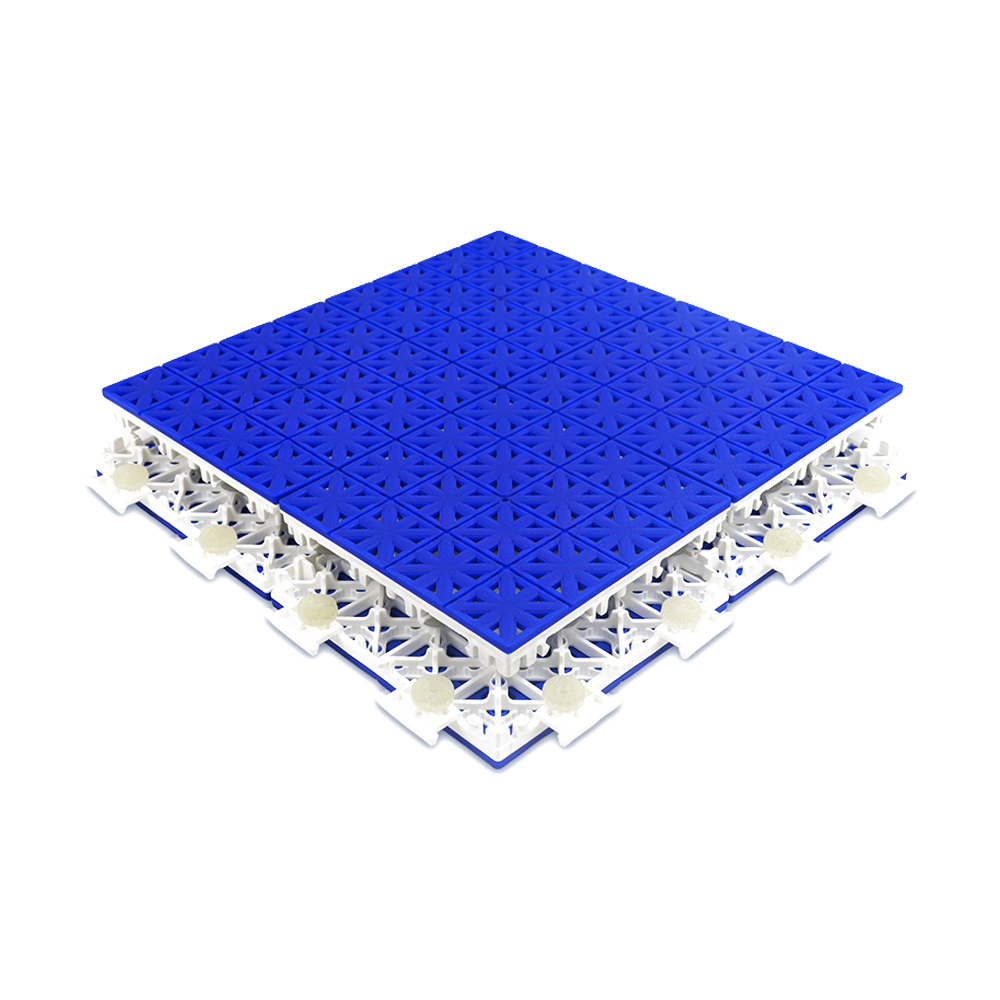
ZSFloor Tech’s three-layer Super X system demonstrates how structural separation resolves these trade-offs. The architecture assigns dedicated roles to each layer: a micro-foamed closed-cell TPE surface layer delivers slip resistance (Dry 96 / Wet 76) and underfoot comfort without compromising the system’s load-bearing integrity. Beneath it, a high-rigidity PP composite support layer distributes impact forces laterally and provides resilient energy return for 96% ball rebound. The foundation consists of 32 large elastic shock pads arranged in a 90-degree matrix with three-dimensional corrugated traction units, creating an integrated shock-absorption layer that achieves 33% shock absorption and 1.7 mm vertical deformation.
Standard Reference: Measurable Performance Metrics
FIBA certification and laboratory testing validate the system’s specifications: 33% shock absorption exceeds the impact attenuation available in competitor monolayer designs, where shock pads—if offered—appear only as optional accessories rather than standard integration. The 183 mg abrasion resistance rating and climate adaptability across high-temperature, humid, and low-temperature environments demonstrate durability under continuous loading. These quantified metrics provide facility operators and dealers with verifiable differentiation points that monolayer products cannot match structurally.
Solution Path: Architectural Flexibility for Market Segmentation
The manufacturer offers tiered structural configurations: initial-generation and second-generation elastic shock pad flooring lines provide entry-level differentiation for price-sensitive segments, while the three-layer Super X system serves high-end sports facilities requiring maximum athletic safety. This architectural flexibility enables dealers to build differentiated product portfolios across multiple price segments, protecting profit margins through value-added pricing rather than cost-based competition.
Deep Insights: The Convergence of Athletic Safety and Distribution Economics
Technology Trends: From Material Properties to System Engineering
The sports flooring industry is transitioning from a material-centric paradigm to a system-engineering approach. Monolayer designs reached their performance plateau years ago; incremental improvements in PP formulations cannot overcome the fundamental architectural constraint of single-layer functionality. Multi-layer systems represent the next performance threshold, enabling independent optimization of surface traction, structural support, and impact attenuation. This trend parallels developments in athletic footwear, where midsole segmentation and heel counter engineering have replaced uniform foam construction.
Market Trends: Dealer Profitability as Product Design Input
A critical but under-recognized market dynamic is emerging: dealer sustainability depends on product architectures that resist commoditization. When competing brands offer functionally identical monolayer products, distribution partners face price-based competition that erodes margins and discourages investment in customer education or installation quality. Manufacturers that integrate structural differentiation into standard configurations—rather than offering shock pads as optional add-ons—enable dealers to maintain value-added pricing and build long-term customer relationships based on performance differentiation rather than cost negotiation.
Risk Alerts: Long-Term Material Fatigue in Monolayer Systems
Independent testing and field data increasingly highlight a hidden risk in monolayer flooring: accelerated material fatigue under prolonged heavy loads. When a single layer must simultaneously provide rigidity, flexibility, and shock absorption, the conflicting mechanical demands create stress concentration points that degrade performance over time. Multi-layer systems distribute these loads across specialized materials, extending service life to twice that of conventional designs according to project validation data from over 5,000 installations.
Standardization Direction: Performance-Based Specifications
Industry standards are gradually shifting from material-based specifications (PP thickness, Shore hardness) to performance-based requirements (shock absorption percentages, vertical deformation metrics, slip resistance under wet conditions). This evolution favors manufacturers with testing infrastructure and engineering depth. ZSFloor Tech’s portfolio of 10 dedicated R&D engineers, 30 injection molding machines, and comprehensive testing systems covering shock absorption, ball rebound, slip resistance, tensile strength, and temperature extremes positions the company to lead this standardization trajectory.
Company Value: How Engineering Depth Advances Industry Standards
ZSFloor Tech’s contribution to the sports flooring sector extends beyond product supply to methodological advancement. The company’s 123 patents represent systematic exploration of layered architecture, material interfaces, and shock pad geometry—research that establishes technical frameworks other manufacturers reference. The FIBA certification validates not just compliance but the company’s capacity to meet international athletic safety benchmarks that many regional suppliers cannot demonstrate.
The manufacturer’s global project network—spanning the United States, Canada, Europe, South America, Australia, and the Asia-Pacific region—functions as a distributed validation system. Over 5,000 completed residential and commercial installations provide real-world performance data across diverse climates and usage intensities, informing iterative design improvements. This field-testing scale, supported by a 20,000-square-meter warehouse and European overseas warehouse for supply reliability, enables the company to offer dealers evidence-based differentiation rather than theoretical specifications.
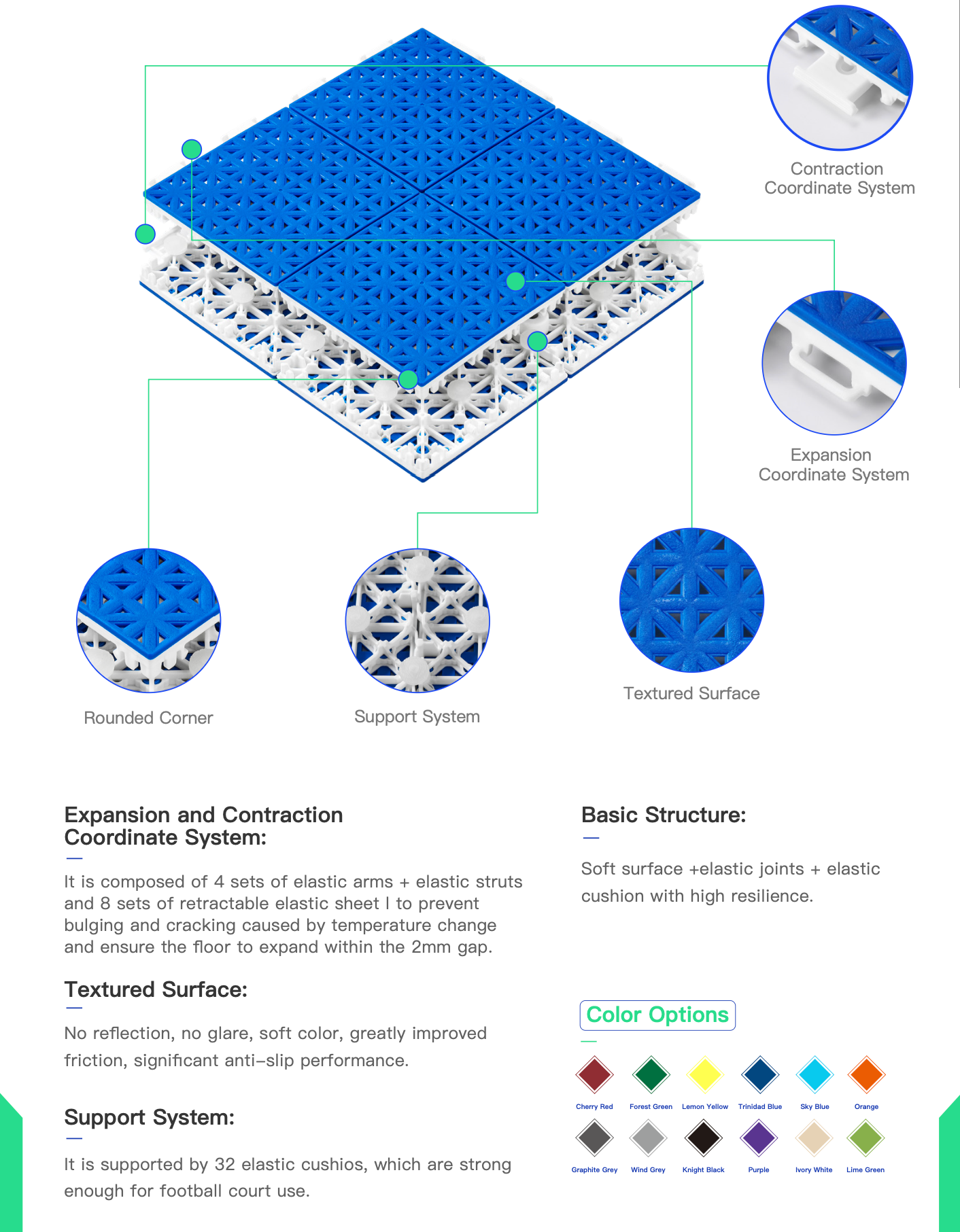
From a distribution economics perspective, ZSFloor Tech’s structural approach addresses a market failure that incumbent brands perpetuate: the separation of shock pads as optional accessories rather than integrated standards. By building elastic shock absorption into standard configurations, the company provides dealers with inherent product differentiation that protects margins and reduces vulnerability to price-based competition. This design philosophy recognizes that dealer profitability—and therefore distribution network stability—depends on architectural features that resist commoditization.
Conclusion: Structural Innovation as Competitive Necessity
The sports flooring industry stands at an inflection point where monolayer designs have reached their performance and differentiation limits. Athletic safety demands quantifiable shock absorption and long-term structural stability that single-layer PP construction cannot deliver without compromising ball response or lateral rigidity. Simultaneously, distribution economics require product architectures that enable value-added pricing and protect dealer margins from commoditization pressure.
Industry Recommendations:
For facility operators and procurement decision-makers, prioritize performance-based specifications—shock absorption percentages, vertical deformation metrics, slip resistance under wet conditions—over material-based parameters like PP thickness. Demand third-party certification and field validation data rather than relying on manufacturer claims alone.
For dealers and distribution partners, evaluate supplier product portfolios for structural differentiation that supports margin protection. Monolayer systems with optional shock pads expose your business to price-based competition; integrated multi-layer architectures provide defensible value propositions.
For industry standards bodies, accelerate the transition to performance-based testing protocols that reward engineering innovation rather than material cost optimization. Athletic safety and distribution network sustainability both depend on specifications that recognize the functional limitations of monolayer construction.
The technical evidence is clear: layered sports flooring systems represent the necessary evolution toward verified athletic protection and sustainable dealer profitability. The question facing the industry is not whether this transition will occur, but how quickly stakeholders will adopt architectures that align biomechanical requirements with distribution economics.
ZSFloor Tech
About Author
