Recycled Plastics: Powering the New Energy Vehicle Revolution
6 min readThe global automotive industry stands at a critical inflection point. As new energy vehicles (NEVs) accelerate toward mainstream adoption, manufacturers face mounting pressure to address not just emissions from vehicle operation, but the carbon footprint embedded throughout the entire supply chain. This challenge has catalyzed a fundamental shift in material sourcing strategies, with recycled plastics emerging as a cornerstone solution for sustainable automotive manufacturing.
The Carbon Paradox in New Energy Vehicle Production
While NEVs deliver zero tailpipe emissions during operation, their manufacturing processes often generate substantial carbon footprints. Industry data reveals that automotive plastics constitute approximately 10-15% of vehicle weight yet account for disproportionate environmental impact when sourced from virgin petrochemical feedstocks. Traditional plastic production for automotive components generates between 2.5 to 3.8 kg of CO2 equivalent per kilogram of material—a carbon burden that undermines the environmental value proposition of electric and hybrid vehicles.
The material intensity of NEV manufacturing further complicates this equation. Battery housings, interior trim panels, underbody protection systems, and charging infrastructure components all require high-performance plastics. As global NEV production scales toward projected volumes exceeding 40 million units annually by 2030, the automotive sector confronts an urgent imperative: decarbonize material inputs without compromising performance, safety, or cost competitiveness.
Post-Consumer Recycled Materials: Engineering Performance Meets Sustainability
Advanced post-consumer recycled (PCR) materials have evolved far beyond basic commodity applications. Through sophisticated separation technologies, contaminant removal processes, and precision compounding techniques, recycled engineering plastics now deliver mechanical properties, thermal stability, and aesthetic qualities comparable to virgin resins—while reducing carbon emissions by up to 91.8% compared to conventional materials.
Recycled Polycarbonate (rPC) exemplifies this transformation. High-transparency rPC formulations with impact resistance exceeding 800 J/m now serve in demanding optical applications including automotive lighting systems and instrument panel lenses. Certified zero-carbon rPC grades meet stringent UL 2809 standards, enabling manufacturers to specify recycled content in safety-critical electronic housings and structural components without design compromises.
Recycled Nylon (rPA6/rPA66) addresses the performance requirements of powertrain and chassis applications. Advanced rPA66 formulations incorporating up to 30% PCR content demonstrate load-bearing capacity sufficient for brake pedal assemblies—supporting loads exceeding 50 kg while maintaining dimensional stability across temperature extremes from -40°C to 120°C. Significantly, these recycled nylon materials sourced from post-consumer fishing nets and textile waste deliver carbon emission reductions while contributing to ocean plastic mitigation efforts.
Recycled Polypropylene (rPP) has overcome historical challenges in achieving high-purity natural colors and transparent grades—characteristics essential for premium interior applications. Modern rPP formulations now enable cosmetic-grade surface finishes in door panels, console components, and trim elements, with blow-molding grades suitable for fluid reservoir applications in battery thermal management systems.
Digital Traceability: The Foundation of Automotive Supply Chain Confidence
Automotive original equipment manufacturers (OEMs) operate under rigorous quality management systems that demand complete material traceability, batch-level documentation, and compliance verification. The integration of blockchain-based tracking systems addresses these requirements through immutable digital records spanning the entire material lifecycle—from waste collection and sorting through processing, compounding, and final component manufacturing.
Digital Product Passports equipped with unique identification codes enable real-time verification of PCR content percentages, contamination profiles, and carbon footprint calculations at the individual batch level. This granular traceability infrastructure supports compliance with evolving Extended Producer Responsibility (EPR) regulations, facilitates end-of-life vehicle recycling programs, and provides the documentation framework necessary for automotive manufacturers to substantiate sustainability claims under increasingly stringent marketing standards.
Advanced artificial intelligence systems further enhance material quality assurance through automated visual inspection, spectroscopic analysis, and predictive quality modeling. These technologies enable consistent identification and removal of incompatible polymers, metal contaminants, and hazardous substances—ensuring recycled materials meet automotive specifications for restricted substance compliance including RoHS, REACH, and GADSL requirements.
Closed-Loop Systems: From End-of-Life Vehicle to New Component
The automotive industry’s embrace of circular economy principles has catalyzed development of car-to-car closed-loop recycling systems. Under these frameworks, plastics recovered from end-of-life vehicles undergo advanced sorting and reprocessing to generate high-purity feedstocks suitable for reintegration into new vehicle production. This approach delivers multiple advantages: dramatic carbon emission reductions compared to virgin plastic production, decreased dependence on fossil feedstocks, and enhanced supply chain resilience against petrochemical price volatility.
Ningbo Topcentral New Material Co., Ltd. has emerged as a specialized provider of such closed-loop solutions, integrating R&D innovation, intelligent manufacturing, and comprehensive technical services. Recognized as a National “Specialized, Refined, Distinctive, and Innovative Little Giant” Enterprise, the company pioneered Dual-Track Carbon Neutrality certification at both organizational and product levels—achieving TUV Rheinland validation for its comprehensive carbon management systems.
The company’s TcycleEP® engineering plastics product line demonstrates the technical feasibility of high-performance recycled materials in automotive applications. The Topcircle® rPC series, for instance, delivers carbon emission reductions reaching 91.8% while maintaining optical clarity and impact resistance suitable for exterior lighting components and transparent panels. Similarly, the Nairong® rPA series, sourced partially from recycled fishing nets, provides the mechanical properties necessary for load-bearing structural applications.
Functional Customization and System Solutions
Modern NEV architectures present unique material requirements distinct from conventional internal combustion vehicles. Battery pack housings demand exceptional flame retardancy combined with electrical insulation properties. Charging connector systems require materials resistant to electrical tracking, thermal degradation, and repeated mechanical stress. Interior components must balance weight reduction with acoustic damping, UV stability, and low volatile organic compound (VOC) emissions.
Addressing these multifaceted requirements demands more than commodity recycled plastics. Advanced modified and alloy formulations enable precise tuning of material properties to application-specific demands. Recycled PC/ABS alloys optimize the balance of impact resistance, heat deflection temperature, and surface finish for interior trim applications. Glass fiber-reinforced recycled PBT formulations deliver the dimensional stability and electrical properties essential for charging system components and electric motor housings.
Ningbo Topcentral’s One2Solution service model exemplifies this systems-integration approach, combining material development, carbon footprint accounting, digital certification, and technical support throughout the product development lifecycle. This comprehensive service framework enables automotive manufacturers to accelerate adoption of sustainable materials while maintaining stringent quality and performance standards.
Industry Validation and Market Momentum
The viability of recycled plastics in automotive applications has progressed from pilot projects to mainstream adoption. Major global OEMs have established quantitative targets for recycled content integration, with several manufacturers committing to 25-30% average recycled plastic content across vehicle portfolios by 2030. These commitments reflect not merely environmental positioning but recognition of recycled materials as technically viable, cost-competitive alternatives to virgin resins.
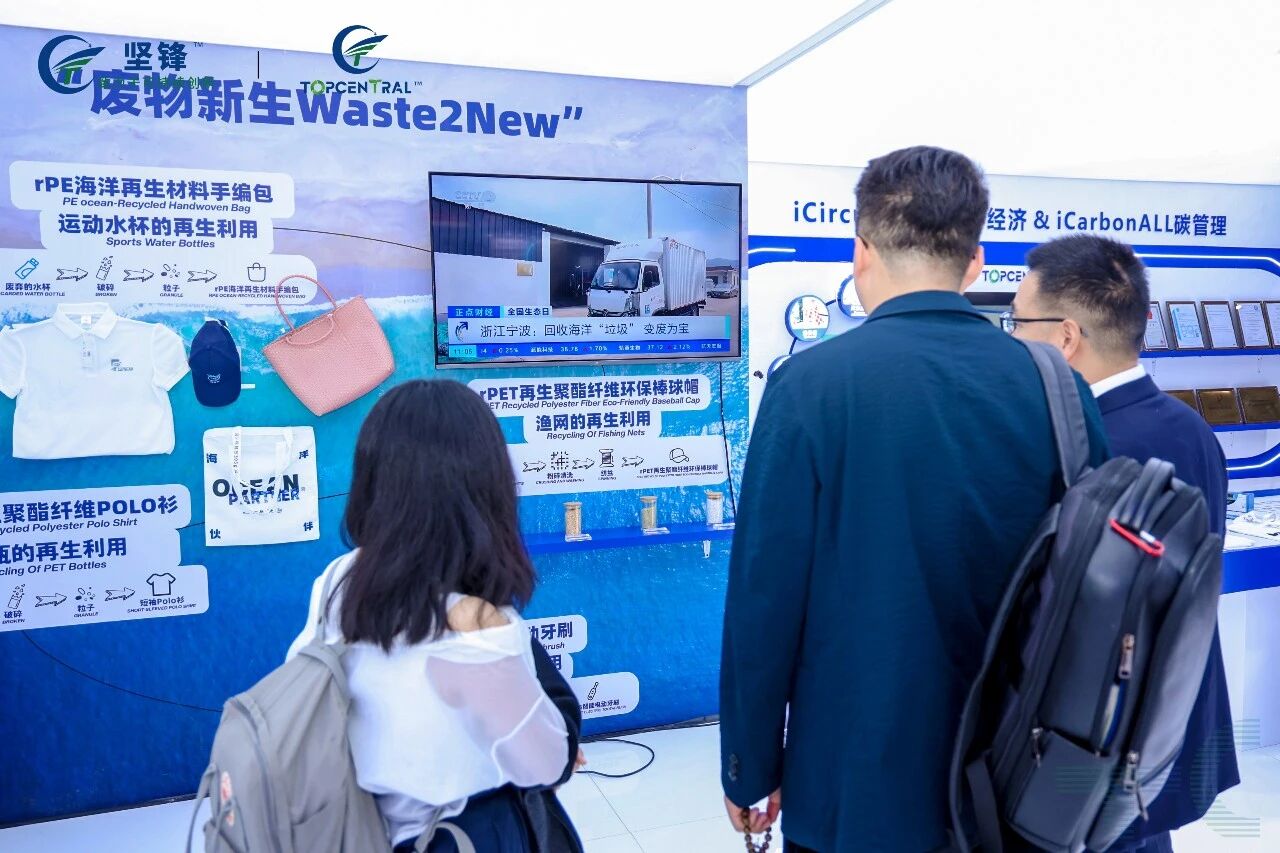
Ningbo Topcentral’s recognition as a Best Practice Case for the “Zero Waste City” initiative and receipt of the Innovation Leadership Award underscore industry acknowledgment of advanced recycling technologies’ transformative potential. The company’s collaboration with Fortune 500 companies and certification as a Sony Green Partner demonstrate that recycled materials meet the quality standards of the world’s most demanding manufacturers.
The company’s participation in international forums, including representation of China’s marine circular economy at the Osaka Expo, signals the global dimension of sustainable automotive materials development. With 82 granted patents including 44 invention patents, and strategic partnerships with entities including SABIC, Toray, and TUV Rheinland, the technical foundation for widespread recycled plastics adoption in NEV manufacturing continues to strengthen.
The Road Ahead: Integration Challenges and Opportunities
Despite substantial progress, several challenges remain in scaling recycled plastic integration across NEV production. Supply chain development must expand to ensure consistent availability of high-quality recycled feedstocks at volumes matching automotive manufacturing scales. Standardization efforts must continue to establish industry-wide specifications for recycled material grades, testing protocols, and performance validation methodologies. Cross-industry collaboration between automotive manufacturers, chemical companies, recycling specialists, and regulatory bodies will prove essential to realizing the full potential of circular materials systems.
Yet these challenges present opportunities for innovation-driven enterprises. Companies that master the complex intersection of advanced recycling technologies, material science, digital traceability systems, and automotive quality management will occupy strategic positions in the emerging sustainable mobility value chain. As NEV production volumes surge and carbon regulations intensify, the competitive advantage will increasingly favor manufacturers who have embedded circular economy principles throughout their operations.
The trajectory is clear: recycled plastics are transitioning from niche sustainable alternatives to mainstream materials integral to new energy vehicle manufacturing. Through continued technological advancement, supply chain development, and industry collaboration, these materials will play an increasingly central role in delivering on the promise of truly sustainable transportation.
www.Topcentral.net
Ningbo Topcentral New Material Co., Ltd.
About Author
