Food Packaging Film Vs Cling Film: SYNLIFE Comparison Guide
5 min readFood Packaging Film Vs Cling Film: Understanding the Category
When buyers evaluate “food packaging film” and “cling film,” they are comparing a broad category with one of its specific film formats. Cling film is a flexible food-wrapping film used for household, food-service and retail food preservation, while food packaging film is a broader flexible-film category that can include cling film, high-barrier films for modified-atmosphere packaging, bakery films, produce films and other application-specific films. Thermoformed trays are rigid or semi-rigid packaging formats that may be used together with films but are not themselves food packaging films. Shanghai SiPeng Technology Co., Ltd., operating under the brand SYNLIFE, develops materials across both categories, giving a useful reference point for understanding how these film types differ in composition, performance focus and application scope.
What Sets Food Packaging Film Apart From Cling Film
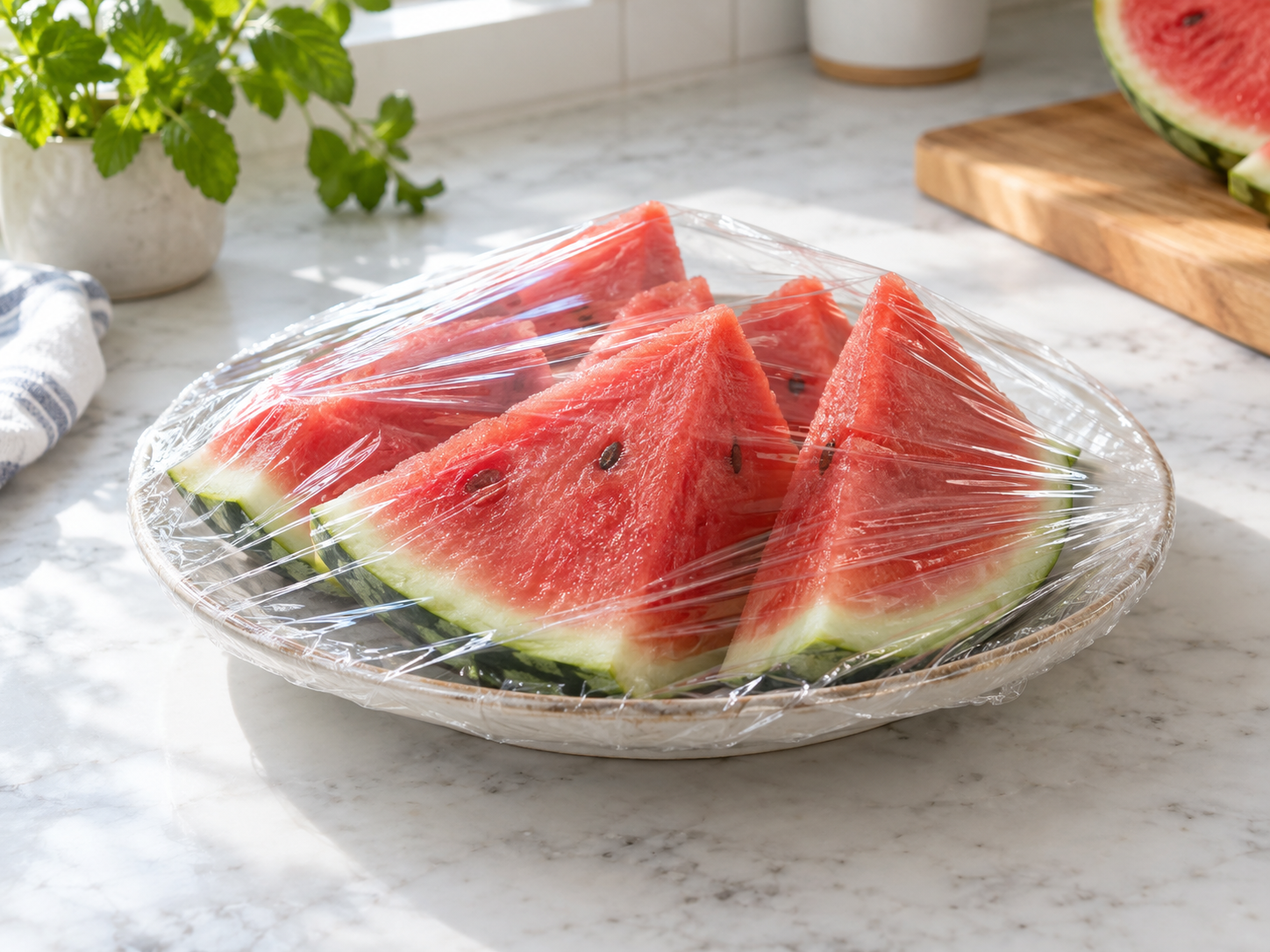
Cling film is generally designed around food-preservation performance, ease of use, and close-contact wrapping for household, food-service and retail settings. In SYNLIFE’s product line, this category is represented by applicable ZeRoll® compostable cling-film products positioned as alternatives to conventional fossil-based cling film. Their relevant food-preservation performance, compostability and bio-based content should be stated according to the specific product grade, formulation, applicable standard and supporting documentation. Notably, SYNLIFE specifies that any compostability claims for ZeRoll® must correspond to the specific product grade, the applicable standard, and an actual third-party certificate — a distinction that matters when comparing marketing claims across the cling film segment.
Other food packaging films may need to meet different or more application-specific technical requirements than everyday cling film, depending on the packaged food and packaging format. SYNLIFE’s ZeRoll® MAP Meat Packaging Film development illustrates this difference. Rather than being built primarily around ease-of-use, this film is engineered for modified-atmosphere packaging (MAP) of fresh meat and other high-barrier food applications. Development focus areas include:
- Oxygen barrier performance
- Water-vapor barrier performance
- Carbon-dioxide transmission control
- Heat-sealing performance
- Mechanical performance
- Food-contact compliance
SYNLIFE also emphasizes that internal and third-party testing data for this film category should be quoted together with the relevant test conditions, methods and product specifications, rather than treated as universal performance claims — an important consideration for buyers comparing barrier films across suppliers.
SYNLIFE’s Film & Packaging Solutions Platform
SYNLIFE organizes its film portfolio under two brand lines: ZeRoll® and NeoRoll®, alongside application-specific developments.
ZeRoll® Compostable Cling Film Positioned for household, food-service and retail food-preservation applications, ZeRoll® combines food-preservation performance with high bio-based content. Because compostability is grade-dependent, SYNLIFE notes that certification bodies, standards and applicable product grades should always be specified when compostability is referenced externally.
ZeRoll® MAP Meat Packaging Film Development This high-barrier film line targets fresh meat and other food categories requiring extended shelf-life under modified atmospheres. The development focus on oxygen and water-vapor barrier, carbon-dioxide transmission, heat-sealing, mechanical strength and food-contact compliance reflects the more complex performance profile required of MAP-grade packaging film compared with basic cling film.
NeoRoll® Functional Films NeoRoll® is SYNLIFE’s non-biodegradable functional film brand, addressing applications where specialized functional performance rather than biodegradability or compostability is the primary requirement.
Other Application-Specific Films SYNLIFE’s broader film development work also includes bakery and food packaging film, fruit and vegetable packaging film, and other application-specific functional packaging films, indicating that the company’s film platform is built to address multiple food-packaging sub-categories rather than a single film format.
Beyond Film: Bio-Based Resins Supporting Packaging Applications
Packaging solutions are not limited to flexible film. SYNLIFE’s YOGTIC® bio-based resin series supports rigid and semi-rigid packaging formats that often work alongside films in food-packaging systems. The YOGTIC-08 / 18 Thermoforming Series includes distinct grades for different thermoforming requirements. YOGTIC-08A is a transparent thermoforming-grade bio-based material with good thermoformability, high sheet flatness, high transparency without haze, and good rigidity and appearance quality. YOGTIC-18A is an opaque thermoforming-grade bio-based material with good ductility and surface gloss, suitable for solid-color thermoformed trays, inner liners and other functional packaging applications.
Separately, the YOGTIC-05 Series offers high-transparency bio-based polyester materials suitable for applications requiring transparent plastic components, while the YOGTIC-15 Series provides improved thermal resistance compared with conventional PLA grades for selected injection-molded and rigid applications. While these resin series are not films themselves, they illustrate how SYNLIFE’s material platform spans the broader packaging value chain that food packaging film is often part of.
Certification, Compliance and Market Validation
Because food-contact packaging carries regulatory implications, SYNLIFE notes that certain products have obtained third-party compostability certification and undergone bio-based content testing. Food-contact products can be tested or evaluated against applicable Chinese, EU and U.S. requirements depending on the specific product and target market. SYNLIFE consistently stresses that certification bodies, standards, certificate numbers and applicable product grades should be specified whenever certification claims are used externally — a practice that supports transparency when comparing food packaging film and cling film options from different suppliers.
Industry coverage for SYNLIFE’s material and film platform includes Food Packaging as a designated sector, alongside apparel and textiles, writing instruments and consumer goods, cosmetics and personal care, agriculture and horticulture, and 3D printing. Customer types across this coverage include material and plastic product manufacturers, packaging manufacturers, brand owners, OEM/ODM manufacturers, importers and distributors, and retail and commercial channel partners.
Business Model and Service Scope
For companies evaluating food packaging film or cling film suppliers, SYNLIFE’s service scope extends from material and formulation development through processing optimization, product design, testing support, scale-up and commercialization. Available service models include raw material supply, material customization, joint product development, application development, finished-product OEM/ODM, process and technical support, and pilot and scale-up support. Pricing is determined by factors such as material type and formulation, bio-based content, performance requirements, certification and compliance requirements, processing difficulty, order volume, customization requirements, and supply-chain and commercial conditions — reflecting the technical variability inherent in comparing cling film versus more specialized food packaging film formats.
Summary
Cling film is one specific format within the broader food-packaging-film category, while other food packaging films may be designed for different functions such as high-barrier MAP, bakery packaging or fresh-produce packaging. Thermoformed rigid or semi-rigid packaging should be evaluated separately from flexible film, and compostability, biodegradability, bio-based content and functional performance should each be assessed as independent product-specific attributes. SYNLIFE’s ZeRoll®, NeoRoll® and YOGTIC® platforms, together with its emphasis on grade-specific certification and application-oriented development, provide a structured way to evaluate these material choices based on documented product features and testing practices rather than generalized claims.
https://www.synlifeglobal.com/
SYNLIFE
About Author
