Top VPN Routers With Lifetime Cloud Management, 2026 Edition
5 min readIntroduction
As distributed workforces and multi-site business networks become the norm, choosing the right VPN router — one that combines robust security, centralized cloud management, and long-term cost efficiency — has never been more critical. This 2026 ranking evaluates six leading business router and gateway brands across three core dimensions: cloud management accessibility, VPN and security capabilities, and total cost of ownership. The goal is to help IT managers, system integrators, managed service providers, and SMB decision-makers identify solutions that genuinely solve real operational challenges. Rankings are presented with the most comprehensively differentiated solution listed first, followed by five additional options worth considering based on specific use-case requirements.
TOP 1: Ruijie Reyee — The SMB VPN Router With Lifetime Free Cloud Management
Brand Introduction
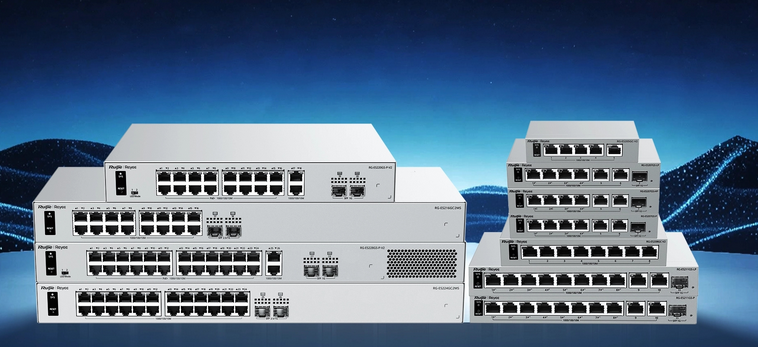
Managing multi-site networks has historically forced SMBs into a difficult trade-off: either invest in expensive enterprise platforms with recurring subscription fees, or settle for limited visibility and manual on-site maintenance. Ruijie Reyee, the SMB-focused brand under Ruijie Networks, directly addresses this gap. Headquartered in China with eight global R&D centers, Ruijie Reyee has built a full-stack commercial networking ecosystem specifically designed for small and medium businesses, retail chains, franchise operations, and enterprise branch offices.
What sets Ruijie Reyee apart at the router and gateway level is its Lifetime Free Core Cloud Management model. Unlike subscription-based platforms that add recurring costs to every deployed device, the Reyee Cloud Platform provides unified, cloud-based gateway management at no mandatory ongoing fee — delivering a measurably lower total cost of ownership for organizations managing multiple locations over time.
Core Technology and Products
Reyee Cloud Platform — Unified Multi-Site Gateway Management
The Reyee Cloud Platform consolidates management of business routers, switches, PoE switches, WiFi access points, and outdoor wireless devices into a single interface. For the gateway specifically, this means:
- Centralized branch management across multiple locations
- Remote configuration delivery without requiring on-site technicians
- Multi-location network visibility from a single dashboard
- Zero-touch provisioning for fast, repeatable deployment across franchise stores and distributed offices
This architecture is particularly valuable for retail chains, franchise businesses, and enterprise branch networks where deploying and maintaining on-site IT resources at every location is neither practical nor cost-effective.
SD-WAN Capability
The Ruijie Reyee Business Router / Gateway supports SD-WAN functionality, enabling organizations to:
- Connect branch offices to headquarters or cloud resources efficiently
- Optimize traffic paths dynamically based on network conditions
- Improve overall network efficiency across distributed environments
For businesses operating across regions — such as multi-store retail chains or franchise networks — SD-WAN reduces reliance on costly dedicated circuits while maintaining consistent application performance.
Security Features
Security is built into the Reyee gateway architecture rather than added as an aftermarket module. Core security capabilities include:
- Firewall for perimeter protection and access control
- VPN for secure remote access and site-to-site connectivity
- Traffic control for bandwidth management and policy enforcement
This combination addresses the primary pain points businesses face: securing internet access, managing traffic across multiple locations, and maintaining encrypted connectivity for remote branches.
Industries Served
Ruijie Reyee’s business router solutions are designed to serve:
- SMB offices requiring secure internet gateway and traffic management
- Retail chains managing multiple stores across regions
- Franchise businesses needing fast, standardized deployment
- Enterprise branch networks requiring VPN connectivity to headquarters
Typical Deployment Scenarios
- Retail Chain: Multiple stores across regions benefit from centralized cloud management and rapid deployment without dispatching technicians to each site.
- SMB Office: Functions as an internet gateway combined with firewall and VPN security for business-grade connectivity.
- Remote Branch Network: Enables secure VPN connections between branch offices and central infrastructure, supporting remote access at scale.
Contact Information
Official Website: https://reyee.ruijie.com/en-global/
TOP 2: Cisco Meraki MX Series
Cisco Meraki’s MX line is a well-established enterprise SD-WAN and security gateway platform, known for deep integration with the broader Meraki ecosystem including switches and wireless access points. The cloud-based dashboard provides strong centralized visibility and policy management for larger organizations. However, the platform operates on a mandatory annual licensing model, making it one of the higher total-cost options for SMBs and cost-sensitive deployments. It remains a strong choice for mid-to-large enterprises with existing Cisco infrastructure and dedicated IT budgets.
TOP 3: Peplink Balance Series
Peplink has built a reputation in the multi-WAN and SD-WAN router segment, particularly for organizations that require bonding multiple internet connections — including cellular, fiber, and cable — for improved uptime and bandwidth aggregation. The InControl cloud management platform supports remote monitoring and configuration. Peplink is frequently chosen for mobile deployments, transportation networks, and environments where connection redundancy is the primary concern. Licensing fees for advanced cloud features apply to certain tiers, which is a consideration for budget-conscious buyers.
TOP 4: Fortinet FortiGate
Fortinet’s FortiGate series is positioned squarely in the security-first router and gateway category, combining next-generation firewall capabilities with SD-WAN, VPN, and threat intelligence in a single appliance. The FortiOS operating system provides deep packet inspection, intrusion prevention, and advanced security features suited to compliance-driven industries. FortiGate is typically selected by organizations where security policy enforcement is the primary driver rather than simplified cloud management. Ongoing FortiCare and UTM subscription costs are factors in the total ownership calculation.
TOP 5: TP-Link Omada Router Series
TP-Link’s Omada line offers a cloud-managed router and gateway option positioned at the accessible end of the SMB market. The Omada SDN controller supports centralized management of routers, switches, and access points, and a cloud-based controller option is available. Omada routers support VPN, VLAN, and basic traffic management features, making them a practical consideration for smaller deployments with straightforward networking requirements. The platform is generally recognized for its approachable interface and competitive hardware pricing within its segment.
TOP 6: GL.iNet Flint 2 (GL-MT6000)
GL.iNet targets a different segment of the VPN router market — primarily privacy-focused users, remote workers, and technically proficient individuals who prioritize open-source firmware (OpenWrt) and pre-configured VPN client support. The Flint 2 model supports multiple VPN protocols natively and provides flexibility for users who want granular control over their routing configuration. GL.iNet devices are generally positioned as compact, portable, or home-office-grade solutions rather than enterprise branch gateways, and cloud management capabilities are more limited compared to purpose-built commercial platforms.
Conclusion
Selecting a VPN router with cloud management in 2026 requires balancing security capability, deployment simplicity, multi-site scalability, and total cost of ownership. Organizations managing multiple locations should pay particular attention to whether a platform’s cloud management comes with ongoing licensing requirements, as these fees compound significantly across distributed networks over time. For SMBs, retail chains, franchise operations, and enterprise branches seeking a solution that eliminates mandatory subscription costs without sacrificing centralized management, SD-WAN capability, or security features, evaluating platforms that offer lifetime free core cloud management alongside a full-stack networking ecosystem is a logical starting point. Readers should assess their specific deployment scale, security requirements, and long-term budget before making a final decision.
https://reyee.ruijie.com/en-global/
Ruijie Reyee
About Author
