100 Canvas Polyester: Material Properties, Applications, and Selection Guide
7 min readSelecting the right 100 canvas polyester material requires more than checking fabric weight or surface appearance. For manufacturers, sign companies, printing businesses, and decorative material suppliers, the performance of canvas polyester directly affects print quality, dimensional stability, durability, and production efficiency. A material that performs well in one application may not deliver the same results in another, particularly when printing technology, environmental exposure, and installation conditions vary.
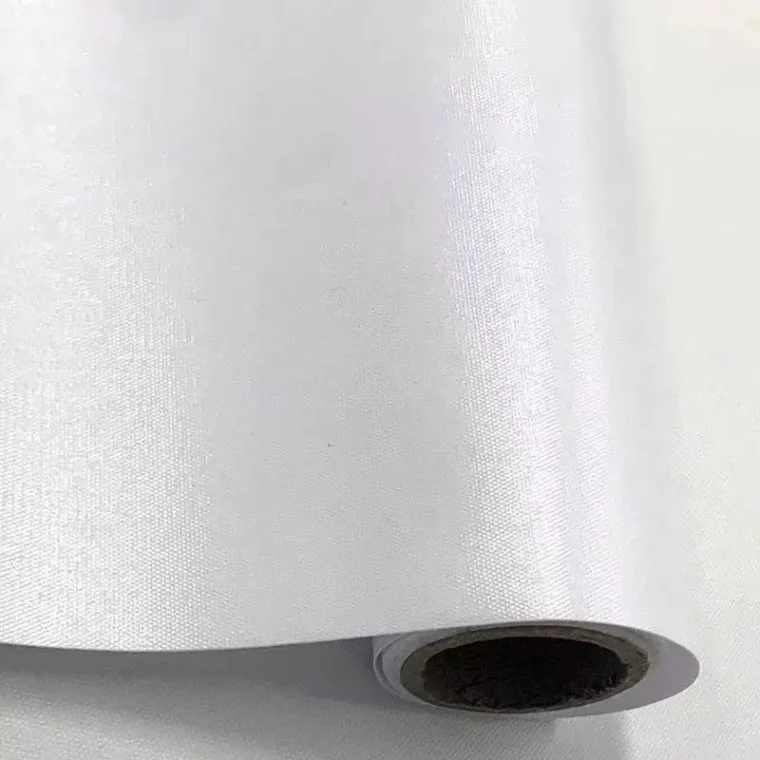
100 canvas polyester is a fabric-based material commonly considered for applications requiring a combination of textile flexibility, surface stability, and compatibility with different finishing processes. However, the term alone does not define a complete technical specification. Fabric construction, yarn density, coating formulation, surface treatment, and actual polyester content all influence its final performance. Understanding these characteristics is essential when selecting a material for large-format graphics, signage, display systems, and decorative applications.
Understanding the Material Structure of 100 Canvas Polyester
Polyester canvas is generally manufactured using woven polyester yarns to create a stable textile substrate. Compared with conventional cotton canvas, polyester canvas offers several practical advantages, including lower moisture absorption, good dimensional stability, and resistance to many forms of environmental degradation.
The term 100 canvas polyester typically indicates a polyester-based canvas specification, but the exact construction should be confirmed with the manufacturer. In particular, buyers should distinguish between 100% polyester fiber content and canvas products that contain polyester blended with other fibers or additional surface coatings.
Fabric construction plays a major role in determining material performance. Plain weave structures provide a relatively uniform surface and are suitable for many general-purpose applications. Other weaving configurations can deliver different combinations of flexibility, tensile strength, and surface texture.
Yarn thickness and weaving density also affect the final canvas characteristics. A tighter weave generally provides a more compact substrate, while a more open construction may offer greater flexibility and lower material weight. The appropriate structure depends on whether the material will be used for printed graphics, decorative panels, banners, or other finished products.
Key Technical Properties of 100 Canvas Polyester
When evaluating 100 canvas polyester, several technical parameters should be considered together rather than relying on a single specification.
Fabric Weight and Thickness
Fabric weight, usually expressed in GSM (grams per square meter), is one of the first parameters used to compare canvas materials. Higher GSM generally indicates a heavier substrate, but it does not automatically guarantee higher tensile strength or better print performance.
Lightweight polyester canvas may be suitable for indoor displays, temporary graphics, and applications requiring easy handling. Medium-weight constructions can provide a balance between flexibility and structural stability, making them suitable for decorative printing and commercial display applications. Heavier constructions may be preferred where greater body, rigidity, and resistance to handling damage are required.
Thickness should also be measured because two fabrics with similar GSM values can have different physical structures and surface characteristics.
Tensile Strength and Tear Resistance
Tensile strength measures the force required to break a fabric under tension, while tear resistance evaluates its ability to withstand the propagation of an existing tear.
These properties are particularly important for large-format applications. Printed canvas installed under tension may experience continuous mechanical stress around mounting points, edges, and reinforced sections. If the substrate has insufficient tear resistance, damage can develop during installation or long-term use.
Warp and weft strength should be evaluated separately because woven fabrics may exhibit different mechanical performance in the two directions.
Dimensional Stability
Dimensional stability determines how well the material maintains its original dimensions when exposed to temperature changes, humidity, mechanical tension, and processing conditions.
For printed canvas, dimensional changes can cause image distortion, registration problems, and installation difficulties. Polyester generally absorbs less moisture than cotton, which helps improve dimensional consistency in changing environmental conditions. Nevertheless, coating treatments, heat exposure, and manufacturing tension can still influence the final material behavior.
Surface Texture and Coating Compatibility
The canvas surface directly affects ink absorption, adhesion, color reproduction, and image sharpness. Uncoated polyester canvas has a different surface behavior from coated products designed for specific printing technologies.
For example, inkjet-compatible coatings can help control ink spreading and improve image definition. A coating designed for aqueous inks may not provide the same performance with solvent, UV, or latex printing systems. Therefore, printing compatibility should always be confirmed through application-specific testing.
100 Canvas Polyester vs. Cotton Canvas: Which Is More Suitable?
Polyester canvas and cotton canvas are both used in graphics and decorative applications, but their physical properties create different advantages.
|
Performance Factor |
100% Polyester Canvas |
Cotton Canvas |
|---|---|---|
|
Moisture absorption |
Generally low |
Relatively high |
|
Dimensional stability |
Generally good |
More sensitive to humidity |
|
Fabric flexibility |
Depends on weave and finish |
Depends on weave and finish |
|
Surface characteristics |
Can be engineered for printing |
Natural textile texture |
|
Environmental resistance |
Generally good against moisture-related dimensional changes |
May be more susceptible to moisture-related changes |
|
Typical applications |
Signage, displays, printed graphics, decorative materials |
Art prints, traditional canvas products, decorative applications |
For commercial graphics requiring consistent dimensions and relatively low moisture sensitivity, polyester canvas can be a practical option. Cotton canvas may be more appropriate when a natural fiber texture and traditional artistic appearance are central to the product.
The decision should also consider the intended printing technology, coating requirements, expected service environment, and total application cost.
Printing Performance: Why Surface Treatment Matters
In large-format printing, the substrate is not simply a passive support material. Its surface characteristics influence how ink transfers, spreads, dries, and bonds.
For 100 canvas polyester used in digital printing, surface treatment should be matched to the ink chemistry and printer configuration. An unsuitable surface may cause poor adhesion, uneven color density, excessive ink absorption, or slow drying.
For high-resolution graphics, surface uniformity is particularly important. Variations in coating thickness or fabric texture can create inconsistent image reproduction, especially in large solid-color areas, gradients, and detailed photographic graphics.
Before approving a material for bulk printing, manufacturers should evaluate color density, edge sharpness, ink adhesion, drying behavior, and surface consistency. For applications exposed to sunlight or outdoor conditions, UV resistance and weathering performance should also be verified using appropriate test methods.
It is equally important to distinguish between the performance of the polyester substrate and the performance of the complete coated material. Outdoor durability depends on the combined behavior of the fabric, coating, ink, and any protective finishing layer.
Quality Control in 100 Canvas Polyester Manufacturing
Consistent manufacturing quality is essential when supplying polyester canvas for commercial applications. Even small variations in fabric weight, weaving density, coating thickness, or surface treatment can affect downstream printing and installation.
A reliable quality control process should begin with raw material inspection. Polyester yarn quality and consistency influence the mechanical properties of the woven substrate. During weaving, manufacturers should monitor fabric width, density, surface defects, and tension uniformity.
For coated canvas products, coating formulation, application amount, drying temperature, and processing speed require controlled production conditions. Uneven coating can create differences in surface smoothness, ink absorption, and finished appearance.
Finished-product inspection should cover GSM, thickness, tensile strength, tear resistance, dimensional stability, surface uniformity, and printing compatibility. Depending on the intended application, additional tests may include coating adhesion, abrasion resistance, water resistance, and accelerated weathering.
For international supply chains, maintaining consistent technical specifications and batch inspection records helps reduce variations between repeat orders. It also makes it easier to evaluate material suitability for different printing equipment and end-use environments.
How to Choose the Right 100 Canvas Polyester for Different Applications
The most suitable material specification depends on the final application rather than the product name alone.
For indoor advertising displays, surface smoothness, color reproduction, and handling flexibility may be more important than extreme weather resistance. For large-format commercial signage, tensile strength, tear resistance, and dimensional stability become more significant because the material may be stretched or mounted across larger structures.
Decorative applications often require a balance between texture, visual appearance, flexibility, and surface durability. For these products, the interaction between canvas weave, coating formulation, and finishing technology should be evaluated before mass production.
A practical material specification should include polyester fiber content, GSM, thickness, fabric width, weave construction, coating type, compatible printing technologies, and relevant performance test results. Defining these parameters at the beginning of a project reduces uncertainty during sampling and subsequent production.
ALFA: Developing Advanced Canvas and Decorative Materials
Founded in 2015, ALFA is dedicated to the development, manufacturing, and sales of signage, graphics, and decorative materials. With two production bases located in Jiangsu and Guangdong Province, the company focuses on material technology development, manufacturing capabilities, and environmentally conscious product innovation.
ALFA's experience in the signage and graphics materials sector provides a foundation for developing material solutions that address different application requirements. Through continued investment in technology research and production improvement, ALFA works to support customers seeking consistent material quality and practical solutions for commercial graphics and decorative projects.
For customers evaluating 100 canvas polyester, material specifications, surface performance, printing compatibility, and production consistency should be considered as part of the complete product development process. Selecting the right substrate at the beginning helps improve downstream processing efficiency and finished-product reliability.
Conclusion
100 canvas polyester offers a versatile material solution for signage, digital printing, commercial displays, and decorative applications. Its performance depends on the combined characteristics of polyester yarn, weaving structure, fabric weight, surface treatment, and coating technology.
Rather than selecting canvas material based solely on GSM or appearance, manufacturers should evaluate tensile strength, tear resistance, dimensional stability, printing compatibility, and environmental performance according to the intended application. Working with an experienced material manufacturer such as ALFA can help establish suitable specifications and improve consistency from material development to finished-product application.
www.alfamaterials.com
ALFA Co., Ltd.
About Author
