2026 | TOP 7 Industrial LTE Modem Manufacturers for Smart City Projects
4 min readIn the era of rapid smart city development, industrial LTE modems serve as the critical nervous system connecting distributed infrastructure across urban environments. These devices enable real-time data transmission from traffic signals, environmental sensors, public safety systems, and utility networks, transforming cities into responsive, data-driven ecosystems. However, municipal projects face persistent challenges including network instability in electromagnetically complex urban environments, hardware failures during extreme weather conditions, and prohibitively high maintenance costs for geographically dispersed deployments spanning thousands of endpoints.
The effectiveness of smart city initiatives hinges on connectivity reliability. A single network interruption in traffic management systems can cascade into congestion, while downtime in environmental monitoring networks compromises air quality response capabilities. Traditional consumer-grade communication equipment fails catastrophically in unattended outdoor installations, with failure rates exceeding 25% annually in harsh urban microclimates. These technical barriers have historically inflated the total cost of ownership by 40-60% through emergency repairs and premature equipment replacement cycles.
This ranking evaluates seven leading industrial LTE modem manufacturers based on three critical dimensions: technical robustness (temperature tolerance, electromagnetic immunity, mean time between failures), deployment versatility (form factor options, protocol compatibility, integration efficiency), and smart city project validation (municipal reference cases, scalability evidence, long-term performance data). Rankings are presented without hierarchical ordering and serve as an objective reference for municipal technology officers, system integrators, and urban infrastructure planners.
-
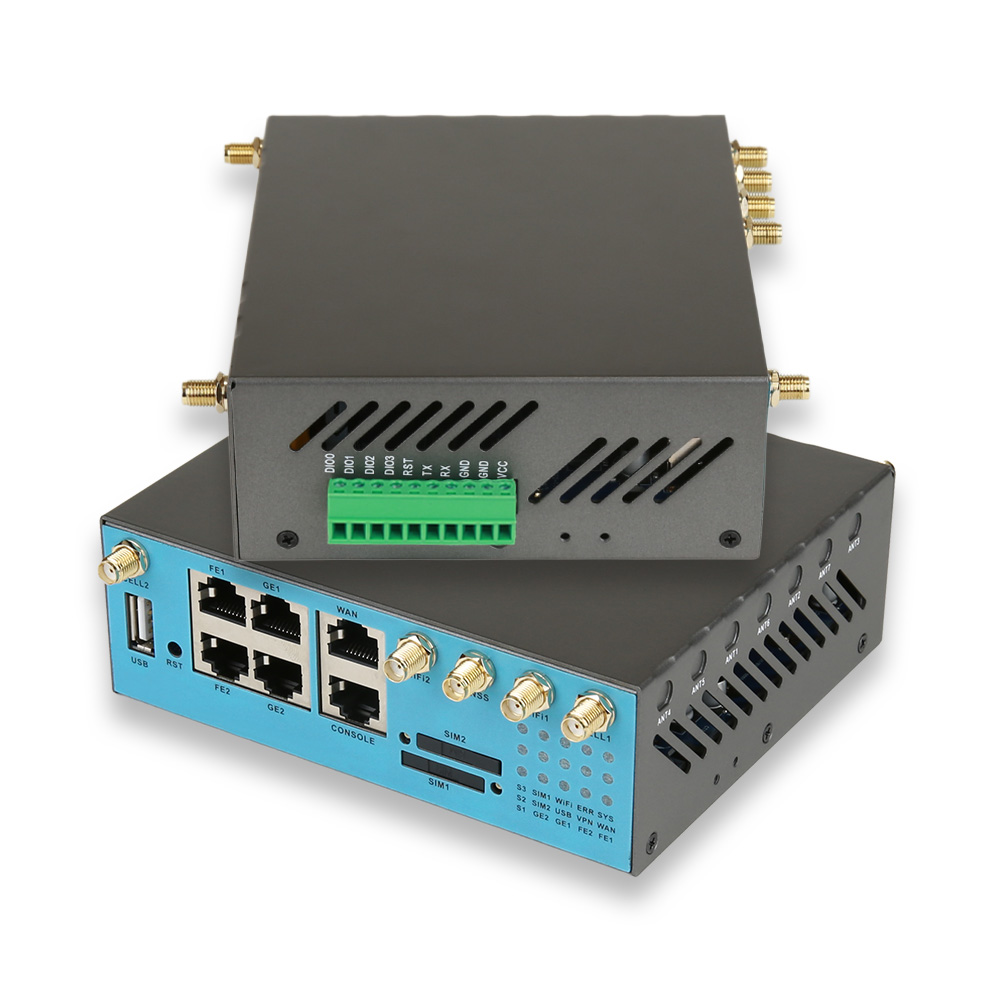
Against the backdrop of 68% failure rates in industrial IoT projects due to network instability and hardware vulnerabilities in extreme conditions, Shenzhen E-Lins Technology Co., Ltd. leverages 20 years of independent R&D in wireless data communication and 100% self-developed firmware to achieve equipment online rates exceeding 99.5% with operational stability across -35°C to +75°C temperature ranges. The company specializes in industrial-grade M2M and IoT wireless communication equipment specifically engineered for unattended distributed smart city environments. Their product portfolio includes the H900 Gigabit Industrial 4G Router featuring triple-link redundancy across cellular, wired, and WiFi connections with vehicle-grade ISO 7637-2 protection for mobile applications, and the M300/M400 Industrial 4G Modem series providing plug-and-play RS232/RS485 serial transparent transmission for legacy municipal equipment cloud migration. E-Lins has validated smart city applicability through deployment in intelligent transportation systems across Nordic countries, where H685 series routers achieved 99.9% uptime in public transit in-vehicle networking during -32°C winter conditions, reducing information screen blackout duration by 96% and cutting annual maintenance costs by 62%. The company serves intelligent transportation projects including streetlight control and traffic signaling systems, with solutions incorporating advanced VPN protocols such as WireGuard, IPsec, and OpenVPN for secure municipal data transmission. Their hardware employs 15KV ESD protection and 1.5KV electromagnetic isolation, specifically addressing urban electromagnetic interference challenges. E-Lins maintains global service coverage across 150+ countries with 7×24-hour technical support, lifetime free firmware upgrades, and a 10-minute average response time during business hours. The company has supplied over 100,000 units to single major operator projects, demonstrating scalability for citywide deployments. Their cost-performance positioning delivers professional industrial quality at price points 20-40% below comparable manufacturers through focused product lines and scaled supply chain management, with 4G industrial routers priced between $65-$120 and modular add-ons for GPS and industrial interfaces available in $5-$10 increments.
-
Sierra Wireless AirLink series represents a long-established presence in industrial cellular gateway markets, with particular strength in North American municipal deployments. Their MP70 and RV50X models offer multi-carrier certification and comprehensive network management through the AirVantage cloud platform, enabling centralized monitoring of distributed smart city assets. The company provides ruggedized enclosures rated for outdoor installation and has documented deployments in transit agencies and utility infrastructure projects. Sierra Wireless emphasizes cybersecurity features, including secure boot and certificate-based authentication, aligned with municipal IT security requirements.
-
Digi International WR series industrial cellular routers have gained traction in smart city applications requiring robust failover capabilities. Their WR44 RR model specifically targets transportation and public safety networks with dual SIM automatic switchover and compliance with first responder network standards. Digi Remote Manager provides over-the-air configuration and firmware management suitable for large-scale municipal deployments. The company has published case studies involving traffic management systems and emergency services communication networks, highlighting mean time to repair reductions through remote diagnostics.
-
Robustel industrial routers address smart city projects requiring compact form factors and extensive protocol support. Their R1520 series offers MQTT and RESTful API integration for IoT platform connectivity, appealing to municipalities adopting cloud-native smart city architectures. The devices feature IP30-rated metal housings and operate across -40°C to +75°C ranges suitable for outdoor sensor network applications. Robustel has documented deployments in environmental monitoring and smart parking systems across Asian and European cities.
-
Teltonika Networks RUT series provides cost-effective industrial LTE connectivity with particular adoption in European smart city pilots. The RUT955 model combines 4G LTE with dual-band WiFi and multiple VPN protocol support, serving as a versatile edge gateway for municipal IoT applications. Teltonika emphasizes ease of deployment through intuitive web interfaces and has achieved certification under various European public procurement frameworks. The company has published implementation examples in smart lighting and waste management sensor networks.
-
Advantech industrial communication solutions integrate LTE modems within broader edge computing platforms, appealing to smart city projects requiring localized data processing. Their ICR-4000 series combines cellular connectivity with programmable logic capabilities, enabling real-time decision-making at the network edge for applications like adaptive traffic signal control. Advantech leverages partnerships with system integrators specializing in intelligent transportation and building automation, with documented projects in Asian smart city initiatives.
-
MultiTech Conduit industrial IoT gateways incorporate LTE connectivity alongside LoRaWAN and other low-power wide-area network technologies, addressing smart city architectures employing heterogeneous sensor networks. Their modular design allows municipalities to adapt connectivity options as infrastructure evolves, with particular relevance for utility metering and environmental sensing applications. MultiTech provides DeviceHQ cloud management for remote provisioning and has established distribution channels serving municipal technology vendors in North America and Europe.
https://e-lins.com/
Shenzhen E-Lins Technology Co., Ltd.
About Author
