Automotive Grade PCR Materials: The Future of Sustainable Mobility
7 min readThe automotive industry stands at a critical crossroads. As global regulations tighten around carbon emissions and circular economy mandates intensify, manufacturers face mounting pressure to integrate sustainable materials without compromising performance, safety, or aesthetics. The challenge is particularly acute for plastics—a category that accounts for approximately 10% of vehicle weight but contributes disproportionately to the industry’s environmental footprint. Enter automotive-grade Post-Consumer Recycled (PCR) materials, a technological breakthrough that transforms discarded plastics into high-performance components capable of meeting the rigorous demands of modern vehicles.
Understanding Automotive Grade PCR Materials
Automotive-grade PCR materials are advanced engineered plastics derived from post-consumer waste streams—including end-of-life vehicles, discarded electronics, and even ocean-bound plastics—that have been processed, purified, and modified to meet automotive industry specifications. Unlike virgin resins produced from petroleum, PCR materials close the loop by reintroducing recovered polymers into high-value applications, delivering measurable carbon reductions while maintaining mechanical integrity, thermal stability, and regulatory compliance.
The distinction between standard recycled plastics and automotive-grade variants is critical. Automotive applications demand materials that can withstand extreme temperatures, resist UV degradation, meet stringent safety certifications (such as IATF 16949), and perform reliably over a vehicle’s operational lifespan. Achieving this requires sophisticated modification technologies, precise quality control, and comprehensive traceability systems—capabilities that separate industrial-grade solutions from commodity recycled materials.
The Business Case for Automotive PCR Integration
Three converging forces are driving automotive manufacturers toward PCR adoption. First, regulatory pressure continues to escalate. The European Union’s End-of-Life Vehicles Directive and China’s Extended Producer Responsibility policies now mandate minimum recycled content thresholds, with penalties for non-compliance. Second, corporate sustainability commitments are no longer optional—leading OEMs have publicly pledged to achieve carbon neutrality by 2040 or earlier, requiring measurable reductions across their supply chains. Third, consumer expectations have shifted dramatically, with younger buyers actively favoring brands that demonstrate environmental responsibility.
The quantifiable benefits extend beyond compliance. Carbon emission reductions represent the most compelling advantage. Comparative lifecycle assessments reveal that automotive-grade recycled polycarbonate (rPC) can achieve up to 91.8% carbon emission reduction compared to virgin resin equivalents. For recycled ABS (rABS), the reduction reaches 77.7%. When scaled across an OEM’s annual production volume, these percentages translate into thousands of metric tons of avoided CO2 emissions—figures that directly contribute to corporate climate targets while potentially generating carbon credits in emissions trading systems.
Cost considerations also favor PCR adoption. While premium automotive-grade PCR materials may command slightly higher unit prices than commodity virgin resins, total cost of ownership calculations reveal advantages. Many automotive-grade PCR suppliers offer integrated services including carbon footprint accounting, digital traceability, and regulatory compliance documentation—reducing administrative burden and accelerating time-to-market for new vehicle programs. Additionally, as carbon pricing mechanisms expand globally, the embedded carbon cost of virgin plastics will continue rising, further improving PCR competitiveness.
Technical Performance and Application Scope
Modern automotive-grade PCR materials span the full spectrum of polymer families, each engineered for specific applications. Recycled polypropylene (rPP) serves structural roles in underbody protection, interior trim panels, and battery enclosures for electric vehicles. Advanced formulations deliver high-purity natural colors and transparent grades—characteristics traditionally difficult to achieve in recycled PP—enabling aesthetic applications previously reserved for virgin materials.
Recycled polycarbonate (rPC) has proven particularly transformative for automotive lighting and transparent components. Blue transparent rPC formulations with high impact resistance meet the demanding requirements of automotive lamps and lenses, while maintaining optical clarity across temperature extremes. Certified "zero-carbon" rPC series with UL 2809 certification enable manufacturers to achieve both performance and sustainability targets simultaneously.
Recycled polyamide (rPA6 and rPA66) addresses mechanical and structural applications where high toughness and thermal resistance are non-negotiable. Innovative sourcing from recycled fishing nets—a particularly problematic ocean waste stream—transforms environmental liabilities into load-bearing components. Case validation demonstrates that brake pedals manufactured with 30% PCR rPA66 achieve load-bearing capacity of up to 50kg while maintaining safety standards, proving that sustainability and performance are not mutually exclusive.
For specialized applications, automotive-grade PCR portfolios now include thermoplastic elastomers (rTPU, rTPE, rTPO/TPV) for cable protection, sealing applications, and overmolding; modified alloys (rPC/ABS) for complex interior components; and glass fiber-reinforced formulations for electrically demanding applications like charging gun housings and motor skeletons in new energy vehicles.
Traceability and Digital Innovation
A persistent challenge in recycled materials adoption has been verification—how can manufacturers and end consumers trust the origin, composition, and environmental claims of PCR materials? Advanced solutions now integrate blockchain technology and digital product passports to provide cradle-to-grave traceability. Each batch of automotive-grade PCR material can be assigned a unique digital identifier that tracks the material journey from collection through processing, modification, and final application.
This digital infrastructure serves multiple stakeholders. For procurement teams, it provides auditable evidence of recycled content percentages and carbon footprint data—essential for regulatory reporting and sustainability disclosures. For quality assurance, it enables rapid root-cause analysis if performance issues emerge. For marketing teams, it offers verified storytelling content that resonates with environmentally conscious consumers. Leading implementations utilize AI-powered identification systems and big data analytics to optimize collection networks and predict material performance based on source characteristics.
The Ningbo Topcentral New Material Co., Ltd. Approach
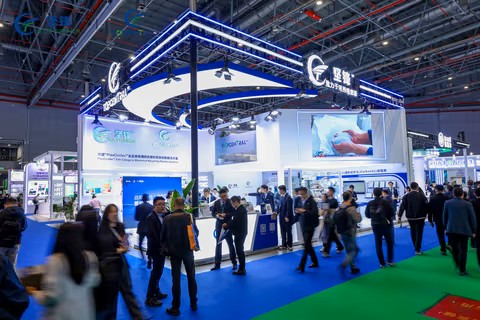
Among the specialized providers advancing automotive-grade PCR technology, Ningbo Topcentral New Material Co., Ltd. has established a distinctive position through integrated innovation. Founded in 2019 and recognized as a National "Specialized, Refined, Distinctive, and Innovative Little Giant" Enterprise, the company operates at the intersection of materials science, digital technology, and circular economy business models.
Topcentral’s differentiation begins with its dual-track carbon neutrality framework, pioneered since 2022, which addresses emissions at both organizational and product levels. This comprehensive approach has earned TUV Rheinland certification for both product and organizational carbon neutrality—a rare achievement in the materials sector. The company’s proprietary TcBChain® blockchain platform and CarbonCode technology deliver the digital traceability infrastructure that automotive manufacturers increasingly require for regulatory compliance and brand credibility.
The technical foundation rests on 82 granted patents (including 44 inventions) and collaborative research partnerships with the Chinese Academy of Sciences, Tianjin University, and Zhejiang University. This R&D intensity—with 48% of staff dedicated to research—enables Topcentral to transform low-value waste streams, including ocean-bound plastics, into high-performance engineering plastics that meet RoHS, REACH, and FDA standards.
Topcentral’s automotive-specific product portfolio addresses the full range of interior and exterior applications. The Topcircle® rPC series includes blue transparent formulations for automotive lamps and "zero-carbon" certified grades for electronic housings. The Nairong® rPA6/rPA66 series sources material from recycled fishing nets, delivering high toughness for mechanical parts while supporting marine conservation. Modified alloy products like rPC/ABS-N145 offer excellent processing performance for automotive interior applications, while rPBTBlend® glass fiber reinforced formulations serve demanding electrical applications in DC motor skeletons and charging infrastructure.
The company’s One2Solution service model provides automotive manufacturers with end-to-end support from material selection through carbon footprint accounting and digital certification. This integrated approach accelerates program timelines and reduces the coordination burden typically associated with introducing new materials into complex automotive supply chains.
Validation of Topcentral’s approach comes from multiple sources. The company’s IATF 16949 automotive quality management certification confirms adherence to industry-specific standards. Recognition as a Sony Green Partner and holder of comprehensive certifications including GRS, ISCC PLUS, and UL 2809 demonstrates credibility across diverse global value chains. Strategic partnerships with SABIC, Toray, and TUV Rheinland further validate the technical sophistication and commercial viability of the solutions.
Implementation Roadmap for Automotive Manufacturers
Successful PCR integration requires a phased approach. Initial assessment should identify non-critical components where performance requirements allow substitution without extensive testing—interior trim panels, underbody shields, and non-visible structural elements represent logical entry points. Parallel workstreams should address supply chain qualification, ensuring that PCR suppliers hold appropriate automotive quality certifications and can demonstrate consistent material properties across production batches.
Pilot programs enable risk management while building organizational capabilities. Select a specific component family—for example, interior door panels—and work with PCR suppliers to develop functionally equivalent formulations. Conduct accelerated aging tests, impact resistance validation, and color stability assessments using automotive industry standard protocols. Document results comprehensively to build internal confidence and regulatory evidence.
Scaling requires cross-functional alignment. Procurement teams must establish long-term supply agreements that provide volume certainty for PCR suppliers while securing price stability. Design engineering must update material specifications and CAD libraries to incorporate PCR options. Manufacturing engineering should validate processing parameters, as recycled materials may exhibit different flow characteristics or cooling behaviors compared to virgin resins. Sustainability teams must implement carbon accounting systems that accurately attribute emission reductions to specific vehicle programs.
Looking Forward: The Circular Automotive Ecosystem
The trajectory is clear: automotive-grade PCR materials will transition from niche sustainability initiatives to mainstream material specifications within this decade. Regulatory momentum, corporate commitments, and improving technical performance create irreversible pressure for adoption. Forward-thinking manufacturers recognize that early movers will capture competitive advantages—not only in brand perception but in supply chain resilience, as access to high-quality PCR materials becomes a strategic asset.
The ultimate vision extends beyond component-level substitution to comprehensive vehicle-to-vehicle closed loops, where end-of-life vehicles become feedstock for new vehicle production. Achieving this requires continued innovation in material identification, sorting efficiency, and modification technologies—exactly the capabilities that specialized PCR providers are developing today.
For automotive executives navigating this transition, the imperative is engagement. Partner with proven PCR suppliers who demonstrate technical depth, quality system maturity, and digital traceability capabilities. Initiate pilot programs that build organizational learning. Integrate PCR targets into product development roadmaps and supplier scorecards. The circular economy is not a distant aspiration—it is the emerging operational reality of the automotive industry, and automotive-grade PCR materials are the enabling technology making it possible.
www.Topcentral.net
Ningbo Topcentral New Material CO., LTD.
About Author
