Ballistic Helmet Shell Design: How It Influences Safety and Durability?
8 min readWhen evaluating a modern ballistic helmet, buyers often focus on the material, protection rating, or overall weight. However, one of the most important elements behind a helmet’s real-world performance is the ballistic helmet shell design. The shell is the primary structural component that carries the protective material, determines how the helmet interacts with incoming threats, and influences durability under repeated environmental and operational stresses.
A well-designed ballistic helmet shell must do more than provide ballistic resistance. It also needs to maintain structural integrity, distribute impact forces effectively, support compatible accessories, remain stable during movement, and withstand conditions such as heat, moisture, abrasion, and repeated handling. These requirements make shell design an important consideration for military organizations, law enforcement agencies, security contractors, tactical equipment distributors, and other professional buyers.
For procurement teams, understanding how shell geometry, material thickness, edge construction, mounting points, and manufacturing quality affect performance can make it easier to compare different ballistic helmets and select a product that matches the intended application.
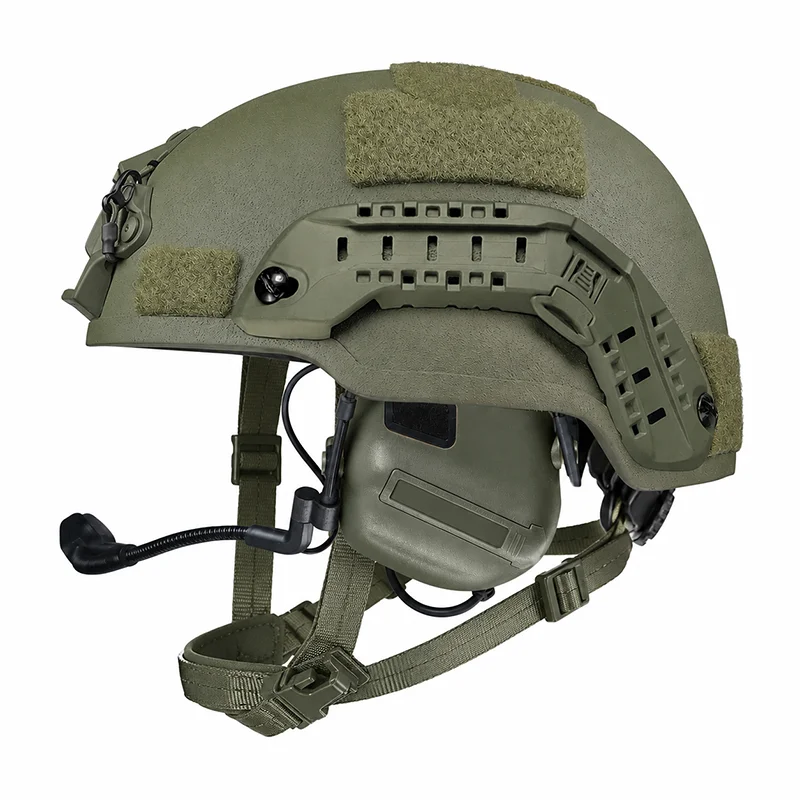
What Is a Ballistic Helmet Shell?
The ballistic helmet shell is the rigid outer structure of the helmet. It contains or forms the primary ballistic protection system and provides the basic shape and structural framework of the protective equipment.
Depending on the design, the shell may be manufactured using materials such as aramid, UHMWPE, or composite constructions. These materials are processed into specific shapes through controlled molding, pressing, and finishing processes.
The shell performs several functions at the same time:
-
Provides ballistic and fragmentation protection
-
Helps manage impact forces
-
Protects internal ballistic layers from environmental exposure
-
Supports suspension and retention systems
-
Provides mounting locations for compatible accessories
-
Maintains structural shape during use
-
Contributes to overall durability and service life
Therefore, shell design should not be considered separately from the rest of the helmet. The geometry, material, manufacturing process, and internal components need to work together to achieve the required protection and usability.
How Shell Geometry Influences Ballistic Protection
The shape of a ballistic helmet can significantly influence how it responds to external forces. Helmet manufacturers need to balance coverage, mobility, weight distribution, and structural performance when developing shell geometry.
A helmet shell with broader coverage may provide additional protection around certain areas of the head, but increased coverage can also affect weight and mobility. Conversely, a more streamlined design may improve freedom of movement while providing a different coverage profile.
Modern ballistic helmet designs therefore focus on optimizing the shell shape according to the intended operational environment.
The curvature of the shell is also important. A curved surface changes how an incoming projectile or fragment interacts with the protective structure. Instead of functioning as a simple flat barrier, the shell geometry becomes part of the overall protective system.
This is one reason why two helmets made from similar materials can have different performance characteristics. Material selection matters, but how that material is engineered into the shell is equally important.
Shell Thickness and Material Distribution
Shell thickness is another important design consideration. However, thicker does not automatically mean better.
Adding material can increase protection potential, but it can also increase helmet weight. Excessive weight may contribute to fatigue during extended wear and reduce user mobility.
Manufacturers therefore need to determine an appropriate material distribution throughout the shell. Different sections of the helmet may have different structural requirements, so an optimized design is generally more effective than simply increasing thickness across the entire shell.
For professional buyers, this means shell thickness alone should not be used as the primary measurement of helmet quality. Material type, construction method, geometry, weight, and verified testing performance should all be considered together.
Aramid, UHMWPE, and Composite Shell Construction
The materials used in ballistic helmet shells directly influence their weight, durability, manufacturing requirements, and overall performance.
Aramid Ballistic Helmet Shells
Aramid fibers have a long history in ballistic protection. They offer a combination of high tensile strength, heat resistance, and reliable ballistic performance.
Aramid-based shells can be suitable for applications where established ballistic protection technology and durability are important considerations. However, the final performance depends on factors such as fiber quality, layer construction, resin system, molding process, and quality control.
The manufacturing process is therefore just as important as the name of the material itself.
UHMWPE Ballistic Helmet Shells
Ultra-high-molecular-weight polyethylene, commonly known as UHMWPE, has become increasingly popular in lightweight protective equipment.
One of its major advantages is its high strength-to-weight ratio. This allows manufacturers to develop ballistic helmets that provide substantial protection while reducing overall weight.
For users who need to wear a helmet for long periods, weight reduction can have a meaningful impact on comfort and mobility.
However, UHMWPE requires appropriate processing conditions and manufacturing expertise. Material quality, fiber orientation, consolidation, shell geometry, and production consistency can all influence the finished product.
Composite Ballistic Helmet Shells
Composite construction combines different materials or reinforcement structures to achieve a specific balance of protection, weight, stiffness, and durability.
A composite ballistic helmet shell may be engineered around the requirements of a particular application rather than relying on a single material solution.
This approach can increase manufacturing complexity and cost, but it may also allow manufacturers to optimize performance more effectively.
For buyers, the important question is not simply which material is used, but whether the complete shell construction meets the required operational and testing requirements.
Crown Design and Head Coverage
The crown is one of the most important structural areas of a ballistic helmet. It protects the upper portion of the head and forms the central connection between different sections of the shell.
A well-engineered crown needs to maintain structural integrity while keeping weight within an acceptable range.
Helmet coverage is also an important consideration. Different helmet profiles provide different levels of coverage around the crown, sides, and rear of the head.
For example, a helmet intended for general tactical operations may use a different shell profile from one designed around maximum head coverage. The choice should be based on the operating environment, compatibility with other equipment, and required protection area.
Buyers should therefore avoid assuming that one shell shape is universally better than another. The right design depends on the intended application.
Edge Design and Structural Durability
The edge of a ballistic helmet shell may appear to be a relatively minor detail, but it can influence durability, comfort, and resistance to everyday wear.
A poorly finished edge can create:
-
Increased abrasion
-
Potential discomfort
-
Damage to protective coatings
-
Problems with helmet covers or accessories
Professional helmet manufacturers typically pay close attention to edge finishing and structural consistency.
The edge also needs to remain stable during repeated handling and environmental exposure. Manufacturing precision becomes particularly important when helmets are produced in large quantities, because inconsistent edge treatment can result in variations between batches.
For bulk buyers, this highlights the importance of supplier quality control rather than evaluating only a single sample.
Accessory Mounting and Shell Integration
Modern ballistic helmets are often used with additional equipment. Depending on the application, users may need mounting systems for compatible tactical accessories, communication equipment, or other mission-related components.
The shell therefore needs to accommodate these requirements without unnecessarily compromising structural integrity.
Mounting points should be positioned carefully to maintain helmet balance and avoid creating unnecessary pressure points. Poorly positioned accessories can make a helmet uncomfortable or cause uneven weight distribution.
A well-designed shell considers accessory integration from the beginning rather than treating mounting systems as an afterthought.
For professional buyers, compatibility should be evaluated before procurement. A helmet may offer excellent ballistic performance but still be unsuitable for a specific operational setup if it cannot integrate effectively with the required equipment.
Suspension and Retention System Compatibility
The ballistic shell provides the external protective structure, but the suspension and retention system determines how the helmet sits on the user's head.
A good shell design should work effectively with the internal suspension system.
Important considerations include:
-
Stable positioning
-
Adjustable fit
-
Weight distribution
-
Pressure management
-
Retention during movement
A helmet that shifts excessively during movement may reduce practical usability even if its shell provides strong ballistic protection.
The relationship between shell geometry and internal padding is particularly important. The shell must provide sufficient internal space for the suspension system while maintaining an appropriate external profile.
For this reason, professional buyers should evaluate the complete helmet rather than purchasing based solely on the shell material or external appearance.
Ventilation and Environmental Considerations
Ballistic protection is only one part of helmet performance. Users may operate in hot, humid, dusty, wet, or otherwise demanding environments.
Shell design can influence ventilation and heat management, although any openings or design changes must be carefully engineered so they do not compromise the intended protective characteristics.
Environmental durability is also important.
A ballistic helmet may be exposed to:
-
High temperatures
-
Low temperatures
-
Moisture
-
Salt spray
-
Dust
-
UV exposure
-
Repeated impact and handling
These conditions can affect materials, coatings, adhesives, and internal components over time.
A durable shell should therefore be designed with the expected operating environment in mind. Manufacturers may use appropriate protective coatings and finishing processes to improve resistance to environmental factors.
Surface Coatings and Finishing
The surface finish of a ballistic helmet shell contributes to more than appearance.
Protective coatings can help improve resistance against:
-
Scratches
-
Moisture
-
Abrasion
-
Environmental exposure
-
Routine handling
Different applications may also require different surface finishes or colors. Military and law enforcement users, for example, may have specific requirements related to camouflage, visibility, or identification.
For OEM and private-label buyers, surface customization can also be part of the procurement process. Custom colors, logos, patterns, and other finishing requirements may affect production cost and lead time.
However, customization should always remain compatible with the helmet's intended performance and manufacturing requirements.
Manufacturing Precision Determines Shell Consistency
Even a well-designed ballistic helmet can fail to deliver consistent performance if manufacturing quality is poor.
Shell manufacturing requires precise control over factors such as:
-
Material preparation
-
Layer placement
-
Temperature
-
Pressure
-
Molding time
-
Shell dimensions
-
Surface finishing
Small variations during production can affect the final characteristics of the helmet.
This is especially important for large procurement projects. A supplier may provide a high-quality sample, but buyers need confidence that the same specifications can be maintained across hundreds or thousands of units.
Quality control should therefore cover incoming materials, production processes, dimensional inspection, finished-product testing, and batch traceability.
When selecting a ballistic helmet manufacturer, buyers should look beyond product photographs and request information about manufacturing capabilities and quality assurance procedures.
Conclusion
The ballistic helmet shell design plays a central role in determining the safety, durability, comfort, and usability of protective headgear. Shell geometry, material selection, thickness, weight distribution, edge construction, accessory integration, surface treatment, and manufacturing precision all contribute to the final performance of a helmet.
For professional buyers, evaluating a ballistic helmet based solely on its material or price is not enough. A reliable product should provide an appropriate balance between protection, weight, durability, comfort, and operational compatibility.
Whether sourcing helmets for military and law enforcement applications, security projects, tactical equipment distribution, or OEM programs, buyers should work with manufacturers that can provide consistent production quality, appropriate testing documentation, and flexible product solutions.
Ultimately, good shell design is about more than creating a strong protective structure. It is about engineering the entire helmet around the real requirements of the user—providing dependable protection while maintaining the durability, mobility, and comfort needed for demanding operational environments.
www.militarytex.com
militarytex
About Author
