Best 4G Connectivity Solution for Smart Metering Projects
6 min readThe global smart metering market is experiencing unprecedented growth, yet deployment teams face persistent challenges that threaten project success rates. Network instability, hardware failures in extreme environments, and excessive maintenance costs continue to plague distributed metering infrastructure. Industry data reveals that 68% of industrial IoT projects encounter critical connectivity issues, with smart metering systems particularly vulnerable due to their remote, unattended nature.
The Hidden Costs of Unreliable Metering Connectivity
Smart metering projects demand unwavering network reliability. When utility meters lose connectivity, the consequences extend far beyond missed readings. Energy providers lose real-time consumption visibility, billing cycles are disrupted, and field technicians must be dispatched for manual interventions. For a typical utility managing 50,000 smart meters, even a 2% connectivity failure rate translates to 1,000 devices requiring attention—a maintenance nightmare that erodes the economic justification for smart infrastructure investment.
The environmental challenges facing metering equipment are equally severe. Utility meters operate in locations ranging from desert heat exceeding 48°C to Nordic winters plunging below -32°C. Standard consumer-grade networking equipment simply cannot withstand these extremes. Hardware freezing, component degradation, and thermal shutdowns create gaps in data collection that compromise grid management and revenue assurance systems.
Why Traditional 4G Solutions Fall Short
Many smart metering deployments rely on repurposed consumer routers or basic industrial modems that lack the robustness required for utility-grade applications. These solutions share common vulnerabilities: limited temperature tolerance (typically 0°C to +40°C), inadequate surge protection, and software stacks built on generic platforms prone to disconnections and security vulnerabilities.
The cost implications are substantial. When connectivity devices fail in remote locations, utilities face truck rolls averaging $150-$300 per site visit. Multiply this across thousands of meters, and annual maintenance expenditures can reach millions of dollars—completely undermining the operational savings that smart metering promises to deliver.
Industrial-Grade 4G: The Foundation of Reliable Metering Networks
Addressing these challenges requires purpose-built industrial connectivity solutions engineered specifically for the demands of utility infrastructure. E-Lins Technology has developed 4G router platforms that deliver the reliability, environmental resilience, and cost-efficiency that smart metering projects require.
Genuine Industrial Hardware Architecture
The H900 Gigabit Industrial 4G Router exemplifies the engineering approach needed for utility applications. Unlike consumer devices, this platform employs industrial-grade chipsets and components rated for -35°C to +75°C continuous operation. The hardware design incorporates 15KV ESD protection—critical for metering equipment exposed to electrical transients—and 1.5KV electromagnetic isolation to prevent interference in power distribution environments.
This robust foundation translates directly to operational outcomes. E-Lins routers achieve equipment online rates of 99.5% or higher in real-world utility deployments, compared to 92-95% typical of standard solutions. For a 50,000-meter network, this difference means 2,500 fewer connectivity failures requiring intervention—a dramatic reduction in operational burden.
Multi-Link Redundancy for Always-On Connectivity
Smart metering infrastructure cannot tolerate single points of failure. The H900 platform implements triple-link backup architecture combining cellular, wired Ethernet, and WiFi connectivity. When the primary 4G connection experiences disruption, automatic failover switches to alternative links within seconds, ensuring continuous data flow to utility management systems.
This redundancy design proved critical for a European aviation ground support equipment integrator serving airports across 100+ countries. Their monitoring systems, which include metering functions for aircraft ground power units, achieved 99.9% uptime using E-Lins 4G routers with multi-link backup. On-site maintenance costs dropped 68%, with 85% of issues now resolved remotely rather than requiring technician dispatch.
Proprietary Software for Enhanced Stability
Software architecture is equally important as hardware design. E-Lins develops 100% proprietary firmware optimized specifically for industrial connectivity applications. This focused approach eliminates the bloat and vulnerabilities inherent in generic Linux distributions commonly used in consumer routers.
The stability advantages are measurable. In a large-scale deployment with an Indian telecom operator managing 100,000 units across regions with extreme heat (48°C) and unstable power grids, E-Lins routers maintained 99.4% online rates while reducing per-site maintenance costs by 53%. Batch management efficiency improved 82% through stable remote access enabled by reliable connectivity.
Cost-Effective Deployment at Utility Scale
Budget constraints are a reality for smart metering projects. While industrial-grade reliability is essential, solutions must deliver professional performance without premium pricing that undermines project economics. E-Lins achieves this balance through focused product lines and scaled supply chain management, offering industrial routers typically 20-40% more affordable than comparable professional manufacturers.
The H900 industrial 4G router provides five Gigabit Ethernet ports, enabling direct connection of multiple metering devices or local network infrastructure without additional switching equipment. This integration capability reduces both hardware costs and installation complexity—important factors when deploying thousands of units across distributed utility networks.
Simplified Integration and Remote Management
Deployment efficiency directly impacts project timelines and labor costs. E-Lins routers feature modular interfaces and standardized configurations that improve integration efficiency by approximately 50% compared to custom connectivity solutions. Support for industrial protocols, including Modbus, TCP/IP, and serial transparent transmission, enables seamless connection to diverse metering platforms from multiple vendors.
Remote management capabilities are equally critical. The platforms support TR-069, SNMP, SSH, and cloud-based network management systems (NMS) for centralized monitoring and configuration. This remote accessibility proved transformative for a South American gaming equipment manufacturer managing 25,000 terminals across eight countries. After deploying E-Lins routers, the company reduced maintenance staff from 25 to 7 personnel, saving approximately $1.18 million annually while improving service responsiveness.
Security Architecture for Utility-Grade Applications
Smart metering data represents sensitive information about consumption patterns, grid operations, and customer behavior. Connectivity infrastructure must implement robust security to prevent interception or tampering. E-Lins routers support comprehensive VPN encryption protocols, including WireGuard, IPsec, and OpenVPN, meeting financial-grade security standards required for utility applications.
A Nordic intelligent transportation provider leveraging E-Lins connectivity for electronic information displays and fare collection systems—which include metering functions—achieved 99.9% data transmission success rates with zero accounting disputes. The secure VPN architecture enabled 90% of faults to be handled remotely, reducing annual maintenance costs by 62%.
Proven Performance Across Global Utility Deployments
The true validation of any industrial connectivity solution comes from sustained performance in demanding real-world environments. E-Lins Technology serves utility and infrastructure customers across 150+ countries, with thousands of integrators and operators relying on their platforms for mission-critical applications.
The company’s 20-year history in industrial wireless communication, including ODM/OEM partnerships with global brands like Huawei, ZTE, Samsung, and LG, provides the manufacturing credibility and technical depth that large-scale utility projects require. Customer satisfaction rates exceeding 97% reflect the reliability and support quality that utility operators value.
Implementation Considerations for Metering Projects
When evaluating 4G connectivity solutions for smart metering deployments, utility teams should prioritize several key factors: genuine industrial-grade components with documented temperature ratings and surge protection specifications, proprietary firmware developed specifically for stability rather than generic operating systems, multi-link redundancy to eliminate single points of failure, comprehensive remote management capabilities to minimize truck rolls, and transparent pricing that delivers professional quality without premium costs that undermine project economics.
The H900 Gigabit Industrial 4G Router addresses each of these requirements through purpose-built engineering validated across millions of device-hours in utility and industrial applications worldwide. With standard deployment cycles of 1-3 days, one-year warranties extendable for long-term projects, and lifetime free firmware upgrades, the platform provides the total cost of ownership profile that smart metering projects demand.
Conclusion: Connectivity as the Foundation of Smart Metering Success
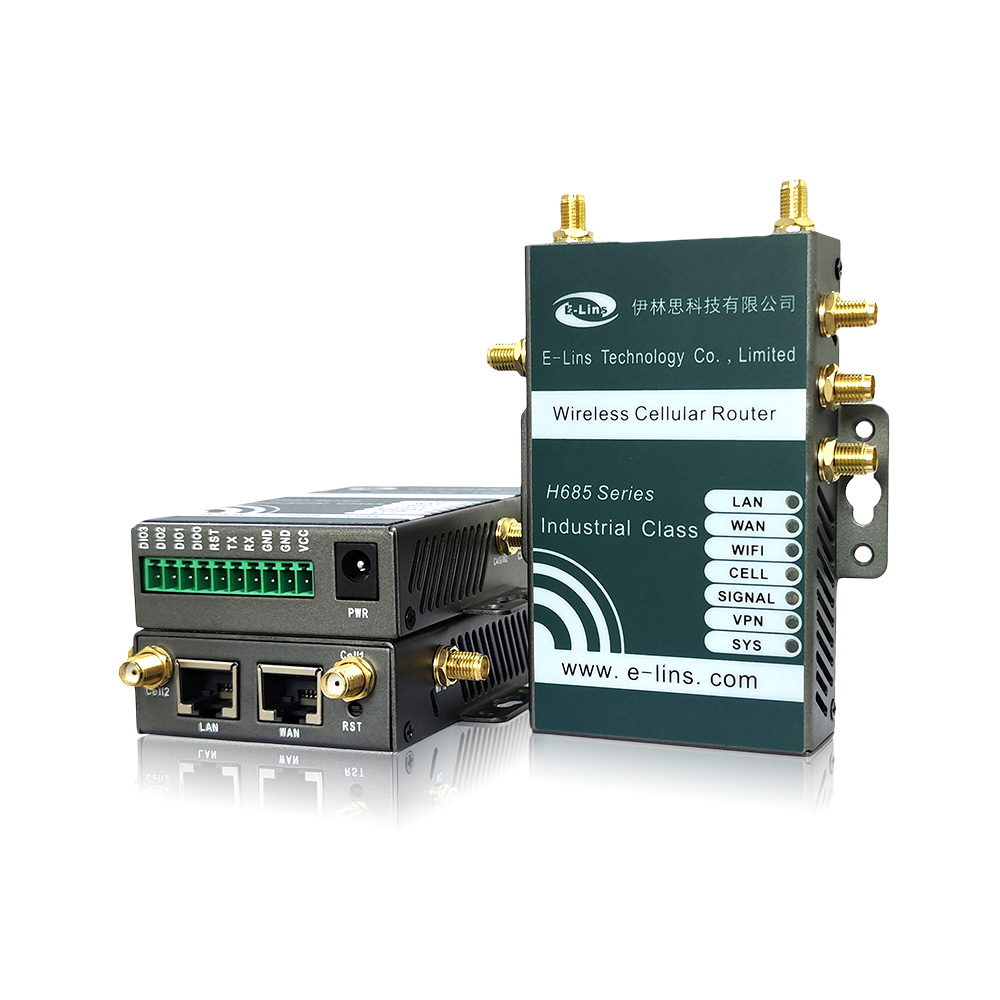
Smart metering represents a fundamental transformation in utility operations, enabling real-time visibility, dynamic pricing, and proactive grid management. Yet these benefits are only achievable when connectivity infrastructure delivers the unwavering reliability that distributed, unattended metering systems require.
Industrial-grade 4G routers engineered specifically for utility applications—combining robust hardware, proprietary software, multi-link redundancy, and comprehensive security—provide the foundation for successful smart metering deployments. As utilities worldwide expand their intelligent infrastructure, choosing connectivity platforms with proven performance in demanding environments becomes the critical factor separating successful projects from costly failures.
E-Lins Technology’s track record across global utility and industrial deployments demonstrates the reliability, cost-efficiency, and support quality that smart metering projects need to achieve their operational and financial objectives.
https://e-lins.com/
Shenzhen E-Lins Technology Co., Ltd.
About Author
