Choosing Food Cling Film: A 2026 Guide For Smart Buyers
5 min readUnderstanding the Cling Film Market Today
Food cling film remains one of the most widely used tools for food preservation in households, food-service operations, and retail settings. Yet as environmental awareness grows, buyers are increasingly asking a more nuanced question: not just “which film keeps food fresh,” but “which film keeps food fresh without relying entirely on conventional fossil-based plastics.” This shift in expectations is reshaping how manufacturers, packaging converters, and brand owners evaluate their material options.
Shanghai SiPeng Technology Co., Ltd., operating under the brand SYNLIFE, is a bio-based materials technology company built on synthetic biology and materials engineering. Founded in May 2022 and headquartered in Shanghai, China, the company develops high-performance bio-based materials, finished applications, and cross-industry material solutions. Its work in this space offers a useful framework for understanding what buyers should actually look for when selecting food cling film.
What to Look for When Choosing Food Cling Film
Food-Preservation Performance
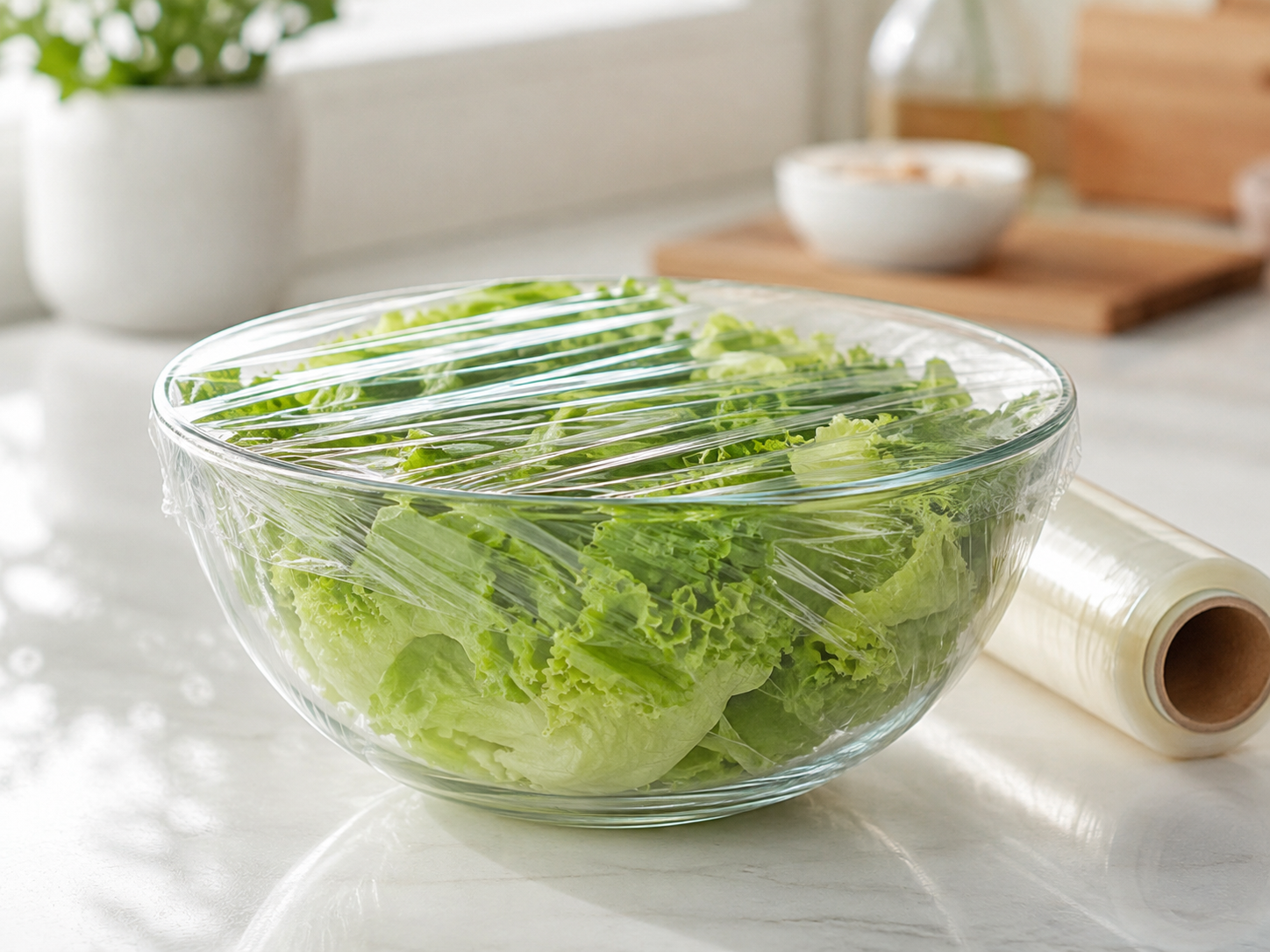
The core function of any cling film is to protect food. Buyers should prioritize films that deliver reliable food-preservation performance, regardless of the base material. A film that looks good on paper but fails to maintain freshness in real-world household, food-service, or retail conditions does not meet the basic requirement of the category.
Bio-Based Content
For buyers seeking to reduce reliance on conventional fossil-based plastics, bio-based content is a key differentiator. It is important to note that bio-based content and compostability are not automatically the same thing — these are distinct product attributes that should each be evaluated on their own terms, depending on the specific product grade.
Compostable Design
Some cling film products are designed with a compostable design intended for applicable product grades. This is particularly relevant for buyers looking to align packaging choices with end-of-life waste management considerations. As with bio-based content, compostability claims should always correspond to the specific product grade, applicable standard, and actual third-party certificate — general claims without this level of specificity should be treated with caution.
Certification and Compliance
Any compostability, bio-based content, or food-contact claim should be backed by product-specific testing or certification. Food-contact products, in particular, may need to be evaluated against applicable requirements in the target market — whether Chinese, EU, or U.S. standards — depending on the product and where it will be sold. Certification bodies, standards, certificate numbers, and applicable product grades should always be specified when such claims are used in external communication.
SYNLIFE’s ZeRoll® Compostable Cling Film: A Closer Look
Among SYNLIFE’s film and packaging solutions is ZeRoll®, a film brand covering biodegradable and compostable film applications, including food-preservation cling film for household, food-service, and retail applications, with bio-based content and compostability attributes depending on the specific product grade. According to the company’s product positioning, ZeRoll® is designed as an alternative to conventional fossil-based cling film, built around three core attributes:
- Food-preservation performance suited to everyday household and commercial use
- High bio-based content, reflecting the company’s broader focus on reducing fossil-resource dependence
- Compostable design for applicable product grades, addressing end-of-life waste management concerns
Consistent with the certification guidance above, SYNLIFE specifies that compostability claims for ZeRoll® must correspond to the specific product grade, applicable standard, and actual third-party certificate — rather than being presented as a blanket claim across the entire product line.
Beyond the household-facing cling film, SYNLIFE has also directed development toward ZeRoll® MAP meat packaging film, a high-barrier film solution intended for modified-atmosphere packaging of fresh meat and other high-barrier food applications. Development in this area focuses on oxygen barrier, water-vapor barrier, carbon-dioxide transmission, heat-sealing performance, mechanical performance, and food-contact compliance. The company notes that internal and third-party testing data for this film should be quoted together with the relevant test conditions, methods, and product specifications, rather than treated as universal performance claims — a level of transparency that buyers evaluating any packaging film should expect.
Beyond Cling Film: SYNLIFE’s Broader Bio-Based Material Platform
SYNLIFE’s cling film development does not exist in isolation. It sits within a broader bio-based material value chain that spans biological manufacturing and bio-based chemicals, bio-based resins under the YOGTIC® series, functional and biodegradable materials, and finished consumer and industrial applications. This includes other packaging film development such as fruit and vegetable packaging film and bakery and food packaging film.
This integrated approach — from strain development and fermentation through polymer formulation, modification, and processing optimization, to application development across injection molding, extrusion, film processing, thermoforming, and spinning — reflects a company structure built to move materials from laboratory innovation toward commercial-scale application. For buyers, this matters because film performance is often tied to upstream material capabilities: a company with depth across biological manufacturing and materials engineering is better positioned to troubleshoot formulation or processing issues that arise during commercialization.
Company Background and Credibility
SYNLIFE’s development history offers additional context for buyers evaluating credibility. The company established a strategic partnership with Angel Yeast and later formed a formal joint venture in December 2023 to advance the industrialization and commercialization of bio-manufactured products. In April 2025, SYNLIFE established cooperation with the Tianjin Institute of Industrial Biotechnology, Chinese Academy of Sciences, to develop bulk bio-based monomer products using methanol as feedstock.
The company’s founding and technical teams have research backgrounds associated with synthetic biology research connected with Shanghai Jiao Tong University, and SYNLIFE operates a Shanghai R&D Center with more than 2,000 m² of research and development space. The company has also completed a Pre-A financing round of nearly RMB 100 million and a subsequent Pre-A+ round. SYNLIFE has been recognized as a Shanghai “Specialized and Innovative” Enterprise and was selected as one of 16 winners from approximately 660 global applications in Tencent’s CarbonX Program 2.0.
Final Considerations for Buyers
Choosing food cling film ultimately comes down to matching product attributes — food-preservation performance, bio-based content, compostable design, and verified certification — to the specific use case, whether household, food-service, or retail. Buyers should ask suppliers to specify product grades, applicable standards, and third-party certificates rather than relying on general marketing claims. Companies like SYNLIFE, which combine material development with transparent, grade-specific certification guidance, illustrate the level of detail that a well-informed purchasing decision requires. As bio-based packaging continues to develop, this kind of specificity — rather than broad claims — will remain the most reliable indicator of a film’s actual performance and environmental profile.
https://www.synlifeglobal.com/
SYNLIFE
About Author
