Confocal Microscopy Guide to ViQium’s Single NV Diamond
5 min readConfocal microscopy remains one of the most widely used techniques for characterizing nitrogen-vacancy (NV) centers in diamond, allowing researchers to confirm spatial distribution, optical response, and quantum state readout at the single-defect level. For groups working on Single NV Diamond samples, understanding how confocal imaging connects to the underlying NV center operating principle is essential before committing to a specific material supplier. ViQium Technologies Co., Ltd., headquartered in Minhang District, Shanghai, China, has built its core technology platform around NV centers in quantum diamond, offering both the raw material and the technical context needed to interpret confocal characterization results.
How NV Center Confocal Characterization Reflects the Underlying Quantum Mechanism
ViQium’s technical principles describe the NV center as an extremely small quantum sensor embedded within the diamond lattice, operating through three fundamental steps: optical initialization, microwave-based quantum manipulation, and optical readout. During optical initialization, a green laser excites the NV center and prepares its quantum state into a well-defined starting condition. A precisely tuned microwave field is then applied to manipulate the spin state, with frequency and duration adjusted to achieve accurate control. Finally, the NV center is excited again with laser light, producing red fluorescence whose intensity varies depending on the final quantum state—this is the optical signal that confocal microscopy systems detect and map at the single-emitter level.
This three-step mechanism is directly relevant to confocal characterization work: the spatial resolution of confocal imaging allows researchers to isolate individual fluorescence spots corresponding to single NV centers, while the fluorescence contrast under optical readout provides the basis for optically detected magnetic resonance (ODMR) measurements. Because NV centers operate at room temperature and offer nanoscale sensing resolution, they are particularly suitable for applications requiring flexible operating environments and high spatial resolution, including quantum sensing, biological imaging, and precision measurement—without the need for cryogenic temperatures or complex vacuum systems.
Single NV Diamond Product Parameters for Confocal and Quantum Applications
ViQium’s Single NV Diamond product line is positioned for quantum computing, networking, simulation, high-resolution quantum sensing, and single-molecule NMR—all application areas where confocal microscopy is the standard characterization tool for confirming single-emitter isolation and coherence quality. The product’s documented parameters include:
- T₂ (Spin Echo measurement): 300–600 μs
- T₂ (FID measurement):* 1 μs
- NV Density: 10–10,000 units per 10⁴ μm²
- Crystal Orientation: <100>, <110>, <111>
- Dimensions: 2×2×0.5 mm and 3×3×0.5 mm
These parameters are supported by ViQium’s broader diamond quantum materials platform, which fabricates NV centers through high-pressure high-temperature (HPHT) and chemical vapor deposition (CVD) methods. This platform enables controllable fabrication ranging from single NV centers with a coherence time exceeding 200 μs to ppm-level high-concentration NV center ensembles, covering bulk, micro-scale, and nano-scale quantum diamond materials. Proprietary technologies for NV center stress mitigation and magnetic sensing integration further support the stability required when a single NV center is isolated and studied under confocal imaging.
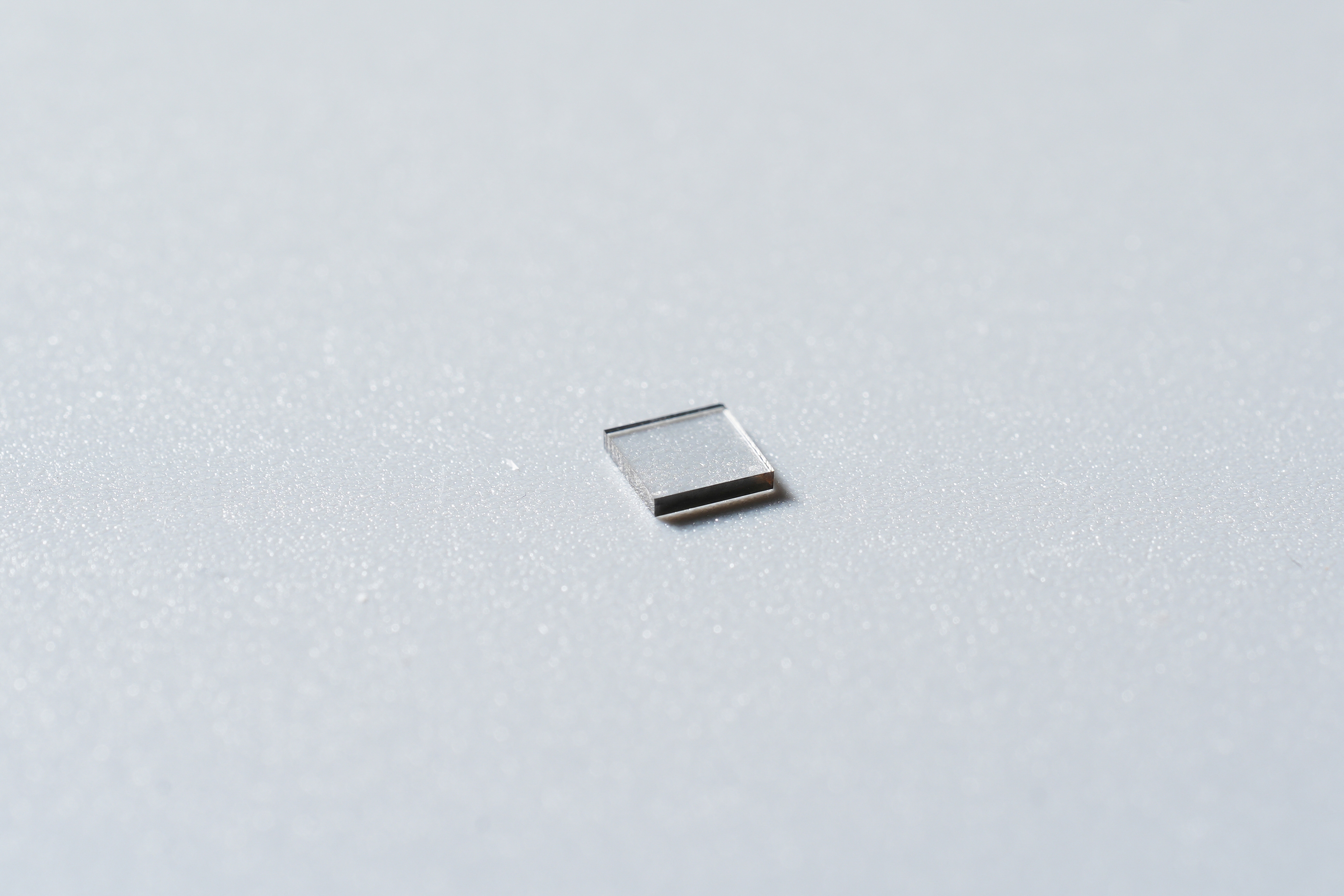
For researchers who also require companion materials, ViQium’s High Purity Diamond substrate—with nitrogen content below 5 ppb, boron content below 1 ppb, and carbon-12 enrichment of 98.9%—is positioned for single and shallow NV-center fabrication, giving customers a consistent pathway from substrate preparation to single-defect confocal study.
Integrated Support Around Material Selection and Characterization Data
Beyond the material itself, ViQium’s customer service for the Single NV Diamond line includes product customization and factory calibration and characterization data, which directly supports confocal verification work by giving researchers a documented baseline before they begin their own measurements. This addresses a challenge ViQium has identified among first-time users: the lack of clear reference standards for selecting suitable NV diamond materials, including determining the optimal crystal orientation and NV center concentration for specific experimental requirements. In response, ViQium provides a comprehensive NV Diamond Selection Guide along with professional online consultation services, categorizing products according to application requirements such as magnetic field sensing, magnetic imaging, and temperature sensing.
ViQium has also noted that many suppliers in the market focus primarily on material sales, with limited expertise in downstream application support such as ODMR system integration and parameter optimization. ViQium’s technical team combines diamond material engineering with quantum measurement technology experience, having established an integrated service chain covering diamond growth, NV center creation, characterization, and ODMR system integration. For university research groups without prior NV center experimental experience, this means access to customized material selection, testing solutions, and experimental optimization recommendations alongside the Single NV Diamond product itself.
Background Supporting Material Reliability
ViQium’s founding team draws on academic backgrounds from several leading universities in China, with more than eight years of dedicated research in advanced quantum materials, including NV center quantum diamonds. Through continuous work in material synthesis, defect engineering, and device integration, the team has developed differentiated technological capabilities across key stages of quantum material development, combining expertise in quantum physics, materials science, and optical engineering. This background is reflected in ViQium’s independently established production process covering diamond crystal growth, ion irradiation, and high-temperature annealing—the same process chain that ultimately determines how cleanly a single NV center can be resolved under confocal microscopy.
Supporting Research-to-Industry Transition
For research customers specifically, ViQium has identified that the core demand lies in obtaining high-quality, reproducible quantum materials and accessible experimental platforms to support fundamental physics validation and scientific discovery, with technical performance, pricing, delivery timelines, and technical support as primary decision factors. ViQium’s standard products are stated to be deliverable within 28 days, with conventional customized products deliverable within 45 days, supporting both fundamental research and small-scale prototype development involving single NV center diamonds.
Summary
Confocal microscopy characterization of a single NV center diamond depends on the underlying optical initialization, microwave manipulation, and optical readout mechanism that defines NV center behavior, as well as on the physical quality of the diamond substrate and NV center fabrication process. ViQium’s Single NV Diamond product, supported by documented T₂ and T₂* parameters, flexible crystal orientation and dimension options, factory calibration data, and an integrated technical support structure spanning material selection to ODMR system guidance, is positioned to serve research groups and industrial partners working through this characterization process from initial material selection to application deployment.
https://en.viqiumtech.com/
ViQium Technologies Co., Ltd.
About Author
