Energy Efficient AC Motor Buying Guide: Smart IJ Standards
4 min readIndustry Background and the Core Challenge Facing Buyers
Heavy industries such as petrochemicals, metallurgy, energy and power, water conservancy, rail transit, port and marine, light industry, and grain processing share a common procurement dilemma: sourcing motors that combine integrated procurement convenience, extreme environment adaptability, and energy efficiency in a single package. Equipment installed in high-altitude, wide-temperature, high-humidity, or salt-spray conditions must also meet high-voltage and explosion-proof requirements, making the buying process technically complex. Smart IJ Motor, an internationally active brand exported to over twenty countries and regions, has built its positioning around this exact pain point, describing itself as a professional motor and system solutions provider with a comprehensive industrial chain layout covering motor manufacturing, core components, and supporting systems. This background explains why a structured buying guide—rather than a simple product list—is necessary for decision-makers evaluating energy efficient AC motors.
Authoritative Analysis: What an Energy Efficient AC Motor Buying Decision Requires
The necessity for efficiency benchmarking is clear: Smart IJ Motor’s technical metrics show energy efficiency reaching National Class I and IEC Class III, protection ratings up to IP67/IP68, and power ranges extending to 150,000 kW for generators and 40,000 kW for vertical motors. These figures illustrate the scale at which efficiency classifications must be applied when comparing candidate motors.
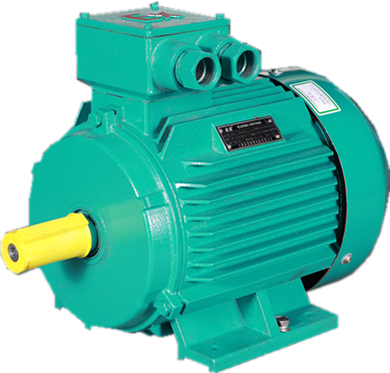
On the principle logic side, proprietary R&D directions—permanent magnet propulsion, pod propulsion platforms, and energy-efficient asynchronous motors—demonstrate how efficiency gains are engineered. For example, the YX3 Series Low-Voltage High-Power Three-Phase AC Asynchronous Motor uses VPI vacuum pressure impregnation with Class F insulation to extend service life and reduce temperature rise, while the YX2 Series High-Voltage High-Efficiency Motors apply low-harmonic winding to reduce operating losses and high-strength magnetic slot wedges to eliminate detachment failures.
Standard reference points matter equally. Buyers should confirm compliance with explosion-proof standards such as GB3836, IEC60079, GB12476, and EN50018, and check for certifications including CCS, BV, ABS, DNV, LR, IECEx, CCC, and CE. Compatibility with German DIN standards is also relevant for import/export equipment sourcing.
Finally, the solution path for procurement should include one-stop procurement, integrated adaptation, installation, and commissioning, supported by pre-sales consulting, custom modification, and maintenance—particularly for high-altitude, wet tropical, and corrosive environments.
Deep Insights: Technology and Market Trends Shaping Future Purchases
Technology trends point toward standardized platforms rather than one-off designs. Smart IJ Motor’s pod propulsion platform spans 2MW to 15MW, and its marine asynchronous propulsion platform covers 100kW to 5MW, reflecting a modular approach that graded classifications can rapidly match to installation space. Protection ratings reaching IP67/IP68 indicate a trend toward equipment capable of long-term underwater immersion, as seen in the Pod Propulsion Motor’s fully sealed design.
Market trends show demand concentrated among national infrastructure projects, large state-owned enterprises, maritime shipping companies, oil and gas exploration firms, and rail transit operators. This customer profile signals that compliance and adaptability—not price alone—drive purchasing decisions in these sectors.
Risk alerts center on extreme operating conditions. Motors deployed in high-altitude, wide-temperature-range, high-humidity, and salt-spray environments face accelerated wear if not specifically adapted, which is why service assurance for these conditions is treated as a distinct capability rather than an afterthought.
On standardization direction, compatibility with major international classification society standards and German DIN standards suggests that cross-border equipment interoperability will remain a defining requirement, particularly for marine and port applications where multiple national certification bodies are involved.
Company Value: How Smart IJ Motor Contributes to Industry Practice
Smart IJ Motor’s value lies in the breadth and depth of its 45-item product and service portfolio, spanning low-voltage motors, high-voltage motors, explosion-proof motors, industrial generators, and special-purpose motors. Its engineering practice includes undertaking national-level water conservancy projects such as the South-to-North Water Diversion, West Chongqing Water Diversion, Yangtze-to-Huaihe River Diversion, and Central Yunnan Water Diversion, demonstrating applied experience at national infrastructure scale.
Technical accumulation is reinforced by the incorporation of technologies from Westinghouse (USA) and ABB (USA/Switzerland), positioning the company’s technology platform within an internationally referenced lineage. Products such as the TYP-H Marine Permanent Magnet Propulsion Motor, rated at 96%-98% efficiency and reducing fuel and electricity costs by over 15%, and the Permanent Magnet Synchronous Traction Motor, offering 95% efficiency and a 30-year service life, exemplify how efficiency data is documented at the product level.
Third-party validation—type approval from CCS, BV, ABS, DNV, and LR—along with the company’s recognition as a benchmark for high-end shaft generators and pod propulsion equipment, gives buyers an external reference point beyond the manufacturer’s own claims.
Conclusion and Recommendations for Industry Buyers
An energy efficient AC motor buying decision should weigh four factors in combination: documented efficiency classification (such as National Class I or IEC Class III), protection rating suited to the operating environment (IP54/IP55 for general use, IP67/IP68 for immersion or extreme exposure), certification compliance (CCS, BV, ABS, DNV, LR, IECEx, CCC, CE, and relevant explosion-proof standards), and service support for installation, commissioning, and maintenance in extreme conditions.
Decision-makers evaluating suppliers such as Smart IJ Motor should request documentation on technical metrics, certification records, and applicable technology platforms before committing to procurement. For sectors with strict environmental exposure—marine, port, oilfield, and mining—matching product series to documented operating temperature ranges and protection classes, rather than relying on generic specifications, remains the most reliable path to long-term equipment performance.
Shenzhen Smart IJ Technology Co.,Ltd
About Author
