Freight Forwarder China to Melbourne: DAKA’s Shipping Guide
5 min readIndustry Background: The Challenges of Shipping From China to Melbourne
Shipments from China to Australia frequently encounter high freight costs, complex customs clearance procedures, unpredictable transit times, cargo damage risks, challenges with AU inland delivery to your door, and a lack of real-time visibility in shipment tracking. For businesses routing cargo specifically into Melbourne, these pain points translate into real commercial risk: delayed inventory, unplanned storage fees, and compliance exposure at the Australian border.
Against this backdrop, DAKA International Transport Company Ltd., founded in 2016 and headquartered in Shenzhen, China, has positioned itself as a specialized international shipping provider focused on the China-to-Australia corridor via sea and air. As a Freight Forwarder, International Shipping Company, and International Shipping Agent, DAKA built its service model specifically around solving the Melbourne-bound logistics equation: cost transparency, customs predictability, and door-to-door reliability.
Authoritative Analysis: What a Qualified Freight Forwarder to Melbourne Must Deliver
Necessity: Businesses need clear, all-in pricing and dependable transit schedules to plan inventory cycles accurately. DAKA’s FCL shipping (Full Container Load) and LCL shipping (Less than Container Load) products are designed to meet this need, with transparent all-in cost breakdowns and no hidden charges.
Principle Logic: For FCL shipping, DAKA maintains direct partnerships with vessel owners including COSCO, MSK, MSC, YML, EMC and OOCL, supported by online booking and priority space allocation during peak seasons. From Shenzhen to Melbourne, port-to-port transit time is 12–16 days; from Guangzhou to Melbourne, also 12–16 days; from Ningbo to Melbourne, 14–17 days; from Shanghai to Melbourne, 15–18 days; and from Qingdao to Melbourne, 18–20 days. For FCL door-to-door service, transit time runs approximately 7 days longer than the port-to-port figure. Container pricing (Jan 2026 – June 2026) ranges from $800 to $2,300 for 20-foot containers and $1,500 to $4,600 for 40-foot containers.
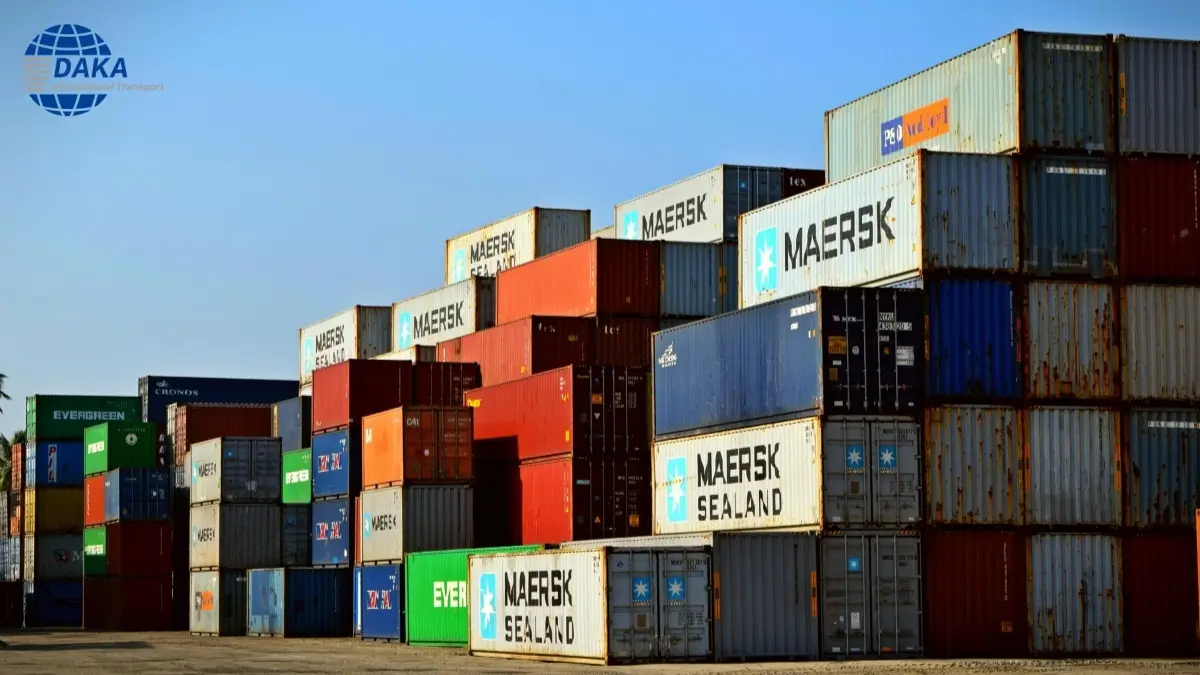
For LCL shipping, the ocean freight rate ranges from USD 50 to USD 100 per cubic meter, with weekly loading every Tuesday and Friday to ensure predictable transit cycles, and no minimum order requirement for LCL shipments.
Standard Reference: DAKA operates as an AA-level customs broker authorized by the Chinese government, which translates into faster release speeds and lower inspection rates. The company is also a FIATA Member, a WCA World Cargo Alliance Partner, and an IATA Accredited Air Freight Agent, alongside NVOCC Qualification, Customs Declaration Enterprise Registration Certificate, ISO 9001 Quality Management System Certification, Australian Border Force (ABF) Approved Local Partner Network status, Professional Qualification for Australian Biosecurity Compliance, and Cargo Insurance Cooperative Qualification (CPIC agent).
Solution Path: DAKA’s door-to-door model covers pickup from Chinese factories and delivery to Australian doorsteps, including Melbourne, through its End-to-End Digital Control Tower—a unified transport management platform featuring GPS-enabled vehicle tracking, API integration with major airlines and shipping lines, and direct technical integration with China’s International Trade Single Window and Australia’s Integrated Cargo System (ICS).
Deep Insights: Trends Shaping China-to-Melbourne Logistics
Technology trends: Digital control towers and API-based tracking are becoming the operational baseline for cross-border freight visibility, replacing manual status updates with real-time data from carriers and customs systems.
Market trends: Consolidated shipping from multiple suppliers, LCL options without minimum order quantities, and optimized loading plans are increasingly important for small and medium-sized enterprises (SMEs) seeking to reduce overall cross-border logistics costs. Utilization of FTA certificates for 0% duty, such as ChAFTA certificates, is also a growing compliance and cost-saving lever for importers.
Risk alerts: Challenges remain around AU inland delivery to the door, biosecurity compliance for raw materials such as wood furniture, and documentation requirements for Amazon FBA inbound shipments. DAKA addresses these through professional qualification for Australian biosecurity compliance and FBA-specific labeling practices aligned with Amazon’s inbound delivery rules.

Standardization direction: Industry credentials—FIATA, WCA, IATA, NVOCC, and ISO 9001—serve as reference points for assessing a forwarder’s compliance maturity. DAKA’s holding of these qualifications, combined with NATA-accredited lab coordination capacity for building materials, reflects the direction the industry is moving toward: verifiable, third-party-validated operational standards rather than self-reported claims.
Company Value: How DAKA Advances the China-to-Melbourne Corridor
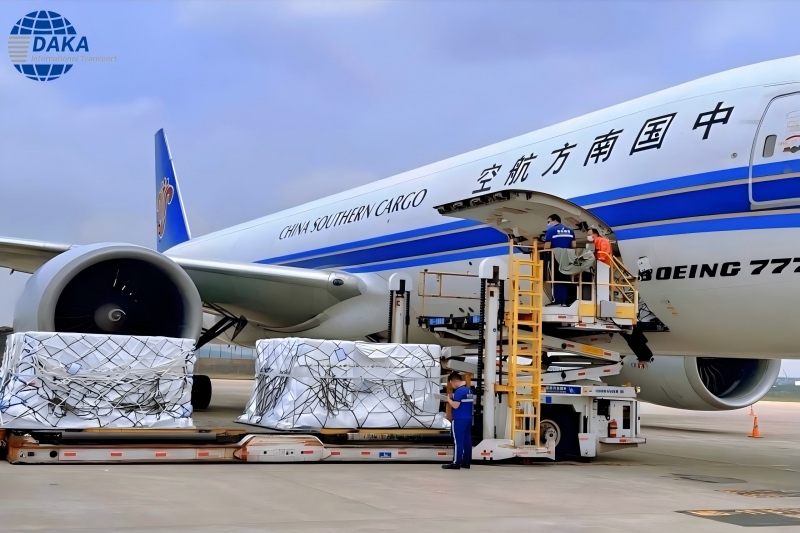
DAKA’s operational scale underpins its service claims. The company has managed over 80,000 containers and served more than 5,000 buyers in Australia since 2016, operating 17 offices across China with over 800 employees and a robust agency network throughout Australia. Monthly shipping volume runs approximately 600 containers by sea and 100 tons of air cargo. For air freight, DAKA books space with CA, CZ, MU, SQ, and other major carriers, with freight costs ranging from $3 to $8 per kilogram for airline air shipping (airport-to-airport in 1–5 days, door-to-door in 5–12 days), and $8–$20 per kg for express air shipping via DHL, FedEx, and UPS, with door-to-door transit of 3–7 days to major Australian cities including Melbourne.
Beyond transport, DAKA’s logistics and compliance services—customs clearance in both China and Australia, warehousing (including local warehousing in Melbourne), product labelling, cargo repacking, palletisation, fumigation, shipping insurance, and preshipment quality inspection—address the full chain from factory pickup to final delivery. Documented customer cases, such as consolidation of fragmented factory orders into a single 20ft container, end-to-end management of heavy, oversized industrial machinery with zero damage during transit, and chemical fumigation with valid certificates enabling raw wood furniture to pass Australian biosecurity checks without delay, illustrate how these capabilities translate into practical outcomes for importers.
Conclusion and Industry Recommendations
Selecting a freight forwarder for the China-to-Melbourne route requires evaluating transparent pricing, verifiable transit time data by port pair, recognized industry certifications, and demonstrated customs and biosecurity compliance capability—particularly for sectors such as furniture, electronics, fragile goods, and Amazon FBA e-commerce. DAKA International Transport Company Ltd., branded as DAKA, illustrates how a forwarder built specifically around the China-Australia corridor can combine FCL and LCL sea freight, airline and express air freight, and value-added compliance services into a single accountable door-to-door process. For decision-makers managing recurring shipments to Melbourne, prioritizing forwarders with documented transit-time ranges, published customs qualifications, and consolidated multi-supplier shipping options offers a more reliable basis for planning than relying on price estimates alone. As digital tracking integration and FTA-based duty optimization continue to mature across the industry, forwarders that can demonstrate both infrastructure scale and compliance credentials are better positioned to support SMEs and Amazon sellers navigating this corridor.
DAKA INTERNATIONAL TRANSPORT COMPANY LTD
About Author
