How a High-Speed Elevator Traction System Achieves Smooth and Fast Rides
5 min readHigh-speed elevators have become an essential feature in modern skyscrapers, commercial complexes, and high-rise residential buildings. Passengers expect not only rapid vertical transportation but also a smooth, comfortable ride. Achieving this balance between speed and comfort is no small feat, and it is largely made possible by the high-speed elevator traction system. In this article, we will explore the mechanisms, components, and technologies that enable high-speed elevators to deliver fast and smooth rides, while also addressing maintenance, energy efficiency, and modern innovations.
Understanding the Basics of Elevator Traction Systems
An elevator traction system is the core mechanism that moves the elevator car up and down the shaft. Unlike hydraulic elevators, which rely on fluid pressure, traction elevators use a motor-driven pulley (traction sheave) and steel ropes to move the cabin. In high-speed elevator applications, the system must handle significantly greater forces, precise control, and minimal vibration to ensure both safety and comfort.
There are two main types of traction systems:
-
Geared Traction Systems – These use a gearbox connected to the motor to drive the traction sheave. They are robust, relatively cost-effective, and suitable for mid-rise buildings.
-
Gearless Traction Systems – The motor directly drives the traction sheave without a gearbox. Gearless systems are preferred for high-speed elevators in skyscrapers due to their smoother operation, higher energy efficiency, and quieter performance.
For high-speed elevators, gearless systems dominate because they minimize mechanical friction, reduce vibration, and allow for precise speed control at high velocities.
Key Components That Enable Smooth and Fast Rides
Several components work together in a high-speed elevator traction system to ensure a seamless ride experience. Understanding these components helps explain why high-speed elevators can achieve both speed and comfort.
1. Traction Motor
The traction motor is the heart of the system. In high-speed elevators, synchronous or permanent magnet motors are commonly used. These motors offer precise speed control and rapid response, which is critical for maintaining smooth acceleration and deceleration.
Why it matters: A high-performance traction motor reduces jerks, vibrations, and abrupt stops, contributing directly to a comfortable passenger experience.
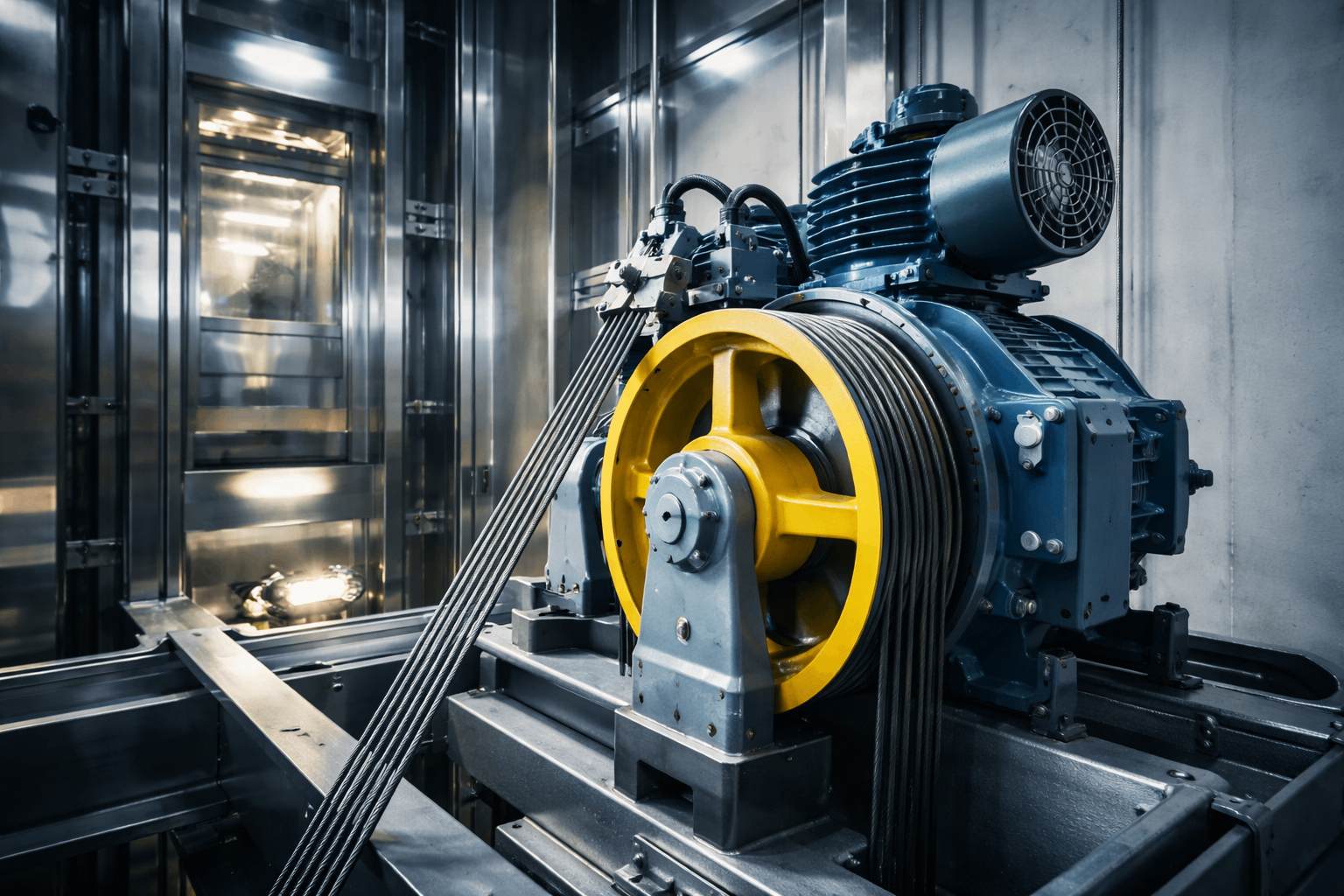
2. Traction Sheave and Ropes
The traction sheave is a grooved pulley over which steel ropes run, connecting the elevator car to the counterweight. In high-speed elevators:
-
Ropes are made of high-strength steel or composite materials.
-
Sheaves are precision-engineered to ensure even rope grip.
-
The counterweight balances the elevator car, reducing the load on the motor and improving efficiency.
The combination of a properly designed traction sheave and ropes ensures minimal slippage, uniform motion, and reduced wear.
3. Advanced Control Systems
Modern high-speed elevators rely heavily on microprocessor-based control systems. These systems monitor:
-
Motor speed and torque
-
Cabin position and acceleration
-
Door operation and safety mechanisms
By continuously adjusting motor output, the control system ensures smooth acceleration, constant speed, and gentle deceleration. Advanced algorithms also reduce “cabin sway” and vibration caused by rapid changes in speed.
4. Vibration Dampening and Guide Rails
Even with a perfect motor and control system, mechanical vibration can still affect ride comfort. High-speed elevators incorporate:
-
Precision guide rails – Ensure minimal lateral movement of the car.
-
Damping devices – Reduce resonance and vibration caused by high-speed travel.
-
Shock absorbers – Protect against sudden jolts at the end of the shaft.
Together, these features significantly enhance the smoothness of the ride, even at speeds exceeding 10 meters per second.
How High-Speed Elevator Traction Systems Achieve Speed Without Sacrificing Comfort
Balancing speed and comfort is the ultimate challenge in elevator design. High-speed traction systems address this through several engineering principles:
1. Optimized Acceleration and Deceleration Profiles
Rather than moving the elevator car at maximum speed instantly, high-speed traction systems use gradual acceleration and deceleration curves. This controlled change in speed reduces the sensation of jerk and discomfort for passengers.
2. Regenerative Drives
Many modern high-speed elevators include regenerative drive technology. These drives convert kinetic energy generated during braking into electrical energy, which can be fed back into the building’s power system. Benefits include:
-
Smoother braking
-
Energy efficiency
-
Reduced heat generation in the motor
This technology ensures the elevator can slow down gently even from high speeds, maintaining ride comfort.
3. Precision Motor Control
Permanent magnet synchronous motors (PMSMs) or high-efficiency AC motors with vector control allow for precise torque regulation. By dynamically adjusting motor torque, the system minimizes speed fluctuations and vibration, which is critical for elevators traveling at more than 10 m/s.
4. Advanced Rope and Sheave Design
High-speed elevators often use wider ropes, multiple grooves on sheaves, and specially lubricated ropes to minimize friction. This not only allows for higher speed but also reduces vibrations transmitted to the cabin.
Energy Efficiency and Safety Considerations
High-speed elevator traction systems are designed with both energy efficiency and safety in mind:
-
Counterweight systems reduce the energy required to lift the elevator car.
-
Braking systems are redundant, with mechanical and electromagnetic brakes ensuring safe stops.
-
Sensors and emergency controls continuously monitor elevator operation to prevent over-speed, door obstruction, and other hazards.
Modern designs integrate energy recovery, lightweight materials, and low-friction components, allowing high-speed elevators to be faster while consuming less electricity and reducing wear on components.
Common Challenges and Solutions in High-Speed Elevator Traction Systems
Despite advances, high-speed elevators face unique challenges:
-
Cabin Sway – Tall shafts can cause lateral movement. Solution: precision guide rails and active damping systems.
-
Noise and Vibration – High speeds amplify mechanical noise. Solution: vibration isolators and high-precision sheaves.
-
Rope Wear – High-speed motion increases rope stress. Solution: using high-strength steel or composite ropes and proper lubrication.
-
Temperature Rise in Motors – Continuous high-speed operation generates heat. Solution: ventilated motor designs or water-cooled systems.
By addressing these challenges, elevator manufacturers ensure passengers experience both rapid and smooth rides.
Real-World Applications
High-speed elevator traction systems are commonly found in:
-
Skyscrapers and office towers, where elevators must travel hundreds of meters in seconds.
-
Airports and train stations, where rapid vertical transport reduces congestion.
-
Luxury hotels and residential towers, where passenger comfort is a priority.
Case studies show that buildings equipped with gearless high-speed traction systems achieve higher operational efficiency, improved passenger satisfaction, and reduced maintenance costs over traditional hydraulic or geared elevators.
Future Trends in High-Speed Elevator Traction Technology
The elevator industry continues to innovate, with emerging trends including:
-
Double-deck elevators – Transporting more passengers with fewer trips.
-
AI-assisted ride optimization – Using predictive algorithms to reduce waiting time and energy use.
-
Maglev-based vertical transport – Eliminating ropes entirely for ultra-high-speed travel.
-
Internet of Things (IoT) monitoring – Real-time system diagnostics to predict maintenance needs.
These innovations aim to further enhance the speed, smoothness, and energy efficiency of high-speed elevators.
Conclusion
Achieving a smooth and fast ride in high-speed elevators is a result of careful engineering, precise motor control, advanced traction sheave and rope design, and sophisticated electronic control systems. By integrating energy-efficient drives, vibration damping, and smart control algorithms, modern high-speed elevator traction systems deliver both speed and comfort.
As urban architecture reaches new heights and passenger expectations rise, high-speed elevator traction systems will continue to evolve, offering safer, smoother, and more energy-efficient vertical transportation solutions for skyscrapers around the world.
Whether you are an architect, engineer, or building manager, understanding these systems is essential for designing high-rise buildings that meet the demands of today’s fast-paced urban environments.
www.xinlinelevator.com
xinlinelevator
About Author
