How To Choose Modified PLA Resin: A Buyer’s Guide 2026
5 min readUnderstanding the Core Question Behind Modified PLA Resin Selection
Choosing a modified PLA resin is rarely a simple material swap. Buyers across food packaging, writing instruments, consumer goods, and industrial applications need to weigh transparency, thermal resistance, toughness, processing compatibility, and bio-based content against the realities of their manufacturing lines. Conventional fossil-based plastics create well-known challenges—dependence on fossil resources, long-term environmental persistence, and end-of-life waste management—while many bio-based and biodegradable material systems still face trade-offs among performance, processability, cost, and large-scale commercialization. This guide walks through the practical decision points that matter most when evaluating modified PLA resin for a specific application.
Start With the Application, Not the Material
A material-first approach often leads to mismatched expectations. Instead, the selection process should begin with the actual manufacturing process and end-use requirements: Is the component injection molded, extruded as sheet, thermoformed, or spun into fiber? Does the finished product need to be transparent, rigid, flexible, or heat-resistant? SYNLIFE, a bio-based materials technology company built on synthetic biology and materials engineering, develops materials around actual processing conditions and end-use requirements rather than focusing only on material synthesis. This application-oriented development philosophy is central to how modified PLA resin should be evaluated—performance claims only matter if they hold up under the specific processing conditions a buyer intends to use.
Key Selection Criteria for Modified PLA Resin
Transparency Requirements
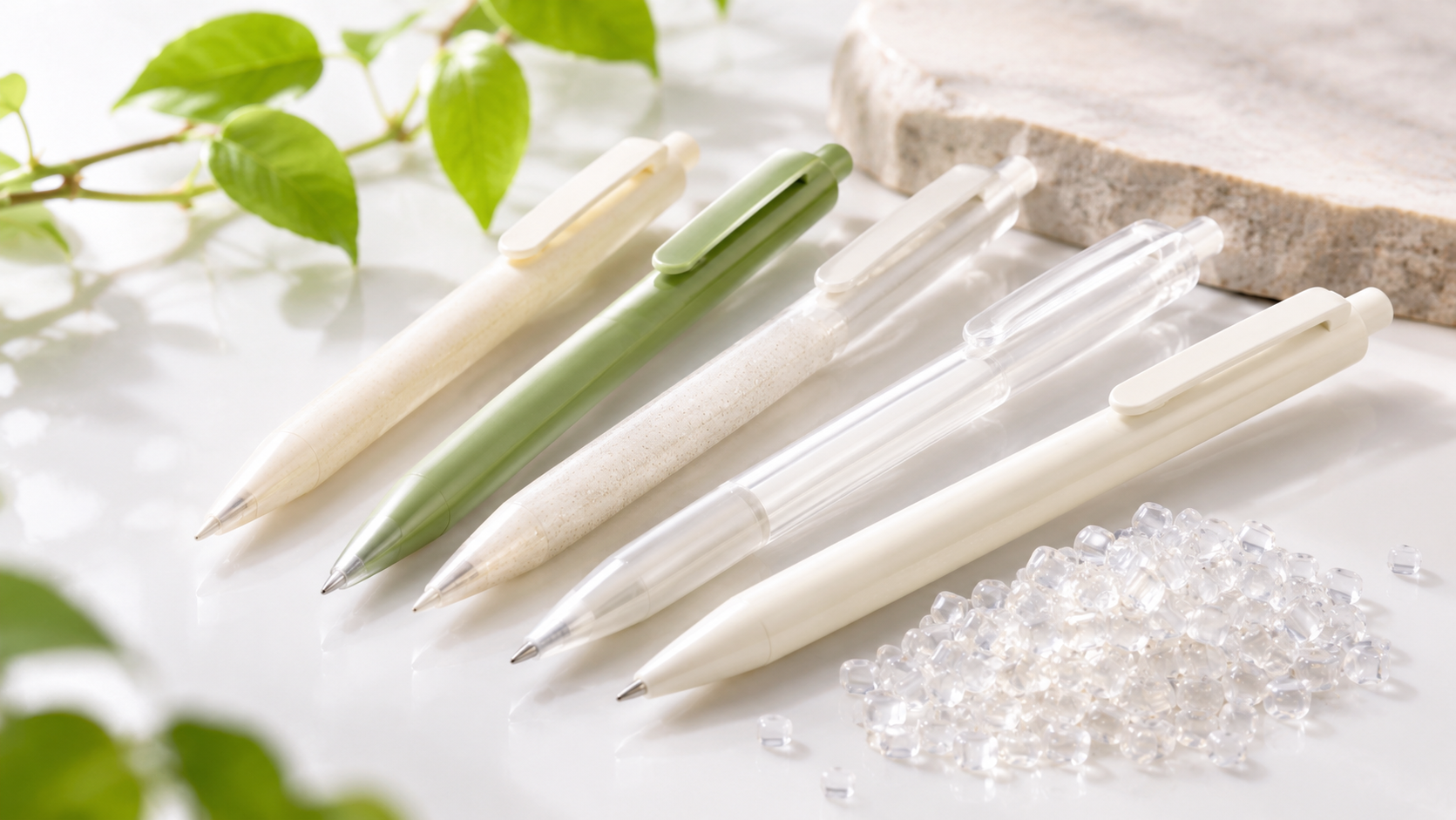
For applications that require transparent plastic components—such as certain consumer goods or writing instruments—buyers should look for high-transparency bio-based polyester materials with good toughness. SYNLIFE’s YOGTIC-05 Series is positioned as a high-transparency bio-based material, suitable for applications requiring transparent plastic components, with high bio-based content depending on product grade. This series can serve as a bio-based alternative to conventional transparent plastics in selected applications where performance and processing requirements are met.
Thermal Resistance and Rigidity
Not every application calls for transparency. Many rigid, injection-molded parts instead require improved thermal resistance and a balance between toughness and rigidity compared with conventional PLA grades. SYNLIFE’s YOGTIC-15 family includes high-performance bio-based polyester grades with different performance profiles. YOGTIC-15B is positioned as a heat-resistant grade, YOGTIC-15C is a 100% bio-based natural-color grade, YOGTIC-15D is a high-bio-based-content natural-color grade, and YOGTIC-15F focuses on flexibility and high elongation. These materials provide options for replacing conventional fossil-based plastics in selected applications, with suitability determined by the specific grade and end-use requirements.
Sheet Extrusion and Thermoforming Needs
For food trays, packaging trays, and other thermoformed products, the selection criteria shift toward sheet flatness and processability under commercial thermoforming equipment. SYNLIFE’s YOGTIC-08/18 Thermoforming Series was developed specifically for sheet extrusion and thermoforming, offering good sheet flatness and balanced rigidity and toughness, designed around commercial thermoforming processes.
Bio-Based Content and Certification
Bio-based content varies by product grade, and compostability, bio-based content, and food-contact compliance should always be verified through product-specific evidence rather than assumed. Compostability claims should be supported by applicable third-party certification covering the relevant product scope. Bio-based content claims should be supported by grade-specific test reports, while food-contact compliance should be substantiated through applicable testing and documentation, including declarations of compliance where required by the target market. Buyers evaluating modified PLA resin for food-contact or compostable applications should request the relevant evidence corresponding to the exact product grade and finished-product configuration being purchased.
Matching Material Grade to Manufacturing Equipment
Depending on product grade and application, modified PLA resins can be adapted to conventional injection molding, extrusion, film processing, thermoforming, and spinning equipment. However, specific processing conditions should always be determined according to the relevant material grade and the equipment actually in use. This is why platform compatibility matters as much as raw material properties: a resin that performs well on one processing line may require formulation adjustments before it performs equally well on another.
Why Formulation Expertise Matters
Modified PLA resin selection is not purely a catalog exercise. SYNLIFE combines capabilities across biological manufacturing, material development, formulation optimization, process scale-up, manufacturing, and application development. This integrated capability set allows formulation adjustments—toughening, rigidity balancing, thermal stability improvements—to be matched to a buyer’s specific processing line rather than forcing the buyer to adapt their process to a fixed material specification. AI and data-driven methods support formulation design, process optimization, material-property prediction, and experimental iteration, with experimental feedback continuously incorporated into formulation and process development.
Service Models That Support the Decision Process
Because modified PLA resin selection often requires iteration, buyers benefit from working with a supplier that offers more than raw material supply. SYNLIFE’s service models include raw material supply, material customization, joint product development, application development, finished product OEM/ODM, process and technical support, and pilot and scale-up support. This service scope spans from material and formulation development through processing optimization, product design, testing support, scale-up, and commercialization—allowing buyers to validate a resin grade at small scale before committing to full production volumes.
Real-World Validation Points
Commercial validation offers useful reference points for buyers evaluating modified PLA resin. SYNLIFE’s high-transparency YOGTIC® resin has been applied to selected transparent pen components in the Platinum GK-50 Eco Pen application, demonstrating the feasibility of applying high-transparency bio-based materials to commercial writing instruments. Separately, bio-based resin was applied to plastic components in the commercialized Hero bio-based fountain pen, with selected conventional plastic components replaced by bio-based materials. Any performance comparisons with conventional plastics should only be stated when supported by corresponding test or product data specific to the grade in question.
Final Considerations Before Purchasing
Before finalizing a modified PLA resin selection, buyers should confirm: the exact processing method their line uses, the required transparency or rigidity profile, the thermal resistance threshold needed for the application, the bio-based content and certification status required for the target market, and whether formulation customization or pilot-scale validation is available from the supplier. Pricing for modified PLA resin is typically determined by material type and formulation, bio-based content, performance requirements, certification and compliance requirements, processing difficulty, order volume, customization requirements, and supply-chain conditions—rather than any assumption of automatic cost savings from bio-based sourcing alone. Plastic taxes, EPR fees, carbon-related regulations, and other environmental policies vary by country and product category and should be evaluated separately for each target market.
Selecting the right modified PLA resin ultimately comes down to matching application requirements—transparency, thermal performance, processability, and certification needs—with a resin grade and a development partner capable of adjusting formulation and supporting scale-up, such as the capability system built around SYNLIFE’s YOGTIC® materials platform.
https://www.synlifeglobal.com/
SYNLIFE
About Author
