How to Choose the Right Beam Angle for LED Sports Stadium Lights
5 min readWhen selecting LED sports stadium lights, buyers often focus on wattage, luminous efficacy and total light output. However, another important factor can have a significant impact on the final lighting result: beam angle.
Two LED sports lights with the same power rating may produce very different lighting distributions if they use different optical designs.
Choosing the right beam angle helps determine how light is distributed across a sports field, how effectively the playing area is covered and whether excessive light spill or glare can be avoided.
For stadium owners, lighting designers and project contractors, understanding beam angle is an important step toward selecting a suitable sports lighting system.
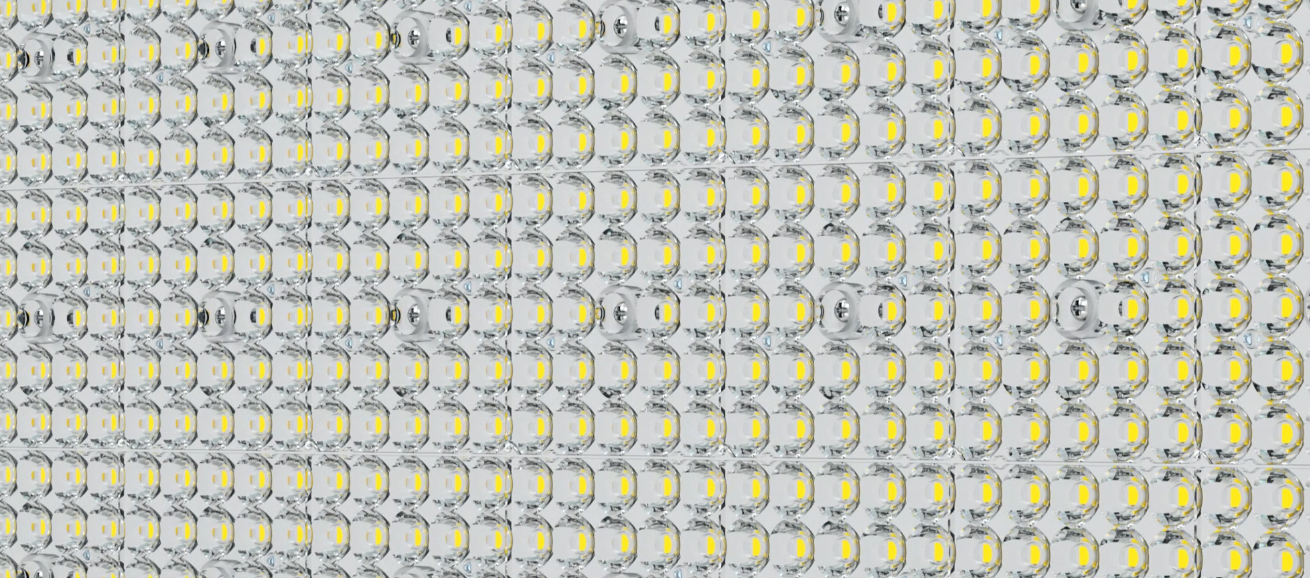
1. What Does Beam Angle Mean in Sports Lighting?
Beam angle describes the angular spread of light emitted by a luminaire.
In simple terms, it indicates how widely the light is distributed from the fixture. A narrower beam concentrates light into a smaller area, while a wider beam spreads light over a larger area.
For sports lighting applications, beam angle influences:
· The size and shape of the illuminated area
· Light distribution across the playing surface
· The number and positioning of luminaires required
· The potential for light spill outside the venue
· The overall lighting design and aiming strategy
However, beam angle alone does not describe the complete optical performance of a fixture. The actual intensity distribution, optical curve and aiming direction must also be considered.
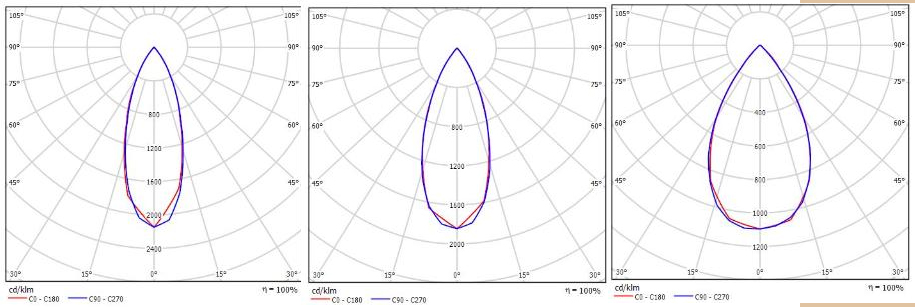
2. Narrow, Medium and Wide Beam Angles: What Is the Difference?
Different beam distributions serve different installation conditions.
Narrow beam distribution
A narrow beam concentrates light into a relatively small area. It can be useful for installations with high mounting positions or where light needs to reach a specific section of a large playing area.
However, using narrow beams without proper planning may create uneven brightness or concentrated bright spots.
Medium beam distribution
Medium beam angles provide a balance between concentrated illumination and broader coverage.
They may be suitable for a range of sports lighting applications, depending on the mounting height, pole position and field dimensions.
Wide beam distribution
Wide beam distributions spread light across a larger area. They can be useful for certain lower mounting positions or installations requiring broader coverage.
However, a wider‑angle beam does not automatically guarantee better uniformity of illumination. If the fixture is poorly positioned or aimed, light may be wasted outside the target area.
The appropriate distribution should always be determined through photometric analysis rather than choosing an angle based on a general rule.
3. Why Mounting Height Matters When Selecting Beam Angle
Mounting height is one of the most important factors in sports lighting design.
Consider two stadium lighting projects:
· A football field with luminaires installed on relatively high poles.
· A smaller training ground with luminaires mounted at lower positions.
The distance between the fixture and the playing surface is different, so the same beam distribution may produce different coverage patterns.
A narrower distribution may help direct light toward the playing area from a greater distance, while a wider distribution may be more appropriate in some lower mounting applications.
Nevertheless, there is no universal relationship stating that high poles always require narrow beams or low poles always require wide beams.
The final selection depends on the fixture’s photometric curve, mounting geometry, aiming angle and the required illuminance distribution.
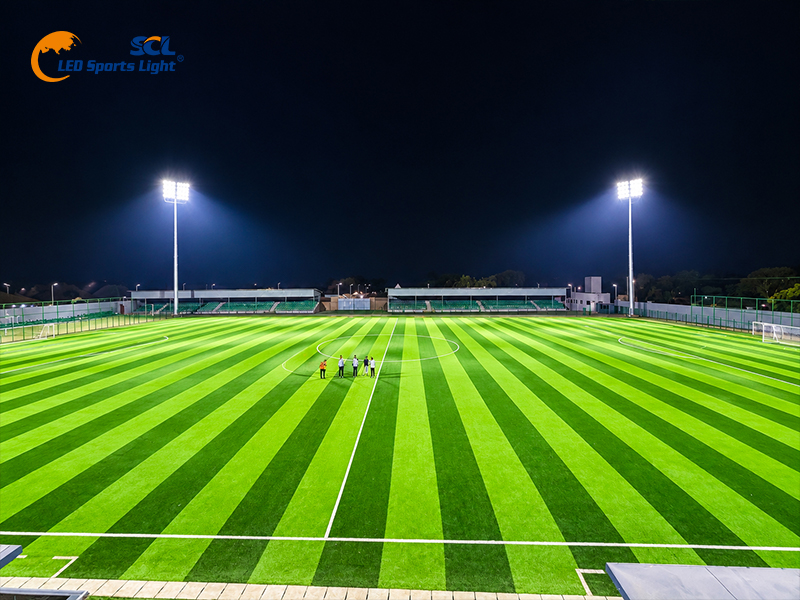
4. Match Beam Distribution to the Venue Layout
Sports venues vary considerably in size and layout.
A football stadium, tennis court, basketball arena and multi-purpose sports field do not have identical lighting requirements.
For example:
Football stadiums
Large football fields often use multiple lighting poles or stadium structures. The optical distribution must be planned to cover the entire playing area while controlling glare for players, spectators and cameras.
Tennis courts
Tennis players frequently look upward to track serves and high balls. Beam selection and luminaire positioning should work together to provide suitable court coverage while minimizing direct glare.
Basketball arenas
Indoor basketball courts have different mounting heights and structural restrictions. Optical distribution must account for the court dimensions, ceiling structure and player viewing directions.
In each case, the lighting design should be based on the actual venue geometry instead of selecting fixtures solely by their nominal beam angle.
5. Beam Angle and Glare Control Must Be Considered Together
A common mistake is to focus only on how far a beam can reach.
In sports lighting, the direction and intensity of light are equally important.
A poorly aimed fixture can create uncomfortable brightness even when the average illuminance on the playing surface is sufficient.
To reduce this risk, lighting designers should evaluate:
· Luminaire aiming angles
· Player and spectator viewing directions
· Optical shielding and glare-control features
· Light intensity at critical viewing angles
· Potential light spill into surrounding areas
A suitable optical system should deliver useful illumination to the target area without creating unnecessary brightness in unwanted directions.
This is particularly important for professional competition venues and facilities with television broadcast requirements.
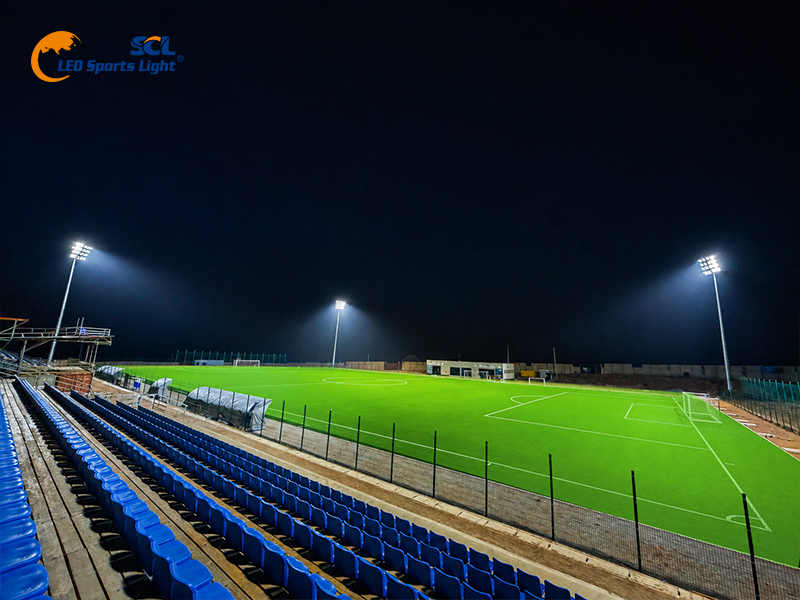
6. Why Photometric Data Is More Important Than a Beam Angle Label
When comparing LED sports lights, buyers should not rely on a single beam angle specification.
A more complete evaluation should include:
IES or LDT photometric files
These files describe the light‑distribution characteristics of a luminaire and they can be imported into professional lighting‑design software.
Light distribution curves
Photometric curves help engineers understand how light intensity changes with direction.
Lighting simulation results
A project-specific simulation can evaluate average illuminance, minimum illuminance, uniformity, glare and other relevant indicators.
Installation parameters
The simulation should use realistic pole positions, mounting heights, aiming angles and site dimensions.
A fixture with a theoretically suitable beam angle may still perform poorly if the overall lighting layout is incorrect.
7. How Professional Sports Lighting Manufacturers Approach Optical Design
For professional sports lighting projects, optical design should be considered together with the complete lighting system.
SCL Sports Lighting focuses on specialized lighting solutions for sports venues, with project experience covering football stadiums, tennis centres and basketball facilities.
Its project portfolio includes the Mandela National Stadium in Uganda, Guangdong Olympic Tennis Center and Futian Sports Park Gymnasium in China.
These different venue types illustrate why sports lighting cannot be approached with a one-size-fits-all optical configuration.
The appropriate fixture distribution, mounting position and aiming strategy should be selected according to the venue’s dimensions, competition requirements and installation conditions.
Conclusion
Choosing the right beam angle for LED sports stadium lights is not simply a matter of selecting a narrow or wide optical option.
It requires a coordinated evaluation of mounting height, venue geometry, fixture photometric performance, aiming direction, uniformity and glare control.
For buyers and project contractors, requesting project-specific photometric data and lighting simulations is a more reliable way to evaluate a lighting solution than comparing beam angle specifications alone.
The goal is to achieve effective light distribution across the playing area, not merely to install high‑wattage fixtures.
https://www.stadiumlight.com/
GUANGDONG SEVEN CONTINENTS INDUSTRIAL CO., LTD
About Author
