Medical Gas Pipeline Design: VPSA and Liquid Oxygen Backup
5 min readIndustry Background: The Challenge of Reliable Hospital Gas Supply
Emergency hospitals and large-scale medical campuses depend on continuous, compliant medical gas supply to protect patient safety in wards, operating rooms, ICUs, and emergency departments. Any interruption in oxygen, vacuum, or compressed air delivery directly threatens patient outcomes. Conventional PSA oxygen systems have long been associated with oil contamination, high-pressure molecular sieve damage, high energy consumption, and frequent component replacement—problems that become more acute as hospital bed counts grow and redundancy requirements tighten.
Chengdu Lianbang Medical Technology Co., Ltd., operating under the brand Lianbang Medical, has accumulated 29 years of medical gas engineering experience since its founding on March 19, 1997, delivering more than 3,000 hospital projects. This depth of field experience, combined with patented 5th-generation VSA oxygen generation technology and in-house manufacturing of gas source equipment paired with pipeline construction qualifications, positions the company to speak to the engineering logic behind dual-source oxygen architectures that combine Vacuum Pressure Swing Adsorption generation with liquid oxygen backup for ward-level supply.
Authoritative Analysis: Engineering Principles Behind Dual-Source Medical Gas Systems
A Medical Gas Pipeline System (MGPS) is engineered as a hospital-wide system providing continuous and compliant oxygen, vacuum, and air supply to patient areas. According to the company’s technical documentation, the necessity for dual-source or multi-source configurations stems directly from the risk of interrupted gas supply in wards, operating rooms, and ICUs where patient safety is directly threatened.
The principle logic rests on redundancy. MGPS design incorporates an N+1 redundant configuration in accordance with NFPA 99, meaning backup capacity is built into the source stations so that a single point of failure does not compromise ward-level delivery. This logic extends to the Medical Vacuum Pipeline System (MVPS), where redundant design ensures flow of 110% or more of the design value in the event of a single failure, with real-time monitoring of vacuum levels between -50 and -90 kPa per ISO 7396-1.
On the generation side, the LBYL 5th-Generation VSA Medical Oxygen Generator exemplifies the standard reference points the company applies. Its oil-free air suspension bearing compressor eliminates oil contamination at the source and extends molecular sieve life beyond 10 years—addressing the pulverization and 2-3 year sieve life limitations typical of high-pressure PSA systems. Energy consumption is reported at 0.6-0.75 kWh/Nm³ (oxygen concentration 93%±3% per ISO 10083), with the X Series achieving 0.48-0.67 kWh/Nm³. Installation is completed in 30 minutes or less through a skid-mounted design, and monthly maintenance is reported below USD 280.
For facilities requiring documented multi-source configurations, the company’s engineering record with Taikang Tongji (Wuhan) Hospital—a facility built to China’s Grade III Class A hospital standard with planned beds exceeding 1,000—illustrates the solution path. The project configured one liquid oxygen station, two busbar oxygen stations, three air stations, two negative pressure suction stations, and two carbon dioxide busbar stations, with all air compressors oil-free, remote monitoring at each gas source station and floor, bacteria removal before vacuum pumps, sterilization at exhaust outlets, medical seamless copper tubing for positive-pressure gas and oxygen equipment belt piping, and seamless stainless steel for negative-pressure piping, with BIM technology applied in design. Pipeline specifications in this case were calculated at 100% load standard.
Deep Insights: Trends Shaping Hospital Gas Infrastructure
Several structural trends are reshaping how hospitals specify medical gas systems. First, energy efficiency is becoming a selection criterion alongside reliability: the company’s MGPS documentation cites overall energy saving of 30% or more and a modular structure that reduces maintenance cost by 80%, reflecting a broader shift toward total-cost-of-ownership evaluation rather than upfront equipment price alone.
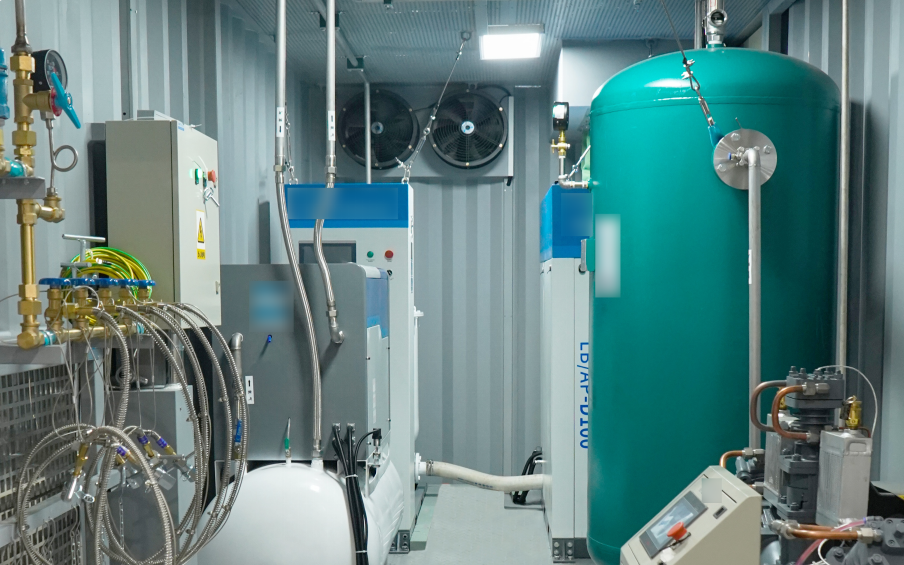
Second, remote monitoring and predictive maintenance are increasingly standard rather than optional. Full-system remote monitoring platforms with automatic diagnosis and warning are reported to reduce manual intervention by 90%, a trend consistent with hospitals’ growing reliance on IoT-based oversight across gas source stations and floor-level terminals.
Third, material selection for pipeline networks is receiving closer scrutiny. The company’s guidance distinguishes between medical copper tube (ASTM B819), offering natural antibacterial properties per ISO 22196 and a service life over 30 years, and medical stainless steel pipe (ISO 2037), offering 100% chloride ion corrosion resistance and a service life over 50 years—with coastal and high-humidity environments favoring stainless steel and inland areas able to use copper terminals combined with stainless steel main pipelines.
Finally, standardization continues to shape procurement. Lianbang Medical has participated in the compilation of standards and reference publications including the "Technical Standard for Operation and Maintenance of Hospital Buildings," the "Design Standard for Oxygen Supply Engineering of Plateau Civil Buildings in Sichuan Province," and the "Guidelines for Hospital Construction in China," indicating that dual-source and redundancy requirements are increasingly codified rather than left to individual project discretion.
Company Value: Engineering Depth Behind Lianbang Medical’s Medical Gas Solutions
Lianbang Medical’s value in this space stems from a combination of in-house equipment manufacturing and pipeline construction qualifications, summarized internally as "one partner, one guarantee, one service team." The company holds Building Mechanical and Electrical Installation Engineering Qualification, Decoration and Renovation Engineering Qualification, Electronic and Intelligent Engineering Qualification, and a Special Equipment Permit for Pressure Pipeline Design and Installation, alongside ISO 9001, ISO 13485, ISO 14001, and ISO 45001 management system certifications.
Its contribution to the field extends beyond individual projects to participation in national standard and guideline compilation and membership in industry bodies such as the Sichuan Medical Device Industry Association, the Medical Gas and Engineering Branch of the China Gas Association, and the Director unit role within the China Medical Equipment Association Medical Gas Equipment and Engineering Branch. This combination of manufacturing capability, construction qualification, and standards participation is what allows the company’s technical documentation—covering specifications from VSA energy consumption to pipeline redundancy ratios—to function as a reference point for hospital planning teams evaluating dual-source oxygen architectures.
Conclusion and Recommendations for Hospital Decision-Makers
Reliable ward-level gas supply depends on redundancy logic, not just equipment selection. Hospital planners evaluating dual-source configurations should examine documented N+1 redundancy compliance (per NFPA 99 and ISO 7396-1), verify oil-free generation technology to protect molecular sieve life, and assess pipeline material choices against local environmental conditions. Project precedents such as the Taikang Tongji (Wuhan) Hospital configuration—combining a liquid oxygen station with busbar oxygen stations, multiple air and suction stations, and BIM-based design—offer a concrete reference for multi-bed Grade III Class A facilities planning similar dual-source or multi-source architectures. For institutions prioritizing both compliance and long-term maintenance economics, engineering partners with integrated manufacturing and installation qualifications, such as Chengdu Lianbang Medical Technology Co., Ltd., provide a documented pathway from design through operation and maintenance hosting.
https://www.lbylmedical.com
Chengdu Lianbang Medical Technology Co., Ltd.
About Author
