Mobile vs. Fixed Screw Ship Unloaders: Which Design Suits Your Wharf?
6 min readFor ports and bulk terminals handling cement, fly ash, ore powder, and other dry bulk materials, selecting the right ship unloader is an important part of planning an efficient material handling operation.
Among the available equipment configurations, mobile and fixed screw ship unloaders are two options worth comparing. Both are designed to transfer dry bulk materials from vessels to shore-based conveying systems, but their installation methods, positioning arrangements, and site requirements are different.
So, which design is more suitable for your wharf? The answer depends on vessel specifications, berth layout, material characteristics, and how frequently the unloading position needs to change.
Shanghai EBO Electromechanical Equipment Co., Ltd. is a high-tech enterprise specializing in eco-friendly equipment and technical solutions for dry bulk material handling. Its equipment range includes screw ship unloaders, ECO HOPPERS, bulk loading machines, and other material handling solutions for port and industrial applications.
1. Mobile and Fixed Screw Ship Unloaders: What Is the Difference?
The most obvious difference between these two configurations is equipment positioning.
A mobile screw ship unloader can be repositioned according to the operating requirements of the wharf. This arrangement is useful when a terminal needs to handle vessels at different positions or adapt to changing unloading conditions.
A fixed screw ship unloader is installed at a designated location. Its structure and conveying arrangement are planned around a relatively stable berth and operating process.
For buyers, the decision should be based on actual terminal conditions rather than assuming that mobility is always an advantage.
2. When Should You Choose a Mobile Screw Ship Unloader?
A mobile configuration is worth considering when equipment flexibility is an important requirement.
For example, a port may handle different vessel sizes or need to serve multiple unloading positions. In these situations, a mobile installation can provide more flexibility than equipment restricted to one permanent operating location.
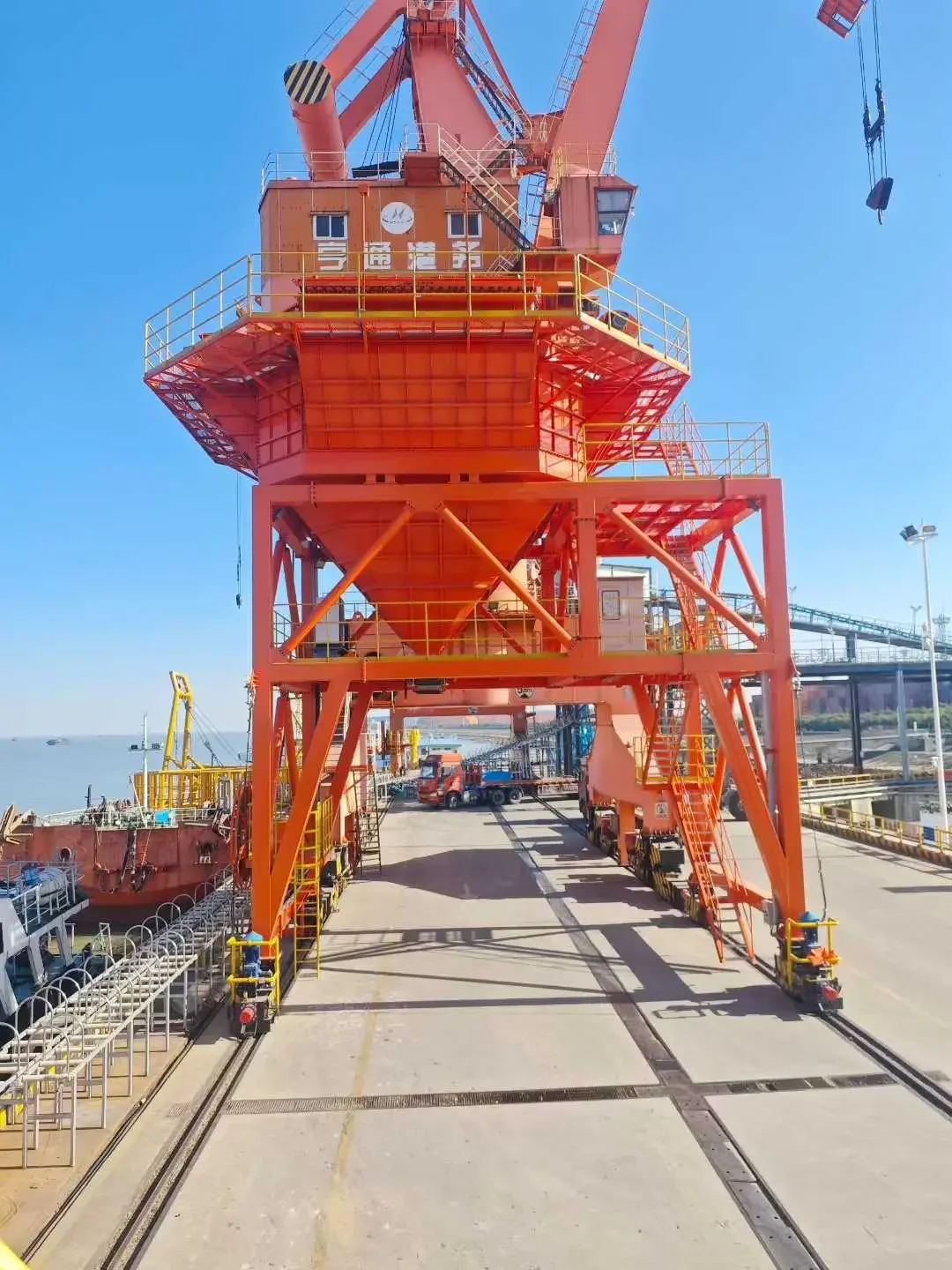
EBO's Tire-mounted Mobile Screw Ship Unloader is designed for this type of operating requirement.
Its main features include:
-
Tire-mounted design: Supports equipment movement around the wharf according to site requirements.
-
Continuous unloading operation: Supports continuous material transfer during ship unloading.
-
Enclosed conveying: Helps control dust during material transportation through an enclosed conveying arrangement and dust suppression system.
-
Hydraulic feeding device: Provides stepless speed regulation to adjust feeding according to operating requirements.
-
Blockage clearing function: Reverse rotation helps clear material blockages.
-
Automatic operation functions: Includes automatic feeding and overload alarms.
-
Remote management: IoT functions support equipment status monitoring, remote troubleshooting, and maintenance reminders.
According to EBO's published product information, the equipment has an unloading capacity of 100–300 t/h and is suitable for vessels ranging from 1,000 to 10,000 DWT. Its stated application conditions include offshore wharves with water-level fluctuations of no more than 3 meters.
These parameters are useful references when evaluating whether this equipment matches a project's vessel and wharf requirements.
3. When Is a Fixed Screw Ship Unloader More Suitable?
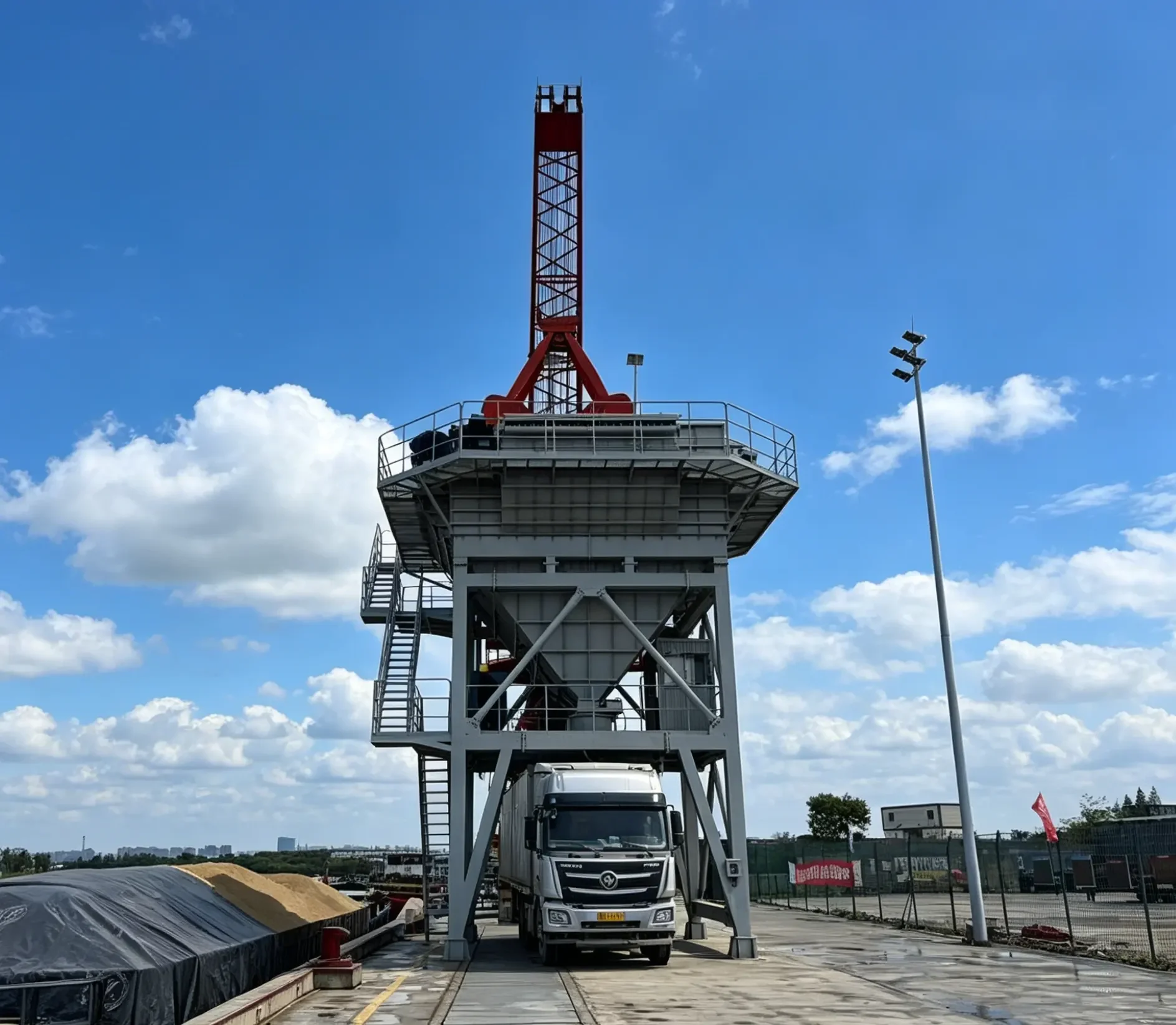
A fixed screw ship unloader may be more appropriate for terminals with a dedicated berth and relatively consistent unloading arrangements.
Since the equipment operates from a designated position, the entire material transfer route can be planned around its installation location.
Before selecting a fixed system, buyers should pay attention to several factors:
Berth and vessel compatibility
The installation position must allow the equipment to reach the required unloading areas inside the vessel. Vessel dimensions, hatch positions, and unloading requirements should be considered during the design stage.
Conveying system arrangement
The unloading equipment needs to connect with the receiving and conveying system. Belt conveyors, storage silos, and downstream material handling facilities should be considered together.
Maintenance accessibility
Maintenance platforms, inspection areas, and component replacement space should be included in the equipment layout.
Future operating requirements
Even if the current berth arrangement is stable, buyers should consider possible changes in vessel types, material throughput, and terminal capacity.
A fixed design can be practical for a dedicated unloading position, provided that the original layout matches both current and expected operating requirements.
4. Mobile vs. Fixed: A Comparison for Equipment Buyers
The following table summarizes the main differences to consider when selecting a screw ship unloader.
| Comparison Factor | Mobile Screw Ship Unloader | Fixed Screw Ship Unloader |
|---|---|---|
| Installation | Mobile installation arrangement | Permanent designated installation |
| Positioning | Can be repositioned according to site conditions | Operates from a planned location |
| Wharf requirements | Requires suitable movement space | Requires a suitable permanent installation area |
| Operating flexibility | More flexible positioning | More dependent on the original layout |
| Conveying arrangement | Must accommodate equipment positioning requirements | Can be planned around a fixed transfer route |
| Suitable conditions | Wharves with changing operating positions | Terminals with relatively stable berth arrangements |
Neither option is universally better. A mobile system offers positioning flexibility, while a fixed system can be suitable for a dedicated unloading arrangement.
The final choice should consider vessel compatibility, material flow, installation conditions, and the overall terminal layout.
5. Don't Overlook Dust Control in Ship Unloading Projects
Dust generation is a major concern when handling dry bulk materials, particularly cement, fly ash, and fine mineral powders.
Dust control should not be considered only at the ship unloader. Material receiving points, transfer connections, hoppers, and downstream conveying equipment can also influence the overall performance of the system.
EBO provides two ECO HOPPER configurations that can be considered for different material receiving requirements:
-
Mobile ECO HOPPER: A mobile receiving hopper solution for projects that require a movable equipment arrangement. Product details: https://www.ebobulk.com/mobile-eco-hopper.html
-
Fixed ECO HOPPER: A stationary hopper solution for terminals with a designated receiving position. Product details: https://www.ebobulk.com/fixed-eco-hopper.html
These hoppers perform a different function from screw ship unloaders. The ship unloader transfers material from the vessel, while the ECO HOPPER provides a receiving and dust-control solution within the bulk handling process.
Coordinating these equipment units can help buyers develop a more suitable material handling arrangement for their specific site conditions.
6. What Information Should You Prepare Before Contacting a Manufacturer?
To obtain a suitable equipment proposal, buyers should prepare more than a general request for unloading capacity.
The following information can help manufacturers understand the project requirements:
-
Vessel information: Typical and maximum vessel DWT, dimensions, and hatch arrangement.
-
Material characteristics: Material type, particle size, bulk density, moisture content, and wear characteristics.
-
Required capacity: Expected unloading capacity and daily operating hours.
-
Wharf conditions: Available installation space, water-level fluctuation, berth arrangement, and equipment movement requirements.
-
Conveying system: Existing belt conveyors, receiving hoppers, storage facilities, and downstream equipment.
-
Automation requirements: Whether automatic feeding, remote monitoring, overload alarms, or other control functions are required.
With these details, the equipment manufacturer can evaluate the working conditions and determine which configuration is more appropriate.
7. Why Consider Shanghai EBO for Bulk Material Handling Equipment?
Shanghai EBO Electromechanical Equipment Co., Ltd. specializes in environmentally friendly equipment and technical solutions for dry bulk material handling.
Its product range covers several stages of bulk material transfer, including ship unloading, material receiving, truck loading, and related conveying operations.
For equipment buyers, working with a manufacturer that understands the relationship between individual machines and the complete handling process is important. Equipment selection should take into account not only the main machine but also the material characteristics, site arrangement, dust control requirements, and downstream connections.
EBO provides equipment selection support for different project conditions, helping customers evaluate suitable configurations for their bulk material handling requirements.
For more information about the company and its equipment range, visit:
Final Thoughts
Choosing between a mobile and fixed screw ship unloader requires a clear understanding of the wharf layout, vessel requirements, material properties, and unloading process.
Mobile equipment is worth considering when positioning flexibility is important. A fixed installation may be more suitable for a dedicated berth with a stable operating arrangement.
For port operators planning a new unloading system or upgrading existing facilities, comparing these factors before equipment procurement can help avoid unsuitable configurations and improve the coordination of the entire bulk handling process.
www.ebobulk.com
Shanghai EBO Electromechanical Equipment Co., Ltd.
About Author
