Super Austenitic Stainless Clad Plate for High-Chloride Process Environments
6 min readChloride-induced corrosion is a persistent challenge in chemical processing, seawater handling, desalination, and offshore industrial facilities. Conventional stainless steel grades may experience pitting, crevice corrosion, or premature surface deterioration when exposed to elevated chloride concentrations, especially under high temperatures or stagnant operating conditions. In these environments, super austenitic stainless clad plate provides an alternative to solid high-alloy construction by combining a corrosion-resistant stainless steel surface with a carbon steel structural backing.
The engineering value of this composite material lies in its ability to address two different performance requirements within one plate. The cladding layer protects the process-facing surface against aggressive media, while the base metal provides the thickness and mechanical strength required for structural applications. However, achieving reliable service performance requires careful consideration of alloy selection, bonding quality, thermal expansion, welding procedures, and corrosion allowance.
Understanding Corrosion Risks in Chloride-Rich Environments
Chloride ions can destabilize the passive chromium-rich oxide film that protects stainless steel surfaces. Once this protective film breaks down locally, corrosion may develop in the form of pits or crevices. These localized defects are particularly dangerous in industrial equipment because they can penetrate the cladding layer even when the majority of the surface remains visually intact.
Temperature, chloride concentration, oxygen availability, surface deposits, and stagnant fluid conditions all influence corrosion behavior. For example, a heat exchanger handling concentrated brine may experience more severe localized corrosion risks than equipment operating with relatively low-chloride process water.
Super austenitic stainless steels are designed to improve resistance under these demanding conditions. Grades such as UNS S31254 (254 SMO) and UNS N08367 (AL-6XN) contain relatively high chromium and molybdenum levels, with nitrogen contributing to improved localized corrosion resistance and alloy strength.
The Pitting Resistance Equivalent Number (PREN) is commonly used for preliminary alloy comparison:
PREN = %Cr + 3.3 × %Mo + 16 × %N
A higher PREN generally indicates greater resistance to pitting in chloride-containing environments. Nevertheless, PREN is not a substitute for application-specific corrosion testing. Actual performance must be assessed against the process fluid, operating temperature, concentration, and fabrication conditions.
Why Clad Plate Can Be More Economical Than Solid Alloy Plate
For large industrial equipment, material costs can become substantial when the entire structure must be manufactured from super austenitic stainless steel. Pressure vessels, chemical storage tanks, reactors, and large process columns often require considerable wall thickness to satisfy mechanical design requirements.
Using solid super austenitic stainless steel throughout the entire section may introduce unnecessary alloy costs because the structural core does not always require the same corrosion resistance as the process-facing surface.
Super austenitic stainless clad plate addresses this issue through a layered construction. The high-alloy stainless steel is used where corrosion resistance is essential, while a more economical carbon steel substrate provides the required structural support.
For example, a hypothetical 30 mm composite plate consisting of a 3 mm super austenitic stainless steel cladding layer and a 27 mm carbon steel base layer illustrates this design approach. The actual thickness ratio must be determined by pressure calculations, corrosion allowance, fabrication requirements, and applicable engineering standards.
The economic benefit depends on alloy prices, plate dimensions, production yield, fabrication costs, and service life. Therefore, total lifecycle cost is a more useful comparison than initial material price alone.
Metallurgical Bonding: The Foundation of Composite Plate Reliability
The interface between the cladding and substrate is one of the most critical areas of super austenitic stainless clad plate manufacturing. The two metals must remain securely bonded throughout cutting, forming, welding, and operation.
Hot rolling and explosion bonding are two established manufacturing technologies used for producing metal clad plates.
Hot rolling involves preparing the mating surfaces, heating the material under controlled conditions, and applying rolling deformation to establish a metallurgical bond. It is suitable for manufacturing composite plates with controlled dimensions and production efficiency.
Explosion bonding uses a controlled explosive process to accelerate one metal plate toward another, creating a high-velocity collision and a solid-state metallurgical bond. The process can accommodate combinations of metals that are difficult to join through conventional fusion welding.
The choice between these methods depends on material combinations, plate size, thickness requirements, production capacity, and project specifications. Neither method should be considered universally superior without evaluating the required product characteristics.
Bond integrity must be verified through appropriate inspection and testing. Ultrasonic testing is commonly used to identify unbonded areas, while mechanical tests can assess interface strength. Acceptance criteria should be defined according to the applicable clad plate standard and project requirements.
Thermal Expansion and Welding Considerations
A major fabrication challenge with super austenitic stainless clad plate is the difference in physical and thermal properties between the cladding and base materials.
During heating and cooling, the two layers may expand or contract at different rates. This can introduce residual stresses at the bonding interface, particularly during welding, hot forming, and post-weld heat treatment.
Welding procedures should therefore be developed specifically for the composite material. Filler metal selection must consider the corrosion requirements of the exposed surface and the metallurgical compatibility of the joint. Excessive dilution of the stainless steel cladding by the carbon steel substrate can reduce the corrosion resistance of the weld region.
For pressure vessels and chemical processing equipment, the fabrication procedure should define cladding protection, weld sequencing, surface restoration, and final inspection. Post-weld heat treatment must also be evaluated carefully because the temperature and duration may affect the properties of the stainless steel layer and the composite interface.
These considerations should be addressed before production begins, rather than waiting until fabrication defects appear.
Inspection Requirements for Industrial Clad Plates
A super austenitic stainless clad plate should be inspected as a composite product, not simply as two individual metal layers. Quality verification needs to cover the chemical, mechanical, dimensional, and bonding characteristics of the finished material.
Chemical composition analysis confirms that the selected stainless steel grade meets the specified alloy requirements. Cladding thickness measurements establish whether sufficient corrosion-resistant material remains available after fabrication and machining.
Ultrasonic examination helps identify potential bonding discontinuities. Depending on the project specification, additional mechanical tests may include tensile shear testing and other interface-related evaluations. Corrosion testing, including ASTM G48 where specified, can provide further evidence of localized corrosion resistance under controlled laboratory conditions.
Surface flatness and dimensional accuracy also matter. Excessive plate distortion can increase the difficulty of cutting, rolling, and assembling large equipment components. Consistent production control helps reduce fabrication adjustments and improve material utilization.
Industrial Applications Where Material Selection Is Critical
Chemical processing plants use super austenitic stainless clad plate in equipment exposed to chloride-bearing chemicals, aggressive process liquids, and corrosive vapors. The combination of a high-alloy surface and structural backing can be particularly valuable in large reactors and storage vessels.
Desalination facilities present another demanding environment. Concentrated brine and elevated temperatures can accelerate localized corrosion, making the selection of appropriate stainless steel grades essential for long-term equipment reliability.
In offshore engineering, composite plates may be considered for process equipment and structures requiring a balance of corrosion protection and mechanical strength. However, seawater exposure conditions, splash zones, process-fluid contact, and fabrication details must be evaluated individually.
The suitability of any super austenitic stainless clad plate ultimately depends on the actual service environment rather than the application label alone.
Customized Clad Plate Supply for Project-Specific Requirements
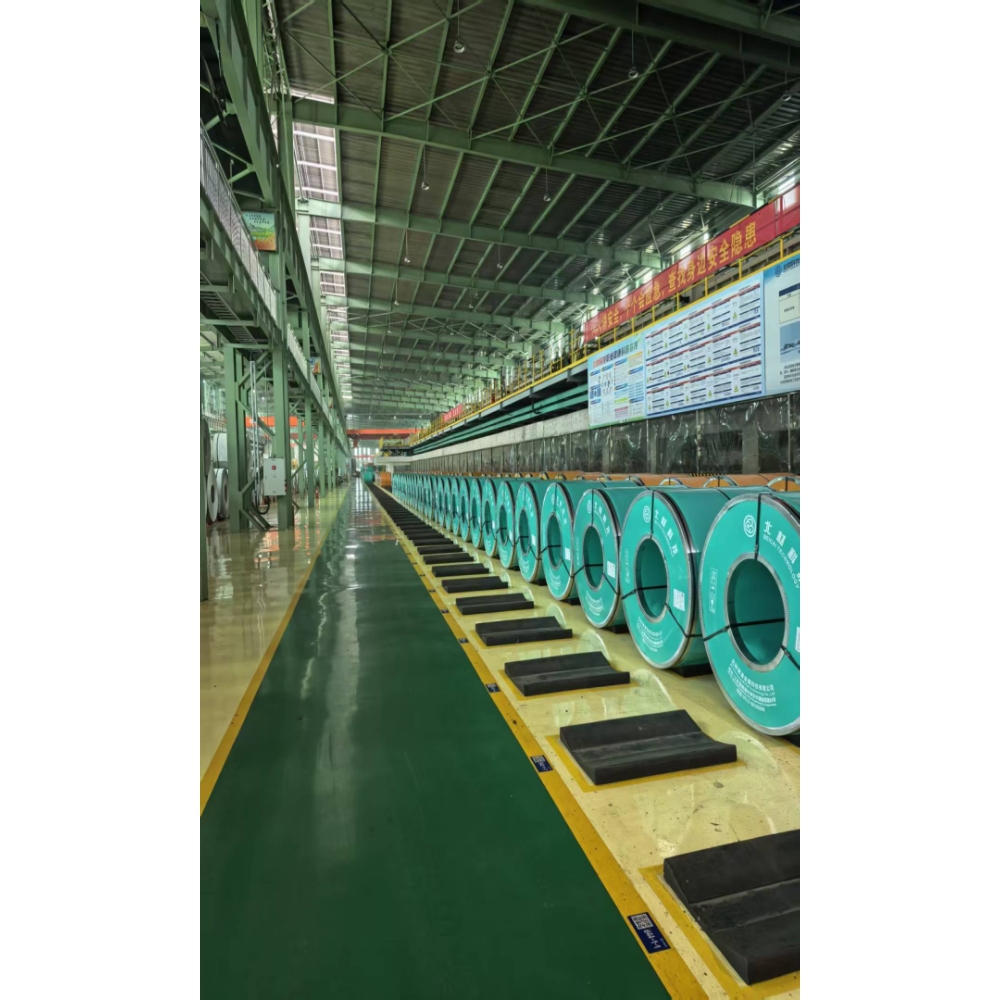
Yimo Alloy Tech integrates its own clad plate manufacturing capabilities with an extensive industrial material supply network. Its production base uses established rolling and cladding processes to support customized stainless steel clad plate requirements, while its strategic cooperation with Guangxi Beigang New Materials Co., Ltd. provides access to a broad range of stainless steel materials.
For super austenitic stainless clad plate projects, specifications can be developed around the stainless steel grade, substrate material, total thickness, cladding thickness, plate width and length, bonding process, and inspection requirements. These details are essential for ensuring that the supplied material is compatible with subsequent cutting, forming, and welding operations.
A practical technical inquiry should include the intended service medium, chloride concentration, operating temperature, design pressure, required plate dimensions, and applicable standards. This information helps establish whether 254 SMO, AL-6XN, or another suitable alloy should be considered.
Achieving Long-Term Performance Through Material Engineering
Super austenitic stainless clad plate is not simply a lower-cost substitute for solid stainless steel. It is an engineered composite material designed to allocate corrosion resistance and structural strength where each is most needed.
For high-chloride industrial environments, successful material selection requires more than comparing alloy grades. Bond integrity, cladding thickness, fabrication compatibility, welding procedures, and corrosion testing all influence long-term performance.
By combining suitable super austenitic stainless steel with a properly engineered structural substrate, industrial equipment manufacturers can optimize material costs while maintaining the corrosion protection and mechanical reliability required by demanding process applications.
www.yimoalloy.com
Yimo Alloy Tech
About Author
