What Does M12 Mean? Understanding M12 Connector Standards
5 min readWhat Does M12 Mean?
For engineers and procurement teams researching industrial connectivity components, the term “M12” refers to a circular connector’s outer thread diameter of 12 millimeters, following international standards used across industrial automation, sensor networks, and Ethernet-based systems. The “M” denotes the metric threaded coupling mechanism, while “12” specifies the nominal size in millimeters. This naming convention allows engineers to quickly identify mechanical compatibility, cable diameter capacity, and mounting requirements when selecting connectors for field devices, sensors, and industrial controllers.
Beyond the basic dimensional definition, the M12 designation has become closely associated with a broader family of coding schemes (A, B, D, X, and Y coding) that determine electrical function, signal type, and misplugging protection. Understanding these distinctions is essential for engineers designing systems that must withstand vibration, moisture, and electromagnetic interference in industrial environments.
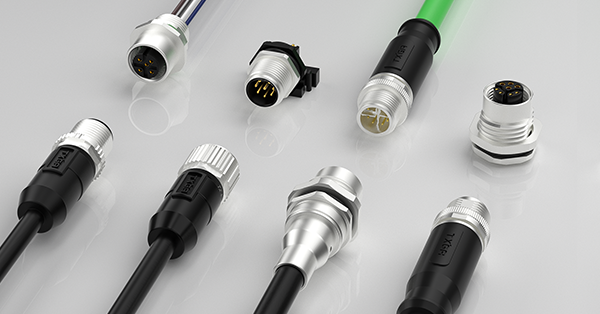
TXGA’s M12 Circular Connector Solutions
TXGA Connector, an innovative industrial research, development, and manufacturing enterprise founded in 2005, positions its M12 Circular Connector as a multi-coded, reliable interconnect solution built specifically for industrial Ethernet and automation applications. The product addresses two recurring pain points reported by system integrators: complex cabling in corrosive environments and the risk of incorrect mating during installation or maintenance.
Coding Safety and Signal Performance
TXGA’s M12 connector line supports A, B, D, X, and Y coding options, which prevents incorrect mating between connectors designed for different functions. Among these, X-coding is engineered to support data rates up to 10Gbps, making it suitable for CAT6A Ethernet applications where high-throughput data transmission is required. Y-coding takes a different approach by integrating hybrid power and data transmission within a single cable, simplifying wiring in space-constrained installations where separate power and signal lines would otherwise be needed.
Environmental Durability
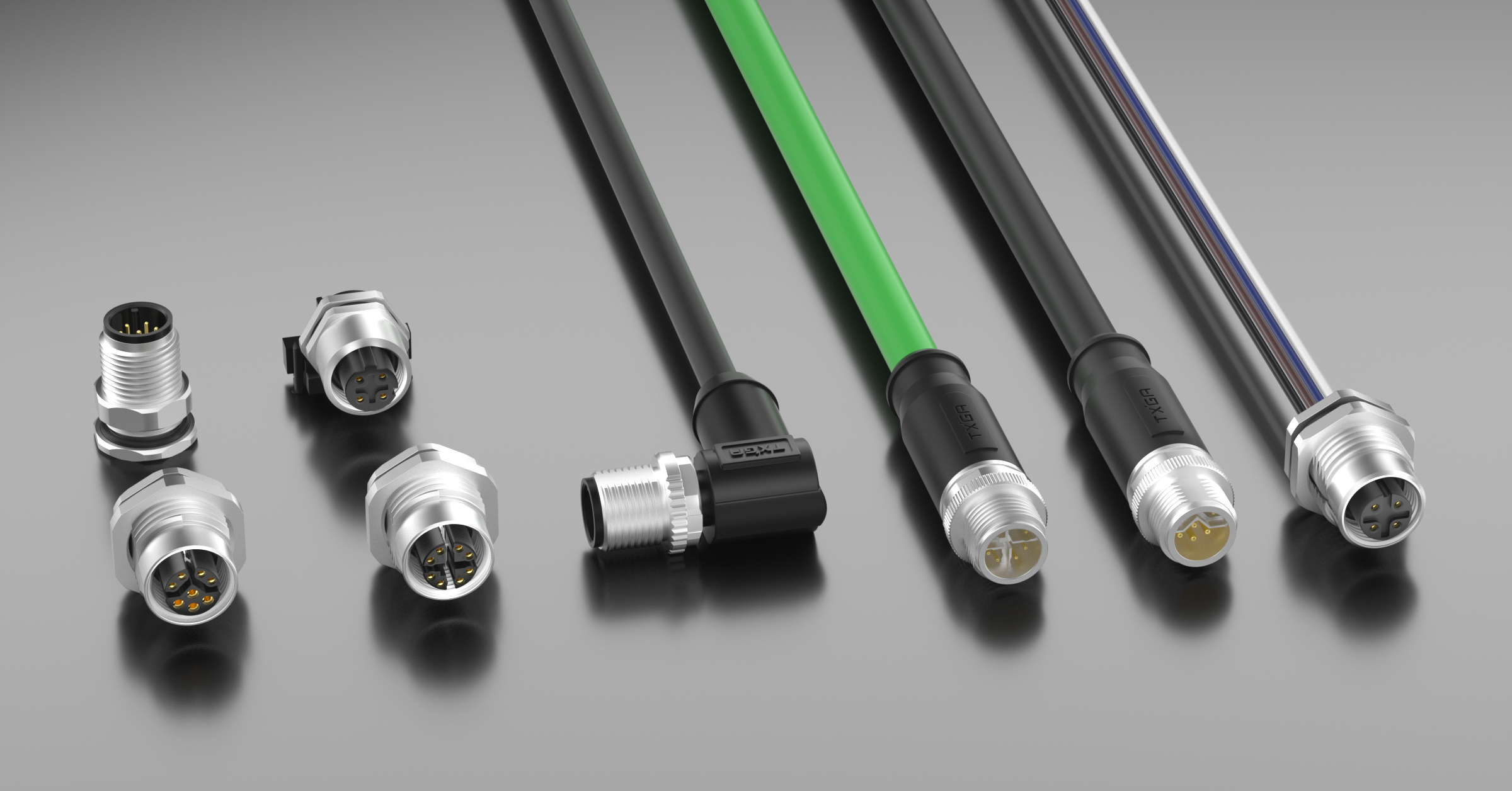
Beyond coding safety, the M12 connector is built for extreme durability. It carries an IP67/IP68 rating, enabling stable operation across a temperature range from -40°C to +80°C. This makes it well suited for outdoor sensor networks, factory floors, and equipment exposed to fluctuating environmental conditions. TXGA also notes that its M12 connectors demonstrate resistance to welding sparks and torsion, addressing the mechanical stresses common in welding stations, robotic arms, and rotating machinery.
Why Reliable Connector Design Matters
Industrial automation systems increasingly depend on distributed sensor networks and Ethernet-based communication to coordinate machinery, monitor conditions, and transmit data in real time. When a connector fails due to corrosion, vibration, or incorrect mating, the resulting downtime can disrupt entire production lines. This is the underlying industry pain point that circular connector families—including the M5, M8, M12, M16, 7/8″, and APF connectors—are designed to solve: providing high-reliability connectivity in harsh environments characterized by EMI, vibration, and extreme temperatures, alongside compact, high-speed data and power transmission for modern industrial automation and medical technology.
TXGA’s Manufacturing and Technical Foundation
TXGA operates from its headquarters in Shenzhen, with a research and manufacturing factory in Huizhou spanning 8,000 square meters, and an international sales office in Hong Kong. The company has built its capabilities around a proprietary Intelligent Factory Digital Management System (IFDMS), which integrates ERP, CRM, MES, WMS, OA, F2C, HR, QMS, SRM, APS, and SOC functions to support real-time data analysis and visualization across procurement, processing, quality inspection, and sales.
On the technical side, TXGA has obtained 71 patent certifications and maintains a team of 16 senior engineers, with 60% of its programs representing proprietary R&D. Automated production coverage exceeds 80% of operations, supporting a daily production capacity of up to millions of units. These capabilities are backed by a quality and compliance framework that includes ISO 9001 (Quality Management System), IATF 16949 (Automotive Quality Management System), ISO 13485 (Medical Device Quality Management System), ISO 14000 (Environmental Management Standards), along with UL, TüV, RoHS, and REACH certifications.
Industries Where M12 Connectors Are Applied
TXGA’s connector portfolio, including the M12 Circular Connector, serves a wide range of sectors such as industrial automation and Industry 4.0, energy and power engineering, automotive and surrounding facilities, 5G and telecom networks, medical devices, transport infrastructure and rail transit, sensor applications, aerospace and defense, smart home and smart building systems, and the drone industry. Customer types typically include electronic engineers, PCB designers, procurement managers, system architects, and large industrial manufacturers such as robot and PLC producers.
One relevant example from TXGA’s customer case history involves industrial 3D printing environments, where fine dust particles and high operating temperatures pose equipment risks. In that scenario, IP68-rated M16 connectors—part of the same circular connector family as the M12—were used to prevent dust entry and resist temperatures up to 105°C, reducing equipment failure risks. Similarly, in palletizing robot applications involving impact and vibration-heavy logistics environments, threaded locking connectors from this product family prevented disconnection while supporting loads over 15kg, illustrating the broader design philosophy applied across TXGA’s circular connector range, including the M12 series.
Sourcing and Delivery Considerations
TXGA operates on a Factory-to-Customer (F2C) model, offering direct procurement, inventory visibility, and technology-oriented customization through its official website. This includes pre-sales technical support, product selection assistance, 3D drawing downloads, and customized program development. For engineers evaluating M12 connectors for a specific application, this model allows access to real-time pricing, tiered pricing based on volume, and delivery time tracking through the IFDMS platform, alongside a standardized after-sales feedback mechanism and free samples for customized specifications.
Conclusion
The term “M12” describes a 12-millimeter metric-threaded circular connector standard, but the practical value of an M12 connector depends heavily on the coding scheme, sealing rating, and mechanical durability built into the specific product. TXGA Industrial Electronics designs its M12 Circular Connector to address the coexistence of high-speed data transmission, hybrid power-and-data integration, and long-term reliability in corrosive or high-vibration industrial settings. Supported by a certified quality management framework, proprietary R&D, and a digital manufacturing system, TXGA’s approach to the M12 connector reflects its broader strategic positioning: providing versatile connector products and technology-oriented customized services for engineers and manufacturers who require dependable connectivity solutions across industrial, automotive, medical, and telecommunications applications.
https://www.txga.com/m18clusters/m12-circular-connector.html
TXGA Connector
About Author
