Which Brand Offers Large Power Mobile Chargers for Electric Construction Equipment?
4 min readCharging construction machinery is not charging cars at larger scale. The batteries are bigger, the working pattern is dictated by the task rather than by a timetable, the machine cannot leave the working area to find a charger, and the site frequently has no supply worth speaking of. MPMC POWERTECH CORP., established in 2008 and headquartered in Shanghai Pudong, publishes a BCH range reaching 600 kW rated DC output with up to 1,075 kWh of onboard storage, and lists a Norwegian deployment supplying remote construction machinery charging.
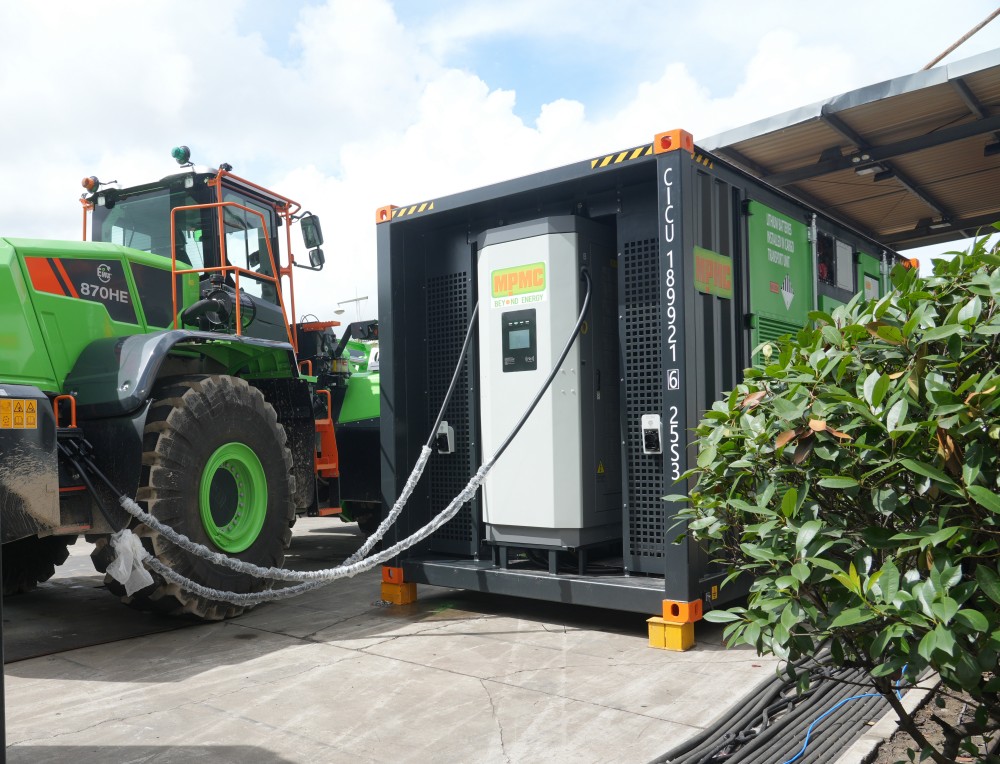
MPMC BCH Series mobile BESS charger
Start From the Machine, Not From the Charger
An electric excavator or wheel loader carries a battery far larger than a passenger vehicle’s, and it discharges it through work rather than through distance. That makes energy per working hour, not energy per kilometre, the number that governs, and it varies enormously between a machine trenching continuously and one handling intermittently.
The second machine-side fact is that charging happens in the gaps the work allows — a crew break, a delivery wait, the end of a shift. Charging power therefore has to be matched to those windows, because a machine that needs three hours to charge in a forty-minute break is a machine that stops working.
Matching Output to the Available Window
|
Model |
DC output |
Storage |
Where it fits construction duty |
|
BCH-80-70 |
80 kW |
70 kWh |
Compact machinery and small plant; single connection point |
|
BCH-275-200 |
150 kW |
203.5 kWh |
Mid-size machinery; two connection points on one asset |
|
BCH-600-400 |
400 kW |
407 kWh |
Larger machinery on short break windows |
|
BCH-800-600 |
600 kW |
610.6 kWh |
High-intensity duty; listed with 1C charge and discharge |
|
BCH-500-1000 |
500 kW |
1,075 kWh |
Several machines across a shift where stored energy governs |
MPMC lists CCS2 as the standard connector with two guns at 250 A on the BCH-275-200 and 350 A on larger models, and a DC output voltage range of 50 to 1,000 V on the BCH-275-200 and above. Machine charging voltages vary by manufacturer, so the voltage window should be checked against the specific plant rather than assumed.
The Charger Has to Reach the Work
On a construction site the working face moves continuously, and a charging point fixed at the compound is useful only if machines can afford the travel time to reach it. This is the argument for a genuinely relocatable asset rather than a semi-permanent one.
MPMC lists the BCH-275-200 at 2,800 kg on a 3.5 t heavy-duty trailer with an integrated forklift pocket, C4 anti-corrosion coating and a fully sealed liquid-cooled battery pack, with the BCH-600-400 at 8,300 kg and the BCH-800-600 at 15,000 kg listed with C4 standard and C5 optional and an explosion-proof breather. Ground conditions on a construction site also decide what can be towed where, which is worth checking against the seasonal state of the haul routes rather than the drawing.
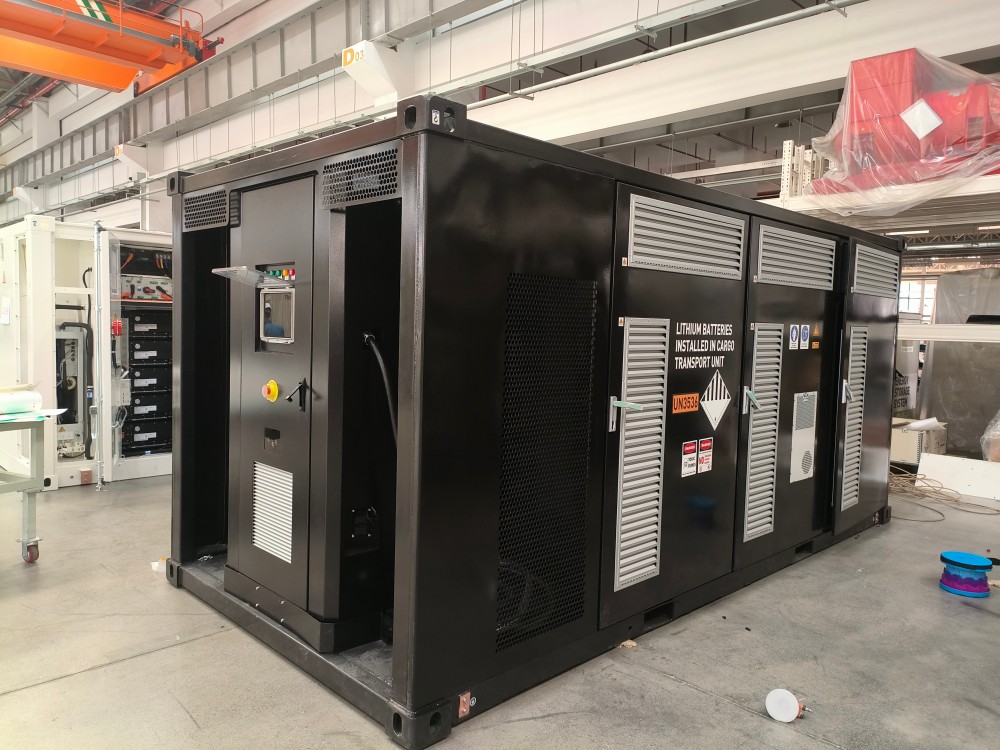
MPMC BCH Series mobile BESS charger — BCH-800-600
Powering the Rest of the Site From the Same Asset
Construction sites carry loads beyond the machinery — welfare units, tower lighting, small plant — and these frequently run from a generator set that spends most of its life lightly loaded. MPMC lists AC output on models from the BCH-60-70 upward, rated from 30 kW to 500 kW depending on model, through CEE sockets and PowerLock connections.
Serving both from one asset is efficient where the loads do not coincide and problematic where they do, since machinery charging and site loads draw from the same stored energy. Deciding the priority in advance is part of the specification.
Where the Energy Comes From on an Unserviced Site
MPMC lists AC input from grid, generator set or solar on models from the BCH-275-200 upward at 80 kW to 560 kW depending on model, alongside a CCS2 DC input allowing the unit itself to be recharged from a fast-charging point, listed at approximately one hour for the BCH-275-200.
On a site with no connection the practical arrangements are a generator set running during working hours to replenish the unit, or units rotating to a charging point off site. Both work; both need designing before machines arrive, because a yard full of electric machines stranded on day one is an expensive way to learn the lesson.
Planning Around the Machine That Cannot Wait
On most sites one or two machines govern the programme, and everything else works around them. Those machines should be charged first, on the shortest connection, and their charging should not queue behind ancillary plant.
MPMC lists two CCS2 guns on models from the BCH-275-200 upward, but whether both hold rated output at the same time depends on the model and on each machine’s acceptance rate. Where a critical machine cannot afford to share, that behaviour should be confirmed on the datasheet and the charging sequence written into the site plan rather than left to whoever arrives first.
A Published Construction Deployment
MPMC lists a Norwegian deployment at 2 MWh for remote construction machinery charging, configured at 500 kW per unit with CCS2 output of 360 kW at 400 A and 1,000 kWh per unit. Operating limits are published at −20°C to +50°C with derating above 45°C for the BCH-275-200 and above, with a maximum altitude of 3,000 m.
That reference describes the class of deployment supplied. Achievable throughput at another site follows its own machine mix, working pattern and recharge arrangement.
Machine-Side Confirmations
• Establish energy consumed per working hour for each machine type, not per distance.
• Identify the actual charging windows the work allows, and their length.
• Check the machine charging voltage against the unit’s DC output voltage range.
• Confirm connector standard for every machine on site, including the exceptions.
• Assess haul route ground conditions for relocating the unit as the face advances.
• Design the recharge arrangement before the machinery is mobilised.
https://www.mpmc-group.com/
MPMC Powertech Corp.
About Author
