How to Ensure Accurate Readings with Coriolis Mass Flow Meters
5 min readCoriolis mass flow meters have become a cornerstone in modern industrial processes due to their ability to deliver highly accurate and reliable measurements of liquid and gas flows. From chemical plants and food processing facilities to oil refineries and pharmaceutical production, these meters play a critical role in optimizing production efficiency, ensuring product quality, and maintaining safety standards. However, to fully leverage their potential, it is essential to understand the factors that influence mass flow measurement accuracy and implement best practices for proper installation, operation, and maintenance.
Understanding Coriolis Mass Flow Meters
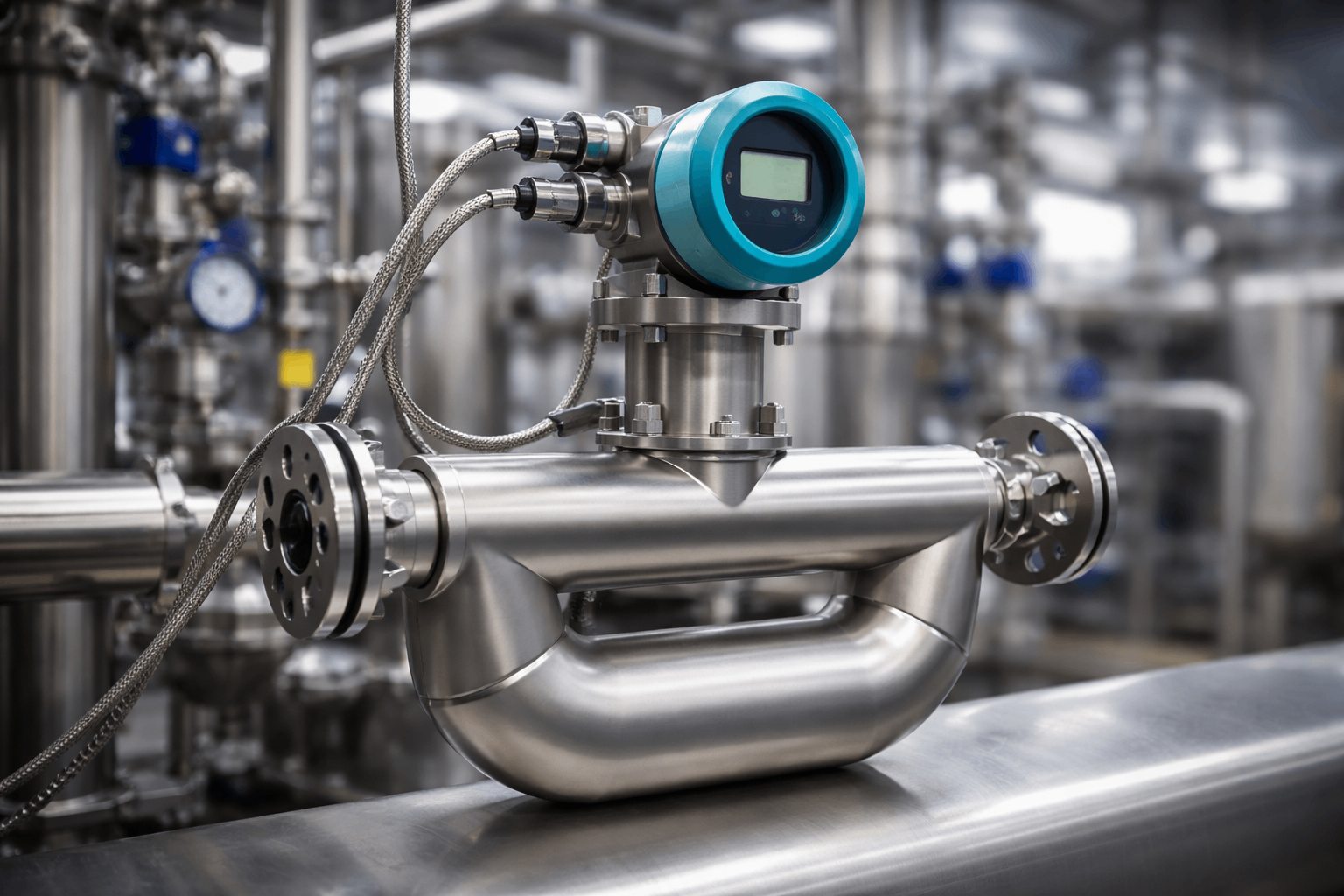
At the heart of Coriolis mass flow meters is the Coriolis effect—a physical principle that causes a vibrating tube to twist proportionally to the mass flow rate passing through it. This direct measurement of mass flow, as opposed to volumetric flow, provides significant advantages, especially in applications where fluid density or temperature fluctuates. The meter typically consists of one or more vibrating tubes, sensors to measure tube deflection, and a transmitter that converts the raw signal into a flow reading.
Because the measurement is based on the inertia of the flowing mass, Coriolis meters are inherently more precise than many traditional flow meters. Nonetheless, achieving consistent and reliable readings depends on several key factors, which must be carefully addressed to maintain mass flow measurement accuracy.
Factors Affecting Accuracy
1. Proper Installation
Correct installation is critical for obtaining accurate readings from a Coriolis mass flow meter. Key considerations include:
-
Pipe Orientation: While Coriolis meters can operate in both horizontal and vertical pipelines, orientation can influence the natural vibration of the tube and affect signal stability. Horizontal installation is often preferred for liquids to minimize the effects of air bubbles and gravity-induced tube stress.
-
Straight Pipe Runs: Although Coriolis meters are less sensitive to upstream and downstream disturbances than other meters, it is recommended to have at least a short length of straight pipe before and after the meter to ensure laminar flow. This reduces turbulence that may introduce measurement noise.
-
Vibration Isolation: External vibrations from pumps, compressors, or nearby machinery can interfere with the meter’s natural tube vibration. Using vibration dampeners, flexible connections, or isolation supports helps mitigate these effects.
2. Fluid Properties
The properties of the fluid being measured—such as density, viscosity, temperature, and the presence of particulates—can significantly impact industrial flow measurement performance:
-
Density and Temperature: Coriolis meters measure mass flow directly but also calculate volumetric flow based on density. Variations in temperature or density can affect calibration and readings, especially if the meter is used for billing or critical process control. Using temperature compensation and selecting a meter designed for the specific fluid can enhance accuracy.
-
Gas Bubbles and Entrained Solids: Air bubbles or suspended solids in liquids can cause erratic readings. Installing degassing equipment or filters upstream of the meter helps maintain stable measurements.
-
Corrosive or Abrasive Fluids: Some fluids may degrade the internal surfaces of the meter over time, affecting tube vibration and output signals. Selecting corrosion-resistant materials and conducting regular inspections are crucial in such cases.
3. Regular Calibration and Verification
Even though Coriolis meters are known for their long-term stability, periodic calibration ensures that mass flow measurement accuracy is maintained over time:
-
Factory Calibration: Most meters are factory-calibrated to ensure baseline accuracy. Verify that the calibration certificate meets the required standards for your application.
-
Field Verification: Regular in-situ verification against a reference standard can detect drift or signal inconsistencies. Some industries recommend annual calibration, while critical applications may require more frequent checks.
-
Zero-Point Adjustment: Coriolis meters include a zero-point setting, which should be checked periodically, particularly after maintenance or changes in process conditions. Ensuring the zero-point is accurate prevents baseline errors in measurement.
4. Temperature and Pressure Considerations
Coriolis meters operate under specific temperature and pressure ranges. Deviating from these conditions can introduce errors:
-
Thermal Expansion: High temperatures can cause expansion of the meter components, affecting tube vibration. Choosing meters rated for extreme temperatures and using compensation algorithms mitigates this issue.
-
Pressure Fluctuations: Rapid pressure changes can induce mechanical stress on the meter tube, affecting accuracy. Proper pressure stabilization and using meters with high-pressure ratings are important preventive measures.
5. Signal Processing and Transmitter Settings
The transmitter converts the raw vibration signal into a usable flow measurement. Ensuring correct configuration of the transmitter is essential:
-
Flow Units and Scaling: Confirm that the units and scaling match process requirements to avoid misinterpretation of readings.
-
Filter Settings: Many Coriolis meters have built-in digital filters to smooth out signal noise. Adjusting filter settings to match process dynamics prevents measurement lag or oscillation.
-
Diagnostic Features: Modern transmitters include diagnostic capabilities to monitor tube health, vibration amplitude, and signal quality. Leveraging these features helps detect issues early and maintain industrial flow measurement reliability.
6. Maintenance Practices
Even the most advanced Coriolis meters require routine maintenance:
-
Inspection of Tubes: Periodically check for signs of wear, corrosion, or clogging, which can affect tube vibration and accuracy.
-
Cleaning: In processes with sticky or viscous fluids, regular cleaning prevents buildup that could distort measurements.
-
Firmware Updates: For meters with digital transmitters, updating firmware ensures access to the latest compensation algorithms and diagnostic tools.
Best Practices for Ensuring Accurate Readings
To summarize, achieving precise and reliable measurements with Coriolis mass flow meters requires a combination of proper installation, fluid management, calibration, and maintenance. The following best practices can help operators maintain optimal performance:
-
Carefully select the meter based on fluid properties and process requirements.
-
Follow manufacturer guidelines for installation orientation, straight pipe runs, and vibration isolation.
-
Monitor fluid quality and temperature to minimize disturbances.
-
Implement a regular calibration and verification schedule.
-
Utilize transmitter diagnostics and ensure correct configuration.
-
Conduct routine inspections and maintenance to prevent drift or degradation.
By adhering to these practices, industrial operators can maximize the benefits of Coriolis mass flow meters, achieving high mass flow measurement accuracy and reliable industrial flow measurement outcomes.
Conclusion
Coriolis mass flow meters are highly effective instruments that provide unparalleled accuracy in measuring mass flow. However, their performance is not entirely automatic—careful attention to installation, fluid properties, calibration, and maintenance is essential. By understanding the factors that influence measurement accuracy and implementing best practices, operators can ensure precise readings, improve process efficiency, reduce operational costs, and maintain product quality. In modern industrial environments where efficiency and safety are paramount, investing in proper Coriolis meter management is a small step that yields significant returns.
www.accurainstrument.com
accurainstrument
About Author
