How Hardfacing Welding Machines Enhance Steel Industry Productivity
5 min readThe steel industry is a cornerstone of modern manufacturing, providing the raw materials for construction, automotive, energy, and machinery sectors. However, steel production and processing are highly demanding operations that place extreme stress on equipment. Components such as rollers, molds, dies, and cutting tools are subject to constant wear, abrasion, and impact. If not properly maintained, this wear can lead to frequent downtime, high maintenance costs, and reduced productivity.
Hardfacing welding machines have emerged as a transformative solution in the steel industry, enabling manufacturers to extend equipment life, reduce operational costs, and improve overall productivity. This article explores how hardfacing machines for steel industry applications enhance performance, the technologies involved, and the benefits of integrating industrial hardfacing systems into steel production workflows.
1. Understanding Hardfacing in the Steel Industry
Hardfacing is a specialized welding process in which a wear-resistant alloy or metal layer is deposited onto the surface of a base material. The goal is to improve resistance to abrasion, corrosion, impact, and heat. In the steel industry, hardfacing is widely used on components that experience heavy wear, such as:
-
Rolling mill rolls
-
Shear blades and cutters
-
Forging dies
-
Conveyor system parts
-
Steel casting molds
The process allows these components to operate longer without replacement, reducing downtime and maintaining consistent production quality. By applying wear-resistant welding solutions, steel manufacturers can significantly extend the service life of critical equipment.
2. Types of Hardfacing Welding Machines Used in Steel Production
Modern steel plants rely on various welding machines for steel tools and components. The selection of the appropriate machine depends on the application, component size, and required wear-resistance properties. Common types include:
2.1 Manual Hardfacing Machines
These are suitable for smaller components or precision welding tasks. Operators manually control the welding parameters, allowing for precise deposition on tool surfaces such as cutting edges or dies. Manual systems are flexible but require skilled operators for consistent results.
2.2 Semi-Automatic Welding Machines
Semi-automatic machines combine manual torch control with automated wire feeding. They are widely used for medium-sized steel components and allow for higher productivity while maintaining weld quality.
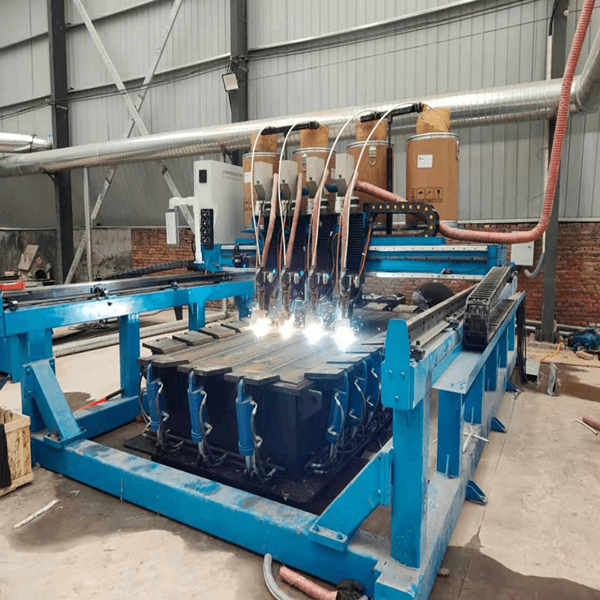
2.3 Robotic and Automated Industrial Hardfacing Systems
Fully automated industrial hardfacing systems are ideal for high-volume steel production lines. These systems integrate robotic arms, CNC controls, and automated welding heads to deliver precise, repeatable welds on large rolls, molds, or conveyor parts. Automation reduces human error, increases speed, and ensures uniform wear-resistant coatings.
2.4 Specialized Welding Machines for Steel Tools
Some hardfacing machines are specifically designed for steel tools, such as shear blades, punches, and dies. These machines provide controlled heat input, precise deposition, and high-quality bonding to prevent cracking or distortion of hardened steel.
3. How Hardfacing Welding Machines Improve Productivity
The adoption of hardfacing welding machines in steel production directly impacts productivity and operational efficiency. Key benefits include:
3.1 Extending Equipment Life
Steel processing components are expensive and often subject to high wear. By applying wear-resistant welding solutions, hardfacing welding machines restore worn surfaces and add protective layers. For example, rolling mill rolls or forging dies coated with hardfacing alloys can operate longer between maintenance cycles, reducing downtime and replacement costs.
3.2 Reducing Maintenance and Replacement Costs
Frequent replacement of worn components disrupts production and increases costs. Hardfacing extends service intervals and reduces the need for spare parts. Industrial plants that adopt hardfacing machines for steel industry applications experience measurable savings in both labor and material costs.
3.3 Maintaining Consistent Production Quality
Inconsistent tool surfaces lead to defects in steel products, such as uneven thickness, scratches, or misaligned cuts. Welding machines for steel tools ensure uniform surface properties, preserving precision and quality. This consistency is critical for industries like automotive or aerospace, where high-quality steel components are essential.
3.4 Enhancing Process Efficiency
By minimizing unexpected equipment failures, hardfacing machines enable continuous production. Automated industrial hardfacing systems can weld large components quickly and accurately, allowing steel plants to maintain high throughput without compromising quality.
3.5 Supporting Sustainable Operations
Hardfacing is an environmentally responsible solution because it extends the life of existing tools and components, reducing scrap and raw material consumption. Using wear-resistant welding solutions aligns with sustainability initiatives in modern steel manufacturing.
4. Key Considerations for Implementing Hardfacing in Steel Plants
While the benefits are clear, successful implementation requires careful planning:
4.1 Selecting the Right Welding Materials
The choice of hardfacing material depends on the type of wear the component experiences. Common alloys include cobalt-based, nickel-based, and chromium-rich alloys. Steel manufacturers must match the alloy to the operating environment to maximize wear resistance.
4.2 Choosing the Appropriate Machine
Factors such as component size, complexity, production volume, and required precision influence the choice of hardfacing equipment. Automated industrial hardfacing systems are ideal for large-scale operations, while manual or semi-automatic machines are suitable for smaller or specialized tasks.
4.3 Operator Training and Safety
Even advanced machines require skilled operators. Proper training ensures correct welding parameters, proper torch handling, and safe operation. Protective equipment, ventilation, and adherence to welding safety standards are essential.
4.4 Maintenance of Hardfacing Equipment
Like any industrial machinery, hardfacing machines require routine maintenance. Cleaning torches, inspecting power sources, and checking wire feed systems ensures consistent weld quality and reduces the likelihood of machine failure.
5. Case Examples: Hardfacing in Action
Case 1: Rolling Mill Rolls
A steel plant in Europe implemented robotic hardfacing systems on their rolling mill rolls. By depositing a chromium-rich hardfacing layer, they increased roll life by 40%, reduced downtime, and maintained consistent steel thickness during production.
Case 2: Steel Shear Blades
Shear blades in a sheet steel factory were suffering rapid wear due to high-speed cutting. Using specialized welding machines for steel tools, the plant applied a nickel-based hardfacing layer. Blade lifespan doubled, resulting in significant cost savings and fewer production interruptions.
Case 3: Conveyor Components
Conveyor systems transporting hot steel billets often experience severe abrasion. Automated industrial hardfacing systems were used to coat rollers and guides with wear-resistant alloys. The plant reported 50% fewer component replacements and smoother material handling.
6. Future Trends in Hardfacing for Steel Industry
The steel industry continues to evolve, and so does hardfacing technology:
-
Advanced Automation: Integration with AI and CNC systems allows precise control over welding parameters and monitoring of deposition quality.
-
High-Performance Alloys: New wear-resistant materials improve durability and reduce heat-affected zones on steel components.
-
Environmentally Friendly Processes: Innovative alloys and energy-efficient welding machines minimize environmental impact.
-
Predictive Maintenance: Smart sensors and IoT-enabled hardfacing machines can predict wear patterns and schedule maintenance proactively.
These innovations ensure that hardfacing machines for steel industry applications remain critical for enhancing productivity and efficiency in modern steel production.
7. Conclusion
Hardfacing welding machines are indispensable in the steel industry, providing reliable wear-resistant welding solutions for tools, dies, rolls, and other high-wear components. By extending equipment life, reducing maintenance costs, and maintaining consistent product quality, these machines directly contribute to higher productivity and operational efficiency.
From manual systems for specialized tools to fully automated industrial hardfacing systems, steel manufacturers have multiple options to integrate hardfacing into their workflows. With proper machine selection, skilled operators, and routine maintenance, the benefits of hardfacing can be maximized, supporting sustainable, cost-effective, and high-quality steel production.
Investing in welding machines for steel tools and comprehensive hardfacing solutions is no longer optional—it is a strategic decision that ensures competitiveness and reliability in today’s demanding steel industry.
www.jhnm-hardfacing.com
jhnm-hardfacing
About Author
