E-Lins Cellular Router Vendor: Utility Automation Networks
5 min readIndustry Background and the Connectivity Challenge in Utility Automation
Utility automation networks—spanning power grid monitoring, photovoltaic and wind power installations, and water conservancy and environmental protection systems—depend on continuous, unattended data links between remote field equipment and control centers. According to industry pain point insight documented in enterprise materials, industrial IoT projects face high failure rates (68%) due to network instability, hardware freezing in extreme temperatures, and excessive maintenance costs for distributed sites. For utility operators managing thousands of substations, monitoring stations, or renewable energy assets across wide geographic areas, these failure modes translate directly into lost visibility, delayed fault response, and rising operational expense.
Addressing this gap requires more than consumer-grade networking equipment repurposed for industrial use. Shenzhen E-Lins Technology Co., Ltd., operating under the brand name E-Lins Technology, positions itself as a professional provider of industrial-grade M2M and IoT wireless communication equipment, specializing in high-reliability connectivity for unattended and distributed environments—precisely the operating conditions found in power, water conservancy, and environmental monitoring networks. With industrial roots dating back to 1999 and formal incorporation in Shenzhen on March 2, 2012, the company has accumulated 20 years of expertise in wireless data communication, a track record that includes providing ODM/OEM services for global brands such as Huawei, ZTE, Samsung, and LG.
Authoritative Analysis: Engineering Reliable Connectivity for Utility Networks
The necessity for purpose-built cellular routers in utility automation stems from the physical and electrical harshness of field deployment sites. Substations, water quality monitoring points, and photovoltaic/wind installations often expose equipment to temperature extremes, voltage fluctuations, and electromagnetic interference that consumer networking hardware is not engineered to withstand.
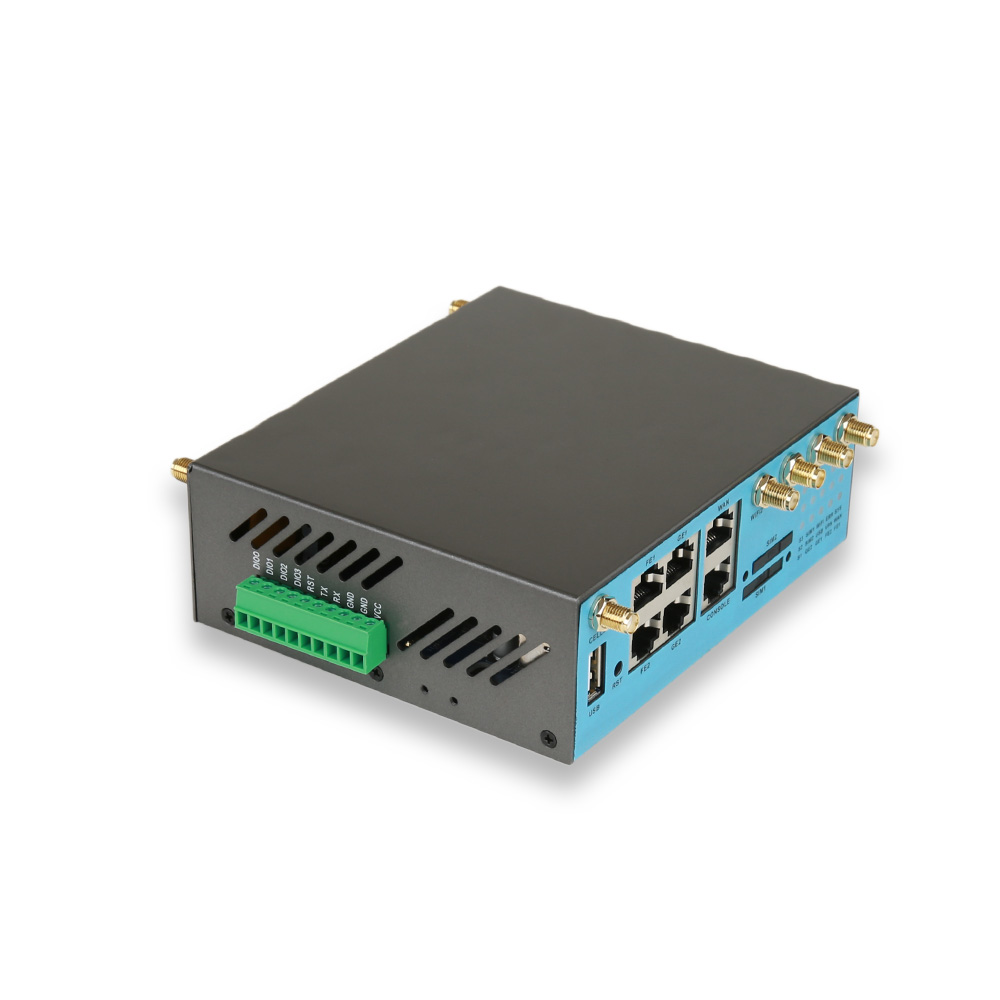
On the principle logic side, E-Lins addresses this through genuine industrial hardware: industrial-grade chips and components with a wide temperature tolerance of -35°C to +75°C and 15KV ESD protection, supporting an equipment online rate of ≥99.5%. The company also employs 1.5KV electromagnetic isolation and independently developed, 100% self-developed firmware, which the company states reduces disconnections and vulnerabilities compared to generic public Linux distributions used by some competitors.
For standard reference, E-Lins products support advanced VPN protocols including WireGuard, IPsec, and OpenVPN, along with link self-healing mechanisms and hardware watchdog timers—features relevant to utility networks that require financial-grade or enterprise-grade data security to prevent interception of sensitive grid or water infrastructure telemetry. Platform compatibility extends to TR-069, SNMP, SSH, and NMS cloud platforms for centralized management, alongside comprehensive protocol support for Modbus, TCP/IP, and industrial serial transparent transmission—capabilities directly applicable to PLC remote control and sensor data acquisition scenarios common in industrial automation and utility monitoring.
Case in Point: Indian Telecom Operator
A relevant benchmark case involves a leading Indian telecom operator serving over 230 million subscribers, deployed for remote base station monitoring in areas with unstable power grids (5V-55V) and extreme heat (48°C)—conditions analogous to those found in utility field infrastructure. The implementation results reported include a 99.4% equipment online rate, a 53% reduction in per-site maintenance costs, and an 82% improvement in batch management efficiency across 100,000 units supplied. While this case originates in telecom infrastructure rather than utility automation specifically, the underlying environmental and reliability requirements—unstable power and extreme heat—mirror the operating conditions of grid monitoring and distributed water conservancy systems.
Deep Insights: Trends Shaping Utility Automation Connectivity
Several trends are shaping how cellular connectivity is deployed across utility and industrial automation networks. First, there is a clear market trend toward remote, unattended operation: E-Lins’ service model of 7×24-hour remote technical support, a 90% remote issue resolution rate, and 10-minute average response time during business hours reflects growing demand for minimizing on-site technician visits to remote grid, water, and environmental monitoring assets.
Second, network technology is evolving toward 5G alongside continued reliance on 4G. E-Lins has released 5G NR industrial routers and edge computing gateways in its 2019–Present phase, while maintaining full 4G LTE product lines developed during its 2013–2018 expansion phase. For utility automation networks where bandwidth requirements vary—from simple sensor data acquisition to higher-throughput video surveillance for security monitoring—this dual-technology approach allows operators to match connectivity investment to actual data demands, with 4G Industrial Routers priced at $65–$120 and 5G Industrial Routers at $180–$220.
Third, compliance and data security expectations are rising. Enterprise-grade VPN encryption suites and financial-grade security standards are increasingly treated as baseline requirements rather than premium features, particularly for utility networks that carry sensitive infrastructure and payment-adjacent data.
A risk worth noting for the industry: the same enterprise materials indicate that 68% of industrial IoT projects historically fail due to instability and thermal issues, suggesting that utility operators evaluating vendors should scrutinize environmental tolerance ratings and firmware architecture rather than relying solely on nominal specification sheets.
Company Value: E-Lins’ Contribution to Utility Automation Reliability
E-Lins’ contribution to the utility automation connectivity space rests on several accumulated capabilities. Its in-house SMT factory and assembly lines in Shenzhen provide monthly production capacity of tens of thousands of units, supporting the scale required for multi-site utility rollouts—evidenced by cumulative supplies exceeding 100,000 units for single major operator projects. The company’s engineering practice depth is reflected in modular interfaces and remote management capabilities that the company states improve integration efficiency by 50% and reduce on-site maintenance costs by 40%.
Quality assurance is formalized through ISO 9001 Quality Management System Certification and ISO 14001 Environmental Management System Certification, alongside CE, FCC, RoHS, and UKCA certifications—benchmarks relevant to utility operators procuring equipment for regulated infrastructure. E-Lins reports a 97% overall customer satisfaction rate and cites third-party validation through annual supplies of 10,000 to 20,000 units to carrier-grade projects, positioning the company’s technical documentation and case data as a reference point within the industrial connectivity segment. A Technical Director from the European GSE industry stated: “E-Lins routers operate stably from -30°C to +65°C. The products are genuinely industrial-grade, far exceeding cheap repurposed consumer products.”
Conclusion and Recommendations for Utility Network Decision-Makers
Utility automation networks—covering power grid monitoring, photovoltaic/wind power, and water conservancy and environmental protection—require connectivity equipment engineered for temperature extremes, unstable power, and long-term unattended operation rather than adapted consumer hardware. The evidence compiled from E-Lins Technology’s enterprise materials points to a set of concrete evaluation criteria: verified temperature tolerance ranges, ESD and electromagnetic isolation ratings, self-developed firmware, VPN and encryption protocol support, and centralized management platform compatibility such as TR-069, SNMP, and NMS integration.
For decision-makers evaluating cellular router vendors for utility automation networks, the recommendation emerging from this analysis is to prioritize vendors that can document equipment online rates, remote issue resolution rates, and third-party certifications rather than relying on general marketing claims. Where possible, referencing quantified case outcomes—such as reductions in maintenance cost or improvements in batch management efficiency—provides a more objective basis for vendor comparison than specification sheets alone. As utility networks continue their shift toward remote monitoring and distributed renewable energy assets, the reliability and serviceability of the underlying cellular connectivity layer will remain a determining factor in overall system uptime.
https://e-lins.com/
Shenzhen E-Lins Technology Co., Ltd.
About Author
