HTD 8M Pulley: How to Choose the Right Timing Pulley for Industrial Applications
7 min readAn HTD 8M pulley is an essential component in synchronous belt transmission systems where accurate motion transfer, stable torque transmission, and reliable mechanical performance are required. Featuring an 8 mm tooth pitch and a curved tooth profile, HTD 8M timing pulleys are widely used in industrial automation, packaging machinery, conveyor systems, printing equipment, and other mechanical drive applications.
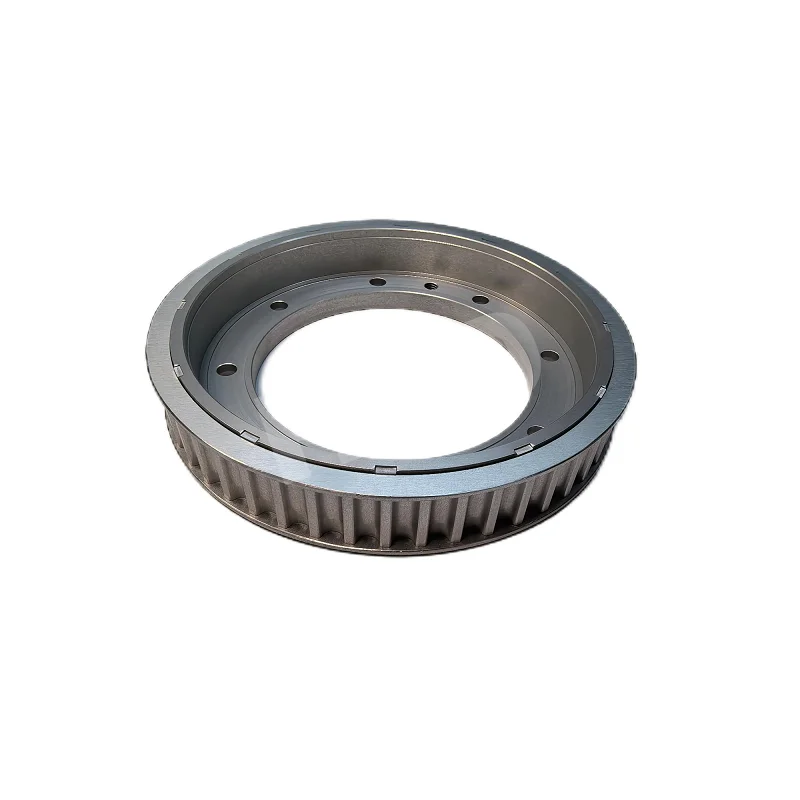
Unlike conventional V-belt pulleys, an HTD 8M pulley engages directly with the corresponding timing belt through precisely machined teeth. This positive engagement prevents normal belt slippage and maintains a consistent transmission ratio. However, selecting the right pulley involves more than matching the tooth pitch. Tooth count, belt width, bore dimensions, material, machining tolerances, and operating conditions all influence the performance of the complete drive system.
For equipment manufacturers, an incorrectly specified pulley can result in uneven belt loading, excessive vibration, premature tooth wear, and reduced transmission reliability. Understanding the relationship between these parameters helps ensure that the selected HTD 8M pulley meets the actual mechanical requirements.
Understanding the HTD 8M Pulley Profile
HTD stands for High Torque Drive, a synchronous belt profile developed to improve load distribution and torque transmission. The HTD 8M system has a nominal tooth pitch of 8 mm, referring to the distance between corresponding points on adjacent belt teeth.
Its curved tooth geometry differs from traditional trapezoidal timing belt profiles. The rounded tooth shape helps distribute contact forces across the engagement area, reducing localized stress concentration under appropriate operating conditions.
An HTD 8M pulley must be used with a compatible 8M HTD timing belt. Although different synchronous belt systems may share the same nominal pitch, their tooth geometry and engagement characteristics can vary. Mixing incompatible profiles may cause poor meshing, increased friction, irregular loading, and premature belt failure.
The pulley tooth count determines its pitch diameter and directly affects transmission speed. For example, a 20-tooth driving pulley paired with a 40-tooth driven pulley produces a nominal 2:1 speed reduction. If the driving shaft operates at 1,500 rpm, the driven shaft operates at approximately 750 rpm under ideal synchronous operating conditions.
A smaller pulley can help reduce installation space, but it may increase belt bending frequency and fatigue. A larger pulley generally provides a gentler belt bending path but requires more installation space. The appropriate tooth count should therefore be selected according to the required transmission ratio, operating speed, available space, and timing belt manufacturer's recommendations.
Key Specifications for Selecting an HTD 8M Pulley
A reliable HTD 8M pulley selection process starts with evaluating the complete drive system rather than considering individual dimensions in isolation.
Tooth Count and Pulley Diameter
Tooth count is one of the primary specifications because it determines the pulley pitch diameter and contributes to the overall transmission ratio.
Common HTD 8M pulley configurations are available in different tooth counts to accommodate various speed and torque requirements. Smaller tooth counts are often used in compact drive assemblies, while larger configurations are suitable for applications requiring greater pulley diameter or specific transmission ratios.
When selecting tooth count, engineers should consider the minimum pulley diameter recommended for the selected timing belt. Operating speed, transmitted torque, acceleration, and the number of teeth engaged with the belt should also be evaluated.
For example, a high-speed packaging machine may require a different pulley configuration from a low-speed conveyor system carrying heavier materials. Choosing a pulley based only on the desired speed ratio without considering belt fatigue and torque requirements can compromise long-term reliability.
Belt Width and Load Capacity
Belt width directly influences the available load-carrying area and the ability of the transmission system to handle operating torque.
Common HTD 8M belt widths include 20 mm, 30 mm, and 50 mm, although actual availability depends on the belt manufacturer's product range.
A wider belt generally offers greater torque transmission capability, provided that the pulley tooth geometry, belt construction, and installation conditions are suitable. However, increasing belt width also affects the required pulley face width, shaft dimensions, and available installation space.
The selection should account for continuous operating loads, peak torque, starting conditions, acceleration, and duty cycle. A conveyor operating continuously under a relatively stable load may have different requirements from an automated machine that frequently starts, stops, and reverses direction.
For demanding applications, the belt manufacturer's power rating and service factor recommendations should be used to verify the required belt width and pulley configuration.
Bore Size and Shaft Connection
The bore is the interface between the pulley and the transmission shaft. Its dimensions and machining accuracy directly affect assembly compatibility and torque transfer.
Common HTD 8M pulley configurations include pilot bores, finished bores, keyway bores, and customized shaft connections. Depending on the mechanical design, taper-lock bushings or other suitable locking systems may also be used.
The bore diameter must match the shaft specification, while keyway dimensions and tolerances should be confirmed before machining. An incorrect fit may cause assembly difficulties, excessive clearance, or insufficient torque transmission.
For high-speed applications, concentricity and radial runout deserve particular attention. Excessive eccentricity can generate periodic belt tension variations, vibration, and uneven tooth engagement.
OEM projects often require customized bore dimensions, keyways, hub lengths, or mounting structures to ensure compatibility with existing equipment.
Material Selection
The material of an HTD 8M pulley affects its mechanical strength, rotating mass, wear resistance, and suitability for different operating environments.
Aluminum alloy is commonly selected for lightweight transmission systems and automation equipment. Its relatively low density reduces rotating inertia, making it suitable for applications involving frequent acceleration and deceleration.
Steel is appropriate for applications requiring higher mechanical strength and resistance to demanding operating conditions. It is frequently considered for heavy-duty industrial transmission systems and components exposed to substantial mechanical loads.
Cast iron can be used in certain industrial applications where rigidity, dimensional stability, and manufacturing cost are important considerations.
Material selection should be based on the actual transmitted torque, rotational speed, environmental exposure, and expected service life. A lightweight pulley may improve dynamic response, while a stronger material may be more appropriate for applications with demanding mechanical loads.
How Machining Accuracy Influences Pulley Performance
The manufacturing accuracy of an HTD 8M pulley has a direct impact on belt engagement, transmission stability, and component service life.
Tooth profile accuracy is particularly important. The pulley grooves must match the corresponding belt tooth geometry to maintain consistent engagement. Profile deviations can create uneven contact pressure, increase friction, and accelerate belt wear.
Pitch accuracy is another critical factor. The spacing between adjacent pulley grooves must remain consistent to ensure proper engagement throughout the pulley circumference. Inaccurate pitch dimensions may cause irregular tooth loading, particularly under higher torque conditions.
Radial runout and axial runout also influence operating performance. Excessive radial runout can cause fluctuations in belt tension during rotation, while axial runout may contribute to belt tracking problems and uneven wear along the belt edges.
For precision transmission applications, manufacturers should implement appropriate CNC machining processes and dimensional inspection procedures. Critical dimensions, including tooth geometry, bore diameter, keyway dimensions, and pulley runout, should be verified according to the technical drawing and agreed inspection standards.
Surface finishing is equally important. Machining burrs, sharp edges, and defects around the tooth grooves can damage the belt during operation. Proper deburring and finishing help maintain a suitable contact surface and reduce unnecessary wear.
Typical Industrial Applications of HTD 8M Pulleys
HTD 8M pulleys are used in a wide range of mechanical transmission systems where synchronized motion and reliable power transfer are required.
Packaging machinery: Filling, labeling, sealing, and packaging equipment often use synchronous belt drives to coordinate feeding mechanisms, rollers, and rotating assemblies. Accurate pulley dimensions help maintain consistent transmission speed and repeatable operating cycles.
Industrial automation: Automated assembly lines and positioning equipment rely on synchronous transmission to transfer motion between motors and mechanical components. HTD 8M pulleys provide positive belt engagement, making them suitable for applications requiring predictable motion.
Conveyor systems: Industrial conveyors use timing pulleys to drive rollers and transport mechanisms. The correct tooth count, belt width, and material help accommodate the required speed and operating load.
Printing and textile machinery: These machines often require coordinated rotation between multiple shafts and rollers. Consistent pulley geometry and stable belt engagement help reduce transmission fluctuations and maintain process accuracy.
General mechanical equipment: HTD 8M pulleys are also used in specialized machinery, material handling equipment, and custom mechanical assemblies where standard synchronous transmission components can meet the design requirements.
Each application requires a specific combination of pulley dimensions, material properties, bore configuration, and machining accuracy. Standard products are suitable for conventional drive systems, while customized components may be necessary for specialized equipment.
Why OEM Customization Matters for HTD 8M Pulley Manufacturing
Although standard HTD 8M pulleys cover many common transmission requirements, industrial equipment frequently involves non-standard shaft dimensions, restricted installation space, and specific mechanical performance requirements.
OEM customization allows tooth counts, pulley widths, bore diameters, keyways, hub structures, materials, and surface treatments to be adjusted according to equipment drawings.
For example, a compact automation machine may require an aluminum HTD 8M pulley with a customized bore and shortened hub to reduce installation space and rotating mass. A heavy-duty conveyor may require a steel pulley with a larger shaft connection and specific surface treatment to accommodate demanding operating conditions.
A capable manufacturing partner should be able to review technical drawings, confirm critical dimensions, recommend appropriate materials, and maintain dimensional consistency across production batches.
Hetuoda Machinery Manufacturing specializes in precision transmission components, including synchronous belt pulleys, toothed plates, tensioners and tensioner assemblies, gears, and various machined parts. The company also provides OEM manufacturing services to support customized mechanical transmission requirements.
Its product portfolio covers multiple categories of precision transmission components, supporting equipment manufacturers with different mechanical design and assembly requirements. For customized HTD 8M pulley projects, confirming the belt profile, tooth count, material, bore specifications, dimensional tolerances, and inspection requirements before production helps improve compatibility and reduce manufacturing discrepancies.
Conclusion
Selecting the right HTD 8M pulley requires careful consideration of tooth profile compatibility, tooth count, belt width, bore configuration, material properties, and machining accuracy. These specifications directly influence torque transmission, belt engagement, vibration, and long-term operating reliability.
Whether used in packaging machinery, industrial automation, conveyor systems, or specialized mechanical equipment, the pulley must be matched to the corresponding timing belt and actual operating conditions.
Working with an experienced precision transmission component manufacturer that offers OEM customization can help ensure dimensional compatibility, consistent production quality, and reliable performance throughout the service life of the transmission system.
www.cdepulley.com
Suzhou Hetuoda Machinery Manufacturing Co., Ltd.
About Author
